Economics

The best economic thinking was never just about money. It was about incentives, power, human nature, and the invisible rules that make some people rich and others stuck. At Intellectual Prestige, we publish original essays that connect foundational economic theory – from Ricardo’s trade models to Becker’s analysis of everything – to the financial decisions, career strategies, and policy debates that shape your daily life.

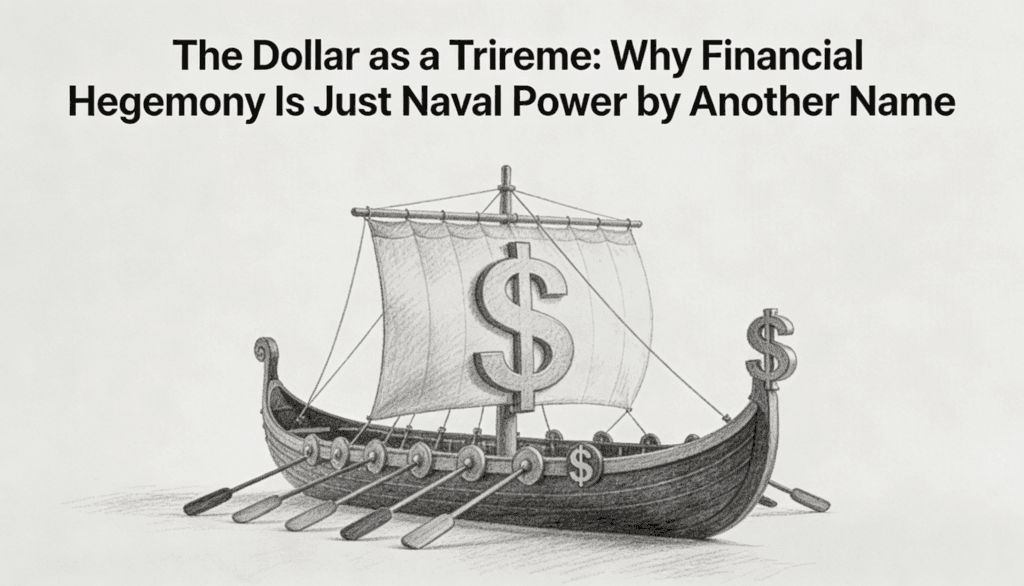
The Dollar as a Trireme- Why Financial Hegemony Is Just Naval Power by Another Name

The Dollar as a Trireme: Why Financial Hegemony Is Just Naval Power by Another Name

When Thucydides sat down to write about the Peloponnesian War, he was not really writing about war. He was writing about power. Specifically, he was writing about what happens when one state accumulates so much of it that every other state must orient itself in relation to that gravity. Athens did not rule the Aegean […]

The Dollar as a Trireme: Why Financial Hegemony Is Just Naval Power by Another Name Read More »

The Secret Reason Behind Rising Divorce Rates- It's Not Values, It's Incentives

The Secret Reason Behind Rising Divorce Rates: It’s Not Values, It’s Incentives

Everyone has a theory about why divorce rates climbed so dramatically in the second half of the twentieth century. The usual suspects get rounded up every time: declining moral values, the sexual revolution, secularism, feminism, social media, dating apps. Pick your villain. The story practically writes itself, and it always ends with a nostalgic sigh

The Secret Reason Behind Rising Divorce Rates: It’s Not Values, It’s Incentives Read More »

Economics Without Romance- A Brutal Guide to How the World Actually Works

Economics Without Romance: A Brutal Guide to How the World Actually Works

Most economists in the mid twentieth century were busy drawing elegant diagrams on chalkboards and explaining how markets reach beautiful equilibria. Stigler walked into the room and asked a different question. Not how things should work. How they actually work. The answer, it turns out, is far less flattering to everyone involved. George Stigler won

Economics Without Romance: A Brutal Guide to How the World Actually Works Read More »

The Credential Graveyard- Why a Master's Degree is Supply without Demand in 2026

The Credential Graveyard: Why a Master’s Degree is “Supply without Demand” in 2026

There is a quiet cemetery growing in the modern economy. It is not filled with companies or currencies. It is filled with credentials. Specifically, master’s degrees. Millions of them, printed on heavy cardstock, tucked into frames, and hung on walls where they slowly become decorative rather than functional. In 1803, a French economist named Jean-Baptiste

The Credential Graveyard: Why a Master’s Degree is “Supply without Demand” in 2026 Read More »

Your Savings Account Is a Crime Scene- Why Jean-Baptiste Say Hated Idle Capital

Your Savings Account Is a Crime Scene: Why Jean-Baptiste Say Hated Idle Capital

Most people think of a savings account as responsible. Prudent. The grown up thing to do. You put money away for a rainy day, watch the balance grow, and feel a small glow of virtue every time you check the number. Jean-Baptiste Say would have looked at your savings account the way a detective looks

Your Savings Account Is a Crime Scene: Why Jean-Baptiste Say Hated Idle Capital Read More »

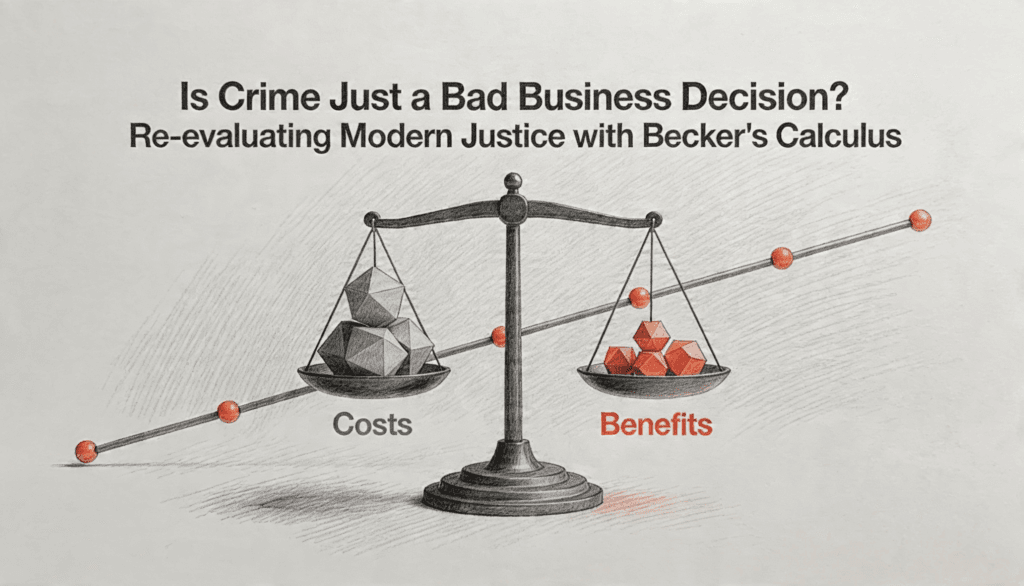
Is Crime Just a Bad Business Decision? Re-evaluating Modern Justice with Becker's Calculus

Is Crime Just a Bad Business Decision? Re-evaluating Modern Justice with Becker’s Calculus

Once, Gary Becker was running late to a student’s oral exam. He needed to park. The legal lot was far away. The illegal spot was right there. So he did what any rational person might do. He weighed the fine, the probability of getting caught, and the time he would save. Then he parked illegally.

Is Crime Just a Bad Business Decision? Re-evaluating Modern Justice with Becker’s Calculus Read More »

Is Modern Finance a Branch of Metaphysics? Alfred North Whitehead Makes the Case

Is Modern Finance a Branch of Metaphysics? Alfred North Whitehead Makes the Case

There is a strange moment in every finance textbook where the author quietly asks you to believe in something you cannot see, touch, or verify. It usually arrives around chapter three. You are told that markets are efficient, that prices reflect all available information, and that rational agents make optimal decisions under uncertainty. No evidence

Is Modern Finance a Branch of Metaphysics? Alfred North Whitehead Makes the Case Read More »