Table of Contents
Most economists in the mid twentieth century were busy drawing elegant diagrams on chalkboards and explaining how markets reach beautiful equilibria. Stigler walked into the room and asked a different question. Not how things should work. How they actually work. The answer, it turns out, is far less flattering to everyone involved.
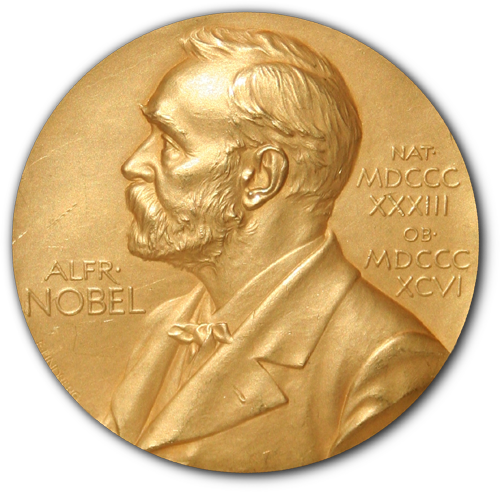
George Stigler won the Nobel Prize in Economics in 1982, and he earned it by doing something deeply unpopular. He treated human beings, politicians, regulators, and even fellow economists as what they are: self interested actors operating in a world of limited information, persistent incentives, and very little magic. If Adam Smith gave economics its founding optimism and Karl Marx gave it its founding rage, Stigler gave it something rarer and more useful. He gave it sobriety.
This is a guide to seeing the world the way Stigler did. It is not comfortable. But it is clarifying.
The Myth of the Benevolent Regulator
Here is a story most people believe. Markets sometimes fail. When they do, the government steps in, writes some rules, creates an agency, and fixes the problem. The regulator acts in the public interest. End of story.
Stigler looked at this story the way a mechanic looks at a car commercial. Nice fantasy. Now let us open the hood.
His most famous contribution, regulatory capture theory, proposed something that sounds cynical until you start looking for evidence, at which point it starts looking obvious. The industries being regulated often end up controlling the regulators. Not through some dramatic conspiracy. Through something much more mundane. The regulated industries care intensely about the rules. The public does not. So the industries show up. They lobby. They provide expertise. They draft language. They offer jobs to regulators after their government service ends. And slowly, almost inevitably, the rules start serving the interests of the very people they were supposed to constrain.
Think about it from a pure energy standpoint. A new regulation on, say, the trucking industry affects every trucking company directly. Their profits, their routes, their survival. It affects the average citizen by maybe a fraction of a cent on the price of a delivered package. Who do you think is going to attend the hearings? Who is going to hire the lawyers? Who is going to remember the commissioner’s name at reelection time?
Stigler was not saying regulation is always captured. He was saying the incentive structure makes capture the default outcome unless something actively prevents it. The burden of proof, in his view, should fall on anyone claiming a regulation is actually serving the public. That was a radical inversion of how most people thought about government intervention. And decades of evidence have been remarkably kind to his skepticism.
Information Is Not Free, and That Changes Everything
Before Stigler, economics had a quiet, almost embarrassing assumption baked into many of its models. Everyone knows everything. Buyers know all the prices. Workers know all the wages. Firms know all the costs. It was like building a theory of driving that assumes every road is perfectly straight and visibility is always infinite.
Stigler dismantled this with his 1961 paper “The Economics of Information,” which is one of those rare academic works that makes you wonder how nobody wrote it sooner. His argument was straightforward. Information is valuable, but acquiring it costs time, effort, and money. Therefore, people will not gather perfect information. They will gather enough information, and then they will stop. This means markets will always have price dispersion. Two identical products will sell for different prices in different places, and that is not a market failure. That is a market operating under real conditions.
This insight ripples outward in ways that reshape how you see everything. Why do people stay in jobs that underpay them? Partly because finding out what other jobs pay costs time and energy. Why do consumers overpay for products? Partly because comparison shopping is itself a form of labor. Why do voters elect politicians who act against their interests? Partly because acquiring accurate political information is exhausting, and the return on investment for any single voter is close to zero.
There is something almost paradoxical here. The information age, with all its search engines and comparison websites, has confirmed Stigler’s point rather than refuted it. We now have more information available than at any point in human history, and people are not notably better informed. Because the bottleneck was never just access. It was always attention, processing capacity, and the willingness to do the cognitive work. More haystacks do not make needles easier to find if you were never that motivated to search in the first place.
Why Governments Do What They Do (Hint: It Is Not What They Say)
Stigler belonged to the Chicago School of economics, a group of thinkers who shared a common suspicion of grand government interventions and a common faith in the power of incentive analysis. But Stigler pushed this further than most. He did not just doubt government effectiveness. He developed a systematic framework for predicting government behavior based on the same tools economists use to predict firm behavior.
The result was something you might call a supply and demand model for regulation. On the demand side, you have industries and interest groups that want favorable rules. On the supply side, you have politicians and bureaucrats who want votes, campaign contributions, and post government career prospects. The “price” is the regulatory outcome. And like any market, the equilibrium tends to favor the parties with the most concentrated interests and the lowest organizing costs.
This is not a conspiracy theory. It is the opposite of a conspiracy theory. Conspiracies require secret coordination. Stigler’s model requires nothing secret at all. It only requires people to follow their incentives, which they do with impressive reliability.
Consider occupational licensing. In theory, requiring licenses for certain professions protects consumers from incompetent practitioners. Who pushes hardest for strict licensing requirements? Not consumers. The existing practitioners, who benefit from keeping new entrants out. Stigler would not have been surprised.
The Intellectual as Interest Group
One of Stigler’s more provocative ideas was applying his framework to intellectuals themselves. Academics, policy experts, and public commentators like to imagine themselves as disinterested seekers of truth, floating above the grubby world of self interest. Stigler found this amusing.
He pointed out that intellectuals compete in their own market. They seek prestige, tenure, publication, influence, and funding. These incentives shape what they study, what they argue, and what they conveniently ignore. An economist who builds a career on the importance of government intervention has a professional interest in government intervention being important. An economist who builds a career on deregulation has a professional interest in deregulation being necessary.
This does not mean all intellectual work is dishonest. But it means the marketplace of ideas has its own distortions, its own capture dynamics, its own information asymmetries. Stigler was asking us to apply the same skeptical lens to the people producing ideas that we apply to the people producing cars. Trust, but verify. And pay attention to who is funding the verification.
Competition Is Not a State, It Is a Process
A subtle but important part of Stigler’s thinking was his insistence that competition should be understood as an ongoing process rather than a static outcome. Perfect competition, as described in textbooks, is a condition where many firms sell identical products, no one has market power, and prices equal marginal costs. It is tidy. It is also fictional.
Real competition is messy, dynamic, and often looks nothing like the textbook version. Firms try to differentiate. They innovate. They fail. They merge. They engage in practices that look anticompetitive in a static snapshot but turn out to be competitive strategies in a dynamic context. Stigler urged economists and regulators to look at markets over time rather than freezing them in a single frame and declaring them broken.
This is where Stigler and the broader Chicago School made their most lasting policy impact. Their work influenced a generation of antitrust thinking, shifting the focus from whether a market looked competitive at any given moment to whether the conditions for competition existed over time. A firm with a large market share is not necessarily a monopolist if new entrants can challenge it. A merger that reduces the number of competitors is not necessarily harmful if it produces efficiencies that benefit consumers.
You can agree or disagree with where this line of reasoning leads. But the underlying analytical move is powerful. Asking “what does this look like right now?” is a different question from asking “what is this likely to look like over the next decade?” Stigler pushed economics toward the second question.
The Uncomfortable Lesson
If you absorb Stigler’s work seriously, you end up in an uncomfortable place. You cannot trust markets to be perfectly efficient because information is costly and unevenly distributed. But you also cannot trust regulators to fix market failures because regulators face their own incentive problems and information deficits. You cannot even fully trust the experts telling you whom to trust because they have their own interests in the game.
This might sound like a recipe for nihilism. Stigler would say it is a recipe for realism. The world is not divided into saints and sinners, noble public servants and greedy capitalists. It is populated by human beings who respond to incentives, operate with limited information, and pursue their own interests with varying degrees of self awareness.
Think of it like engineering. A bridge designer who assumes perfect materials and zero wind will build a bridge that collapses. An institutional designer who assumes benevolent regulators and perfectly informed citizens will build systems that get captured, corrupted, or simply ignored. Stigler was arguing for stress testing our institutions the way we stress test our bridges.
What Stigler Means Now
Stigler died in 1991, but his framework has aged better than most. The revolving door between Wall Street and regulatory agencies, the influence of tech lobbying on privacy legislation, the way pharmaceutical companies shape drug approval processes: these are all examples that fit his predictions with unsettling precision.
Perhaps more importantly, the information economics he pioneered has become the foundation for understanding the digital economy. Every debate about data privacy, algorithmic transparency, and platform market power is, at its core, a debate about who has information, what it costs to acquire, and who benefits from asymmetries. Stigler did not predict the internet. But he gave us some of the best tools for thinking about it.
His work also carries a warning for our current political moment. When people lose faith in institutions, the temptation is to reach for simple narratives. The market is rigged. The government is corrupt. The experts are lying. Stigler’s analysis supports a version of all three claims, but with an important caveat. The problems are structural, not moral. They arise from how systems are designed, not from the unique villainy of the people inside them. Swap out every person in Washington tomorrow and you will get roughly the same outcomes if the incentive structures remain unchanged.
That is a less satisfying story than blaming individuals. But it points toward solutions that might actually work. Change the rules, not the rulers.
Final Thought
Stigler once said that economists should not be in the business of giving people what they want to hear. He practiced what he preached. His economics is not romantic. It does not flatter your politics, your profession, or your species. It just describes the machinery.
And there is something oddly liberating about that. Once you stop expecting the world to run on good intentions, you can start building systems that work even when intentions are mediocre. Which, as Stigler would remind you, is most of the time.