Philosophy

Most philosophy content online falls into two traps: dumbed-down inspirational quotes or impenetrable academic prose. Intellectual Prestige occupies the space between. We publish long-form, argument-driven essays that take thinkers like Marcus Aurelius, Descartes, and Wittgenstein seriously – and apply their frameworks to questions you’re already asking about work, technology, freedom, and what makes a life worth living.

3 Toxic Ideas You Inherited From Christianity (According to Nietzsche)

3 Toxic Ideas You Inherited From Christianity (According to Nietzsche)

You probably think you are a free thinker. You do not go to church. You do not pray before meals. You roll your eyes at televangelists asking for jet money. Maybe you even call yourself an atheist, a skeptic, a rationalist, or some other label that lets you sleep at night feeling intellectually superior to […]

3 Toxic Ideas You Inherited From Christianity (According to Nietzsche) Read More »

Forget Happiness- Why Mill Believed a Dissatisfied Socrates Is Better Than a Satisfied Pig

Forget Happiness: Why Mill Believed a “Dissatisfied Socrates” Is Better Than a “Satisfied Pig”

Most people want to be happy. That sounds so obvious it barely deserves a sentence. But John Stuart Mill, one of the sharpest minds of the nineteenth century, looked at that universal desire and said something strange: happiness is not enough. In fact, the wrong kind of happiness might be worse than no happiness at

Forget Happiness: Why Mill Believed a “Dissatisfied Socrates” Is Better Than a “Satisfied Pig” Read More »

I Like, Therefore I Am- The Shallow Cartesianism of the Attention Economy

I Like, Therefore I Am: The Shallow Cartesianism of the Attention Economy

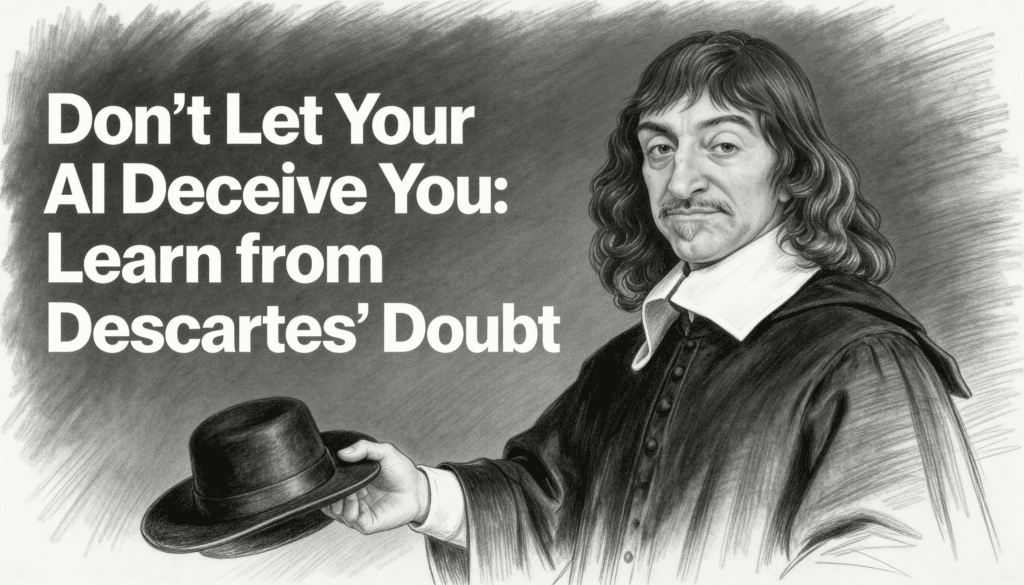
Descartes sat by a fire in 1637 and tried to doubt everything. His clothes, his hands, the room itself. He stripped away every certainty until only one thing remained standing. Cogito, ergo sum. I think, therefore I am. Thought, the stubborn thing left over after the great demolition, became the foundation of selfhood for the

I Like, Therefore I Am: The Shallow Cartesianism of the Attention Economy Read More »