Table of Contents
There is a strange paradox at the heart of modern ambition. We are told to build a personal brand, to shout louder, to post more, to network harder, to be visible at all costs. And yet, when you look closely at the people who actually win, the ones who accumulate wealth, influence, and power, you notice something odd. Many of them are nearly invisible. They do not have podcasts. They do not give keynote speeches. You would walk past them in an airport and never know they own half of it.
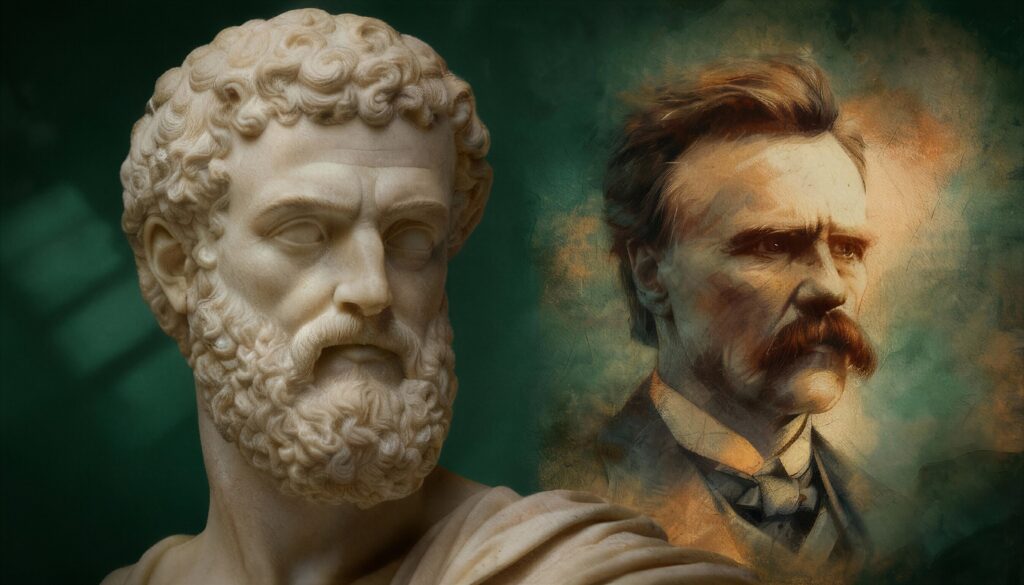
Sun Tzu, writing roughly twenty five centuries ago, understood this better than any modern strategist. His treatise The Art of War is often misread as a manual for confrontation. It is not. It is a manual for winning without confrontation, and a surprising amount of it is about staying hidden. “All warfare is based on deception,” he wrote. The general who appears weak when strong, who seems far when near, who looks asleep when most alert, that is the one who wins. The loud general loses. The visible army gets ambushed.
This is not just ancient philosophy dressed up for a blog post. It is a working principle. And in an era where everyone is performing for an audience, the people who refuse to perform have an enormous structural advantage. Let us look at why.
The Cost of Being Watched
When you are visible, you are accountable. Not in the noble sense of being responsible for your actions, but in the corrosive sense of being judged for every move you make. The visible person cannot pivot without explaining themselves. They cannot fail without an audience taking notes. They cannot change their mind without being called a hypocrite.
Think of it this way. A startup founder who has not yet announced their company can fail nine times and try a tenth. A founder who has done the rounds on every podcast, who has been on magazine covers, who has tweeted their vision to two hundred thousand followers, cannot fail even once without the failure becoming part of their permanent record. The first founder has optionality. The second has a reputation to defend, which is a different and much heavier thing.
Sun Tzu would call this the principle of formlessness. “The ultimate in disposing one’s troops is to be without ascertainable shape.” If your enemy cannot see you, they cannot prepare for you. If your competitors do not know what you are working on, they cannot copy it, undercut it, or lobby against it. Visibility is a tax, and most people pay it gladly without ever calculating the cost.
There is also a psychological cost. Being watched changes how you think. You start optimizing for how things look rather than how things work. You write the tweet before you finish the project, and pretty soon the tweet is the project. The performance becomes the product. This is how genuinely talented people drift into becoming professional explainers of work they no longer actually do.
The Quiet Compounders
Now consider the opposite type. The person who does not announce, does not signal, does not perform. They just build. While everyone else is busy curating their image, they are busy stacking small wins that compound into something enormous.
Real estate investors do this. They do not write threads about “ten lessons from my journey.” They quietly buy buildings, hold them, and let time do the work. By the time anyone notices, they own a third of the neighborhood. The same is true of certain founders, certain writers, certain craftsmen. Their work accumulates while everyone else is accumulating followers.
This is the principle Sun Tzu called using the indirect approach. The frontal assault is loud and obvious and almost always costs more than it yields. The flanking maneuver is quiet, almost invisible, and decisive. In modern terms, the loud strategy is to launch with a press release. The quiet strategy is to spend three years getting really good at something while no one is paying attention, then emerging with a finished thing that does not need a press release because it speaks for itself.
A quiet question worth asking yourself: how much of what you do is for the work, and how much is for the appearance of the work? If you stopped posting about it tomorrow, would you still do it? If the answer is no, you do not have a craft. You have a performance.
Information Asymmetry as a Weapon
The most underrated form of power in any field is knowing more than the other side knows you know. Sun Tzu was obsessed with this. He devoted an entire chapter to the use of spies. Not because he was paranoid, but because he understood that information is the substrate on which every other advantage is built.
In daily life, this translates into a simple practice. Listen more than you talk. Ask questions that seem casual but are not. Let other people reveal themselves while you reveal as little as possible. In any negotiation, the person who speaks first about price loses leverage. In any conflict, the person who explains their reasoning gives the other side a roadmap.
This is not about being deceptive in some grim, manipulative sense. It is about recognizing that your inner thoughts, your strategies, your vulnerabilities, your plans, these are assets. You do not give away your assets for free. You do not announce them on LinkedIn. You hold them, you use them, and you let other people guess.
There is a delicious irony here. In a culture obsessed with transparency and authenticity, the people who practice strategic privacy are dramatically more effective. They are not hiding because they are ashamed. They are hiding because they have read the playbook and noticed that the loudest player at the table is almost always the one who gets bluffed out of the hand.
The Mediocrity of Loud Effort
Most of the visible effort you see around you is, statistically, mediocre. The person filming themselves at the gym at five in the morning is rarely the strongest person in the gym. The person posting daily about their startup is rarely building the best startup. The person announcing their reading list is rarely the most well read.
This is not a coincidence. Effort that needs to be witnessed is, by definition, effort that depends on external validation to feel real. The people doing the most serious work usually do not need that validation because the work itself is the reward. They are too busy doing the thing to perform the thing.
Sun Tzu observed that “the supreme art of war is to subdue the enemy without fighting.” Translated into a modern, non military context, the supreme art of achievement is to win without performing. To get the promotion without making it obvious you wanted it. To build the business without making it your entire personality. To become formidable without ever once announcing that you are trying.
How to Practice Strategic Invisibility
So how do you actually do this? Not as a personality trait, but as a discipline. A few principles, drawn from the old strategist and updated for the present.
First, decouple your identity from your visibility. You are not your follower count. You are not your title. You are not your public persona. Those are masks, useful sometimes, but not the thing. The thing is the actual capability you have built, the actual relationships you have, the actual money in the actual account. Confuse the mask for the face and you will spend your life polishing something that does not exist.
Second, practice the discipline of not telling. When something good happens, do not announce it. When you have a new idea, do not workshop it on social media. When you are working on something important, let it ripen in private. This is genuinely difficult because the urge to share is wired into us, but the urge to share is also exactly what gives your competitors free reconnaissance.
Third, study your environment more than you advertise yourself in it. Most rooms you walk into, you know almost nothing about the other people there. Most fields you enter, you know almost nothing about the underlying dynamics. The visible strategy is to enter and make yourself known. The Sun Tzu strategy is to enter and quietly take inventory. Who has power? Who is faking it? Where are the openings? What is everyone competing for, and is it actually worth winning?
Fourth, allow people to underestimate you. This is the one most people cannot stomach. The ego wants credit, recognition, acknowledgment. The strategic mind wants leverage, and leverage often comes from being underestimated. If people think you are slightly less capable than you actually are, you have a permanent advantage. If they think you are slightly more capable than you actually are, you have a permanent liability.
Sun Tzu put it bluntly. “Pretend inferiority and encourage his arrogance.” Let your opponent feel safe. Let them get sloppy. Let them assume the contest is already decided. Then move.
The One Caveat
There is, of course, a counterpoint worth acknowledging. Pure invisibility does not work for everyone. If your career depends on a public reputation, an artist, a politician, a performer, you cannot vanish entirely. The point is not to be invisible in some absolute sense. The point is to be strategically visible. To choose what you show, when you show it, and to whom.
The mistake most people make is not visibility itself. It is uncalibrated visibility. They show everything to everyone all the time, and then they are surprised when their position weakens. The skilled practitioner shows specific things to specific people at specific moments. The rest stays hidden.
The Long Game
The deepest lesson in Sun Tzu, and the one that almost no one talks about, is patience. The whole book is built on the assumption that time is on your side if you use it correctly. The visible player needs results now because they have an audience to satisfy. The invisible player can wait. They can let the situation develop. They can pick their moment.
This is the real prize. Not invisibility for its own sake, but the freedom that comes from not needing to perform. The freedom to take your time. The freedom to fail in private. The freedom to change direction without explaining yourself to anyone. The freedom to compound your advantages quietly while the rest of the world is busy advertising theirs.
In a culture that has confused attention with achievement, the person who can resist the pull of attention has a kind of power most people will never understand. They are playing a different game on a different timeline with different rules. And by the time anyone notices what they were doing, it is already done.
That, more than any battlefield tactic, is what Sun Tzu was really teaching. The art of not being seen is not about hiding. It is about choosing what is worth seeing, and letting the rest unfold in the dark, where the real work has always been done.