Politics

We do not do partisan commentary. What we do is harder: we take the structural questions of political life – why democracies stagnate, why borders matter, why bureaucracies grow, why rights are never as universal as they claim — and trace them back to the thinkers who first saw these patterns. Hayek, Rousseau, Weber, Huntington. The names change. The tensions do not. Intellectual Prestige writes about the tensions.

Weaponized Incompetence- Using Organizational Friction as a Defensive Shield

Weaponized Incompetence: Using Organizational Friction as a Defensive Shield

Carl von Clausewitz never managed a corporate department. He never sat through a quarterly review where someone explained, with a straight face, that the report could not be finished because the system was down. He never watched a mid level manager respond to an urgent request with a nineteen paragraph email that answered nothing. And […]

Weaponized Incompetence: Using Organizational Friction as a Defensive Shield Read More »

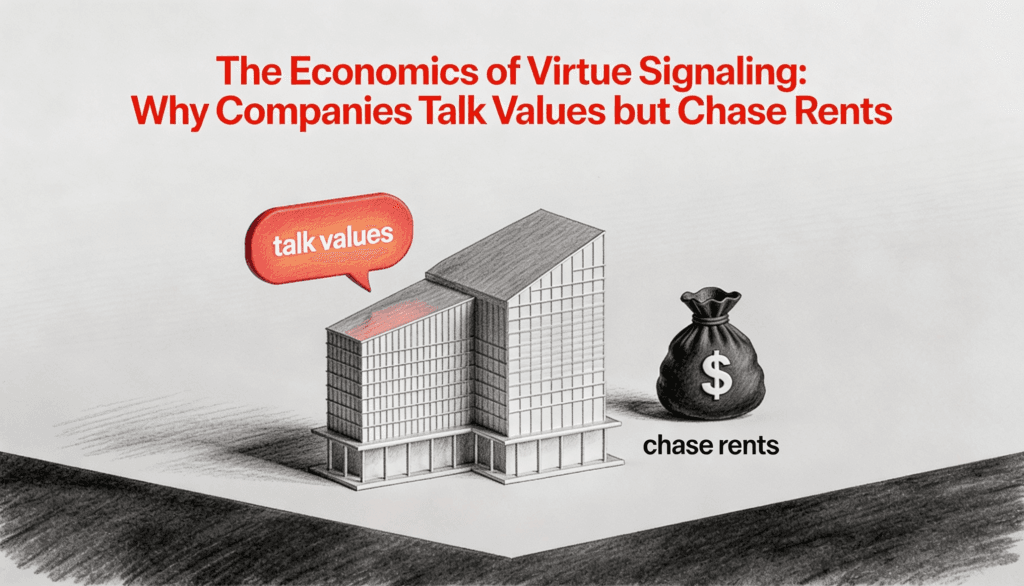
The Economics of Virtue Signaling- Why Companies Talk Values but Chase Rents

The Economics of Virtue Signaling: Why Companies Talk Values but Chase Rents

There is something almost theatrical about watching a Fortune 500 company release a statement on social justice. The language is careful. The font is tasteful. The logo gets a seasonal makeover. And somewhere in the background, the same company is lobbying for tax loopholes that would make a Renaissance pope blush. This is not hypocrisy

The Economics of Virtue Signaling: Why Companies Talk Values but Chase Rents Read More »

The Dollar as a Trireme- Why Financial Hegemony Is Just Naval Power by Another Name

The Dollar as a Trireme: Why Financial Hegemony Is Just Naval Power by Another Name

When Thucydides sat down to write about the Peloponnesian War, he was not really writing about war. He was writing about power. Specifically, he was writing about what happens when one state accumulates so much of it that every other state must orient itself in relation to that gravity. Athens did not rule the Aegean

The Dollar as a Trireme: Why Financial Hegemony Is Just Naval Power by Another Name Read More »

The Myth of the Public Servant- Why Bureaucrats Only Serve Their Own Expansion

The Myth of the “Public Servant”: Why Bureaucrats Only Serve Their Own Expansion

There is a phrase so deeply embedded in political language that most people never stop to examine it. “Public servant.” Say it slowly. Let it sit. Now ask yourself a simple question: when was the last time you felt served by the Department of Motor Vehicles? Murray Rothbard, the American economist and libertarian thinker who

The Myth of the “Public Servant”: Why Bureaucrats Only Serve Their Own Expansion Read More »

Thucydides vs. Machiavelli- Who Really Understands Power Better?

Thucydides vs. Machiavelli: Who Really Understands Power Better?

There is a question that political theorists have been circling for centuries, usually with great seriousness and very little resolution. Between Thucydides and Machiavelli, who actually understood power better? Both men watched civilizations make catastrophic decisions. Both wrote about it with uncomfortable clarity. But if you sit with their work long enough, a distinction emerges

Thucydides vs. Machiavelli: Who Really Understands Power Better? Read More »

Why We Should Sell Citizenship- Using Markets to Solve the Refugee Crisis

Why We Should Sell Citizenship: Using Markets to Solve the Refugee Crisis

There is something deeply uncomfortable about the idea of putting a price tag on belonging. Citizenship feels sacred, like love or loyalty. It is not supposed to be for sale. And yet, the Nobel laureate economist Gary Becker looked at the global refugee crisis and asked a question that makes most people squirm: what if

Why We Should Sell Citizenship: Using Markets to Solve the Refugee Crisis Read More »