Enlightenment

Why Video Game Economies Are More Real Than the US Dollar

Why Video Game Economies Are More “Real” Than the US Dollar

There is a strange moment that happens to almost every serious gamer. You are grinding through a dungeon, picking up loot, selling items at an auction house, and suddenly you realize something uncomfortable. The economy inside this game makes more sense than the one outside your window. That is not a joke. It is not […]

Why Video Game Economies Are More “Real” Than the US Dollar Read More »

Stop Being Good at Everything- The Economic Cost of the Renaissance Man

Stop Being “Good” at Everything: The Economic Cost of the Renaissance Man

You have probably been told, at some point in your life, that you should be well rounded. Read widely. Learn to code and to cook. Pick up a language. Play an instrument. Get comfortable with public speaking. Maybe even start a podcast. The advice sounds reasonable. It even sounds noble. After all, Leonardo da Vinci

Stop Being “Good” at Everything: The Economic Cost of the Renaissance Man Read More »

Why a Country With No Resources Can Still Win at Trade

Why a Country With No Resources Can Still Win at Trade

Let us begin with a thought experiment. Imagine two countries. One is blessed with fertile soil, deep harbors, vast forests, and mineral deposits that glitter under every hillside. The other has rocks. Just rocks and some stubborn grass and a population with strong opinions about cheese. Common sense says the first country dominates trade. It

Why a Country With No Resources Can Still Win at Trade Read More »

The Intellectual Entrepreneur- Why Ideas Are the Raw Materials of the 21st Century

The Intellectual Entrepreneur: Why Ideas Are the Raw Materials of the 21st Century

In 1803, a French economist named Jean-Baptiste Say made a claim that most people ignored for about two hundred years. He argued that the entrepreneur’s real job was not to own land or accumulate capital. It was to combine knowledge, judgment, and imagination into something the world did not yet know it needed. He called

The Intellectual Entrepreneur: Why Ideas Are the Raw Materials of the 21st Century Read More »

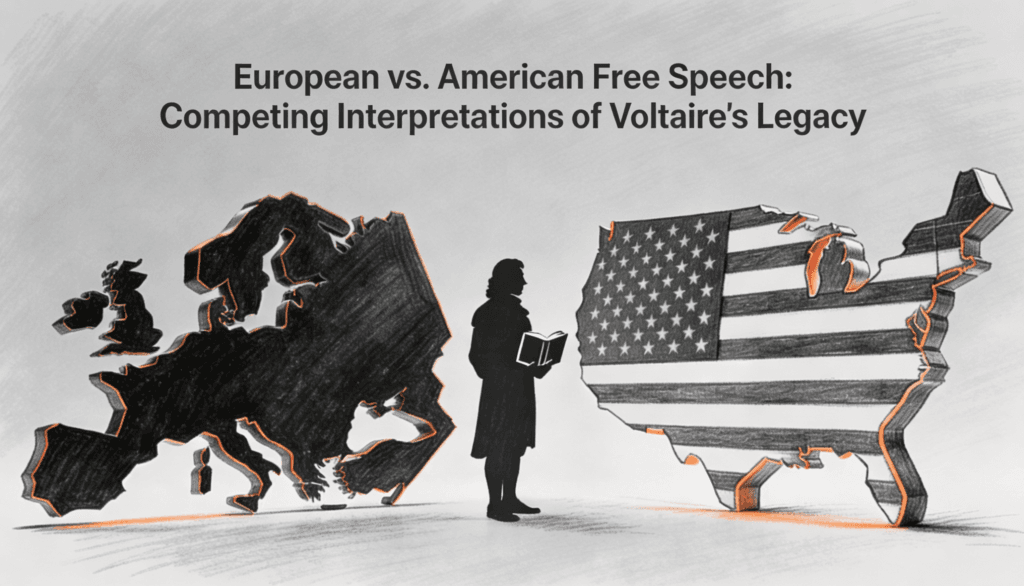
Against The People- Why Voltaire Feared the Mob More Than the Monarch

Against “The People”: Why Voltaire Feared the Mob More Than the Monarch

There is a comfortable story we tell ourselves about the Enlightenment. It goes something like this: brave thinkers stood up against kings and priests, championed the common people, and lit the fuse that would eventually explode into democracy. Voltaire sits near the center of this story, usually holding a quill and looking defiant. The problem

Against “The People”: Why Voltaire Feared the Mob More Than the Monarch Read More »

Content Overload? Why J.B. Say Proves There Is No Such Thing as Too Much Content

Content Overload? Why J.B. Say Proves There Is No Such Thing as “Too Much Content”

Every week, someone publishes a think piece about how we are drowning in content. Too many podcasts. Too many newsletters. Too many blogs saying the same thing in slightly different fonts. The internet, we are told, has become an ocean of noise where nothing meaningful can survive. It sounds reasonable. It even sounds wise. But

Content Overload? Why J.B. Say Proves There Is No Such Thing as “Too Much Content” Read More »

Morality is a Muscle Memory- Why You Do Not Think Your Way to Being Good

Morality is a Muscle Memory: Why You Do Not Think Your Way to Being Good

You probably believe you are a good person because you have thought carefully about right and wrong. You have weighed your options. You have reasoned through dilemmas. You have arrived at conclusions about justice, fairness, and decency through the disciplined application of your rational mind. David Hume would like a word. The Scottish philosopher, writing

Morality is a Muscle Memory: Why You Do Not Think Your Way to Being Good Read More »

Clausewitz the Minimalist- Why the Best Strategy is the One You Can Explain in Three Words

Clausewitz the Minimalist: Why the Best Strategy is the One You Can Explain in Three Words

Carl von Clausewitz wrote a book so dense that most people who quote it have never finished it. “On War” runs over 600 pages of Prussian military theory, nested clauses, and ideas that fold into themselves like origami made of fog. It is, by almost any measure, the opposite of minimalism. And yet the man’s

Clausewitz the Minimalist: Why the Best Strategy is the One You Can Explain in Three Words Read More »

Why Kant Would Tell You to Stop Finding Your Passion and Start Finding Your Duty

Why Kant Would Tell You to Stop “Finding Your Passion” and Start Finding Your Duty

There is a phrase that floats around self help culture like a benevolent ghost, showing up in graduation speeches, Instagram captions, and the bios of people who sell online courses. That phrase is “follow your passion.” It sounds noble. It sounds liberating. It sounds like the kind of advice that could never steer you wrong.

Why Kant Would Tell You to Stop “Finding Your Passion” and Start Finding Your Duty Read More »