Table of Contents
There is a strange contradiction at the heart of modern policy. Governments will subsidize corn, solar panels, electric vehicles, and even beekeeping. But the one institution that arguably produces more social good than any of these – marriage – gets almost nothing. No quarterly check for staying together. No tax rebate for making it past year seven. No bonus for raising kids under the same roof without filing for a custody battle.
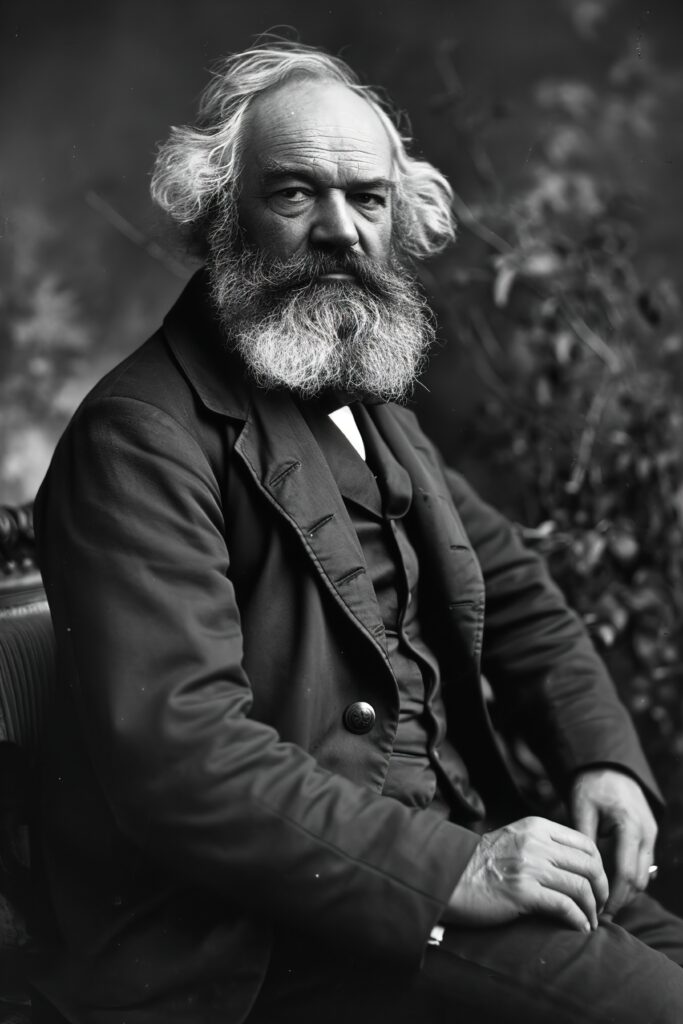
Gary Becker thought this was a mistake. Not in a sentimental way. Not because he believed in soulmates or thought divorce was a moral failing. Becker was an economist at the University of Chicago, and he looked at marriage the way most economists look at a factory. Inputs, outputs, efficiency, externalities. And when he ran the numbers, he came to a conclusion that sounds absurd until you actually think about it: society should pay people to stay married.
Before you dismiss this as cold or reductive, consider that Becker won a Nobel Prize for applying economic thinking to areas most economists refused to touch – family, crime, discrimination, addiction. He was not interested in being polite about it. He was interested in being right.
Marriage as a Firm
Becker’s foundational insight was deceptively simple. Marriage is a partnership that produces things neither person could produce as efficiently alone. Not just children, though children are the most obvious product. Marriage produces shared housing, pooled insurance against bad luck, economies of scale in cooking and cleaning, emotional stability, better health outcomes, and a built in accountability structure that makes people behave slightly less recklessly than they otherwise would.
Think of it like a small business. Two people merge their operations. They specialize. One might focus on earning income while the other manages the household, or both might earn income but split domestic tasks in a way that reduces total effort. The result is a surplus. Both partners end up better off than they would be separately, at least in theory.
This is what Becker called household production theory. A married couple is not just two people who love each other. They are a production unit. And like any production unit, they generate value – not just for themselves, but for the people around them.
Here is where the argument for subsidies begins. When a factory produces steel, it also produces pollution. Economists call that a negative externality. But when a factory produces something that benefits the surrounding community without charging for it – cleaner air from a reforestation project, say – that is a positive externality. Marriage, Becker argued, is loaded with positive externalities.
The Externality Problem
Children raised by married parents tend to perform better in school, commit fewer crimes, earn higher incomes, and require less government assistance. These are not controversial claims. Decades of data support them. You can argue about causation versus correlation, and people do, but the pattern is remarkably consistent across countries, cultures, and time periods.
Now, the married couple raising those children does not get paid for producing a future taxpayer who stays out of prison and contributes to the economy. They bear the costs of staying together – the compromises, the arguments about whose turn it is to empty the dishwasher, the slow erosion of personal freedom that comes with any long term commitment. But the benefits spill over to everyone else. The neighborhood is safer. The schools function better. The social safety net is less strained.
This is a textbook case for a subsidy. When private actors produce public goods but cannot capture the full value of what they produce, the market under provides those goods. We subsidize flu vaccines for the same reason. Your decision to get vaccinated protects not just you but the person sitting next to you on the bus. Marriage, in Becker’s framework, works the same way. Your decision to stay married protects not just your kids but the community your kids grow up in.
The irony is thick. We live in a culture that celebrates individual choice above almost everything else, but the choices that generate the most collective benefit – staying in a committed partnership, raising children in a stable home – receive the least financial encouragement. Meanwhile, we pour public money into programs designed to fix problems that stable marriages would have prevented in the first place. It is like refusing to maintain a bridge and then spending ten times as much on emergency repairs after it collapses.
Why People Divorce (and Why It Matters Economically)
Becker did not view divorce as a moral failure. He viewed it as an information problem. When two people marry, they are making a bet on the future based on incomplete information. They do not know how their partner will change. They do not know what economic shocks will hit them. They do not know whether the person who seemed like a perfect match at 25 will still feel like one at 45.
When the expected gains from staying married fall below the expected gains from leaving, people leave. This is not cynical. It is just how decisions work. Love is real, but love operates within constraints. Financial stress is the most commonly cited factor in divorce, not falling out of love. When the economic foundation cracks, everything built on top of it starts to wobble.
This matters because many divorces are what economists would call inefficient. Both parties end up worse off. The children end up worse off. The community ends up worse off. But in the moment of crisis, each individual is acting rationally given their circumstances. They cannot see the full picture of costs and benefits because many of those costs – the impact on children, the strain on public services, the ripple effects through social networks – are externalized.
A subsidy, in this framework, is not a bribe to stay in a bad marriage. It is a correction for a market failure. It shifts the calculation just enough to keep some marriages intact that would otherwise dissolve under financial pressure. Not all marriages. Not abusive marriages. Not marriages that are genuinely beyond repair. But the marginal marriages – the ones teetering on the edge where a few thousand dollars a year might be the difference between working it out and giving up.
The Counterintuitive Math
Here is something most people do not think about. Divorce is extraordinarily expensive, and not just for the people involved. A single divorce in the United States generates an estimated cost to taxpayers of roughly $30,000 when you account for increased use of social services, higher rates of childhood poverty, greater demand on the legal system, and reduced tax revenue from two now separate and less efficient households. Some estimates put it higher.
If a modest marriage subsidy – say, $2,000 to $5,000 per year – could prevent even a fraction of divorces, the math works out in society’s favor. You do not need to prevent all divorces. You do not even need to prevent most of them. You just need to prevent enough to offset the cost of the subsidy itself. Given the cascading expenses of family dissolution, the threshold is surprisingly low.
This is the same logic behind preventive healthcare. It is cheaper to give someone a blood pressure medication than to treat their stroke. It is cheaper to subsidize a marriage than to subsidize the aftermath of its collapse.
The Objections (and Why They Are Only Half Right)
The most common objection is that you cannot put a price on love. This is true in the same way that you cannot put a price on clean air. But we do put a price on clean air, through carbon credits and environmental regulations, because the alternative is letting it deteriorate until the cost of fixing it becomes unbearable. The fact that something is sacred does not mean it exists outside of economic reality.
A second objection is that subsidies would incentivize people to stay in bad or abusive marriages. This is a serious concern, but it is also a design problem, not a conceptual one. You can structure subsidies to exclude situations involving documented abuse. You can tie them to couples counseling or relationship education. You can make them conditional on mutual agreement rather than automatic. The existence of bad edge cases does not invalidate the general principle, any more than the existence of welfare fraud invalidates the concept of a social safety net.
A third objection, more subtle, is that marriage subsidies would be regressive. Wealthy couples do not need the money, and poor couples face problems that a few thousand dollars will not solve. But this misunderstands the target. The subsidy is not aimed at the very rich or the very poor. It is aimed at the middle – the couples earning enough to get by but not enough to weather a financial storm without serious strain. These are the marriages most vulnerable to economic shocks, and these are the marriages where a modest financial cushion could make the biggest difference.
There is something worth connecting here to a completely different domain: employee retention. Companies discovered decades ago that it is far cheaper to keep an existing employee than to recruit and train a new one. The cost of turnover – lost institutional knowledge, reduced team cohesion, the disruption of onboarding – dwarfs the cost of a retention bonus or a better benefits package. Marriage operates on the same principle. The cost of dissolution dwarfs the cost of maintenance. Yet we invest almost nothing in maintenance and spend fortunes cleaning up the wreckage.
What Becker Got Right (and What He Missed)
Becker’s analysis was brilliant in its clarity but limited in its scope. He treated marriage primarily as an economic arrangement, which gave him analytical power but also blinded him to dimensions of partnership that resist quantification. The emotional labor of sustaining a relationship, the psychological toll of staying in one that has stopped growing, the way identity and autonomy interact with commitment – these things matter, and they do not fit neatly into a production function.
He also underestimated how much marriage itself has changed. When Becker was writing his foundational work in the 1970s and 1980s, marriage was still largely organized around specialization. One partner earned, the other managed the home. The gains from trade were obvious. But as women entered the workforce in large numbers and gender roles shifted, the economic logic of marriage changed. The gains from specialization shrank. The gains from companionship and emotional partnership grew. A subsidy designed for the old model might not work for the new one.
But the core insight survives. Marriage still produces enormous positive externalities. Society still free rides on the stability that married couples provide. And the gap between private costs and public benefits still represents a market failure that policy could, in theory, correct.
The Real Question
The real question is not whether relationship subsidies would work. It is whether we are willing to treat marriage as a matter of public interest rather than purely private choice. We already do this with education, healthcare, and housing. We recognize that individual decisions in these areas have collective consequences, and we use public funds to nudge those decisions in directions that benefit everyone.
Marriage is the last frontier of this logic. It remains wrapped in a protective layer of romantic ideology that resists economic reasoning. We want to believe that love should be enough. That commitment is its own reward. That the government has no business meddling in matters of the heart.
But Becker would point out, with the calm precision of a man who spent his career making people uncomfortable with the truth, that love is not always enough. That commitment has costs. And that when private actors bear costs that produce public benefits, the economically rational thing to do is help them bear those costs.
Paying people to stay married sounds crass. It sounds like something a society would do only after it had given up on romance entirely. But look at it from the other direction. We already pay for the consequences of family instability – through welfare programs, criminal justice spending, mental health services, and lost economic productivity. We just pay after the fact, when the damage is already done and the costs are at their highest.
Maybe the crass thing is not subsidizing marriage. Maybe the crass thing is refusing to, and then pretending surprise when the bill comes due.