Entrepreneurship

Every founder eventually hits a question that no business book can answer. Why does success feel empty? Why do smart people build stupid systems? Why does the market reward people who take risks but punish the ones who fail? Intellectual Prestige writes about entrepreneurship at the level where economics meets philosophy – where Say’s theory of production meets Seneca’s advice on resilience, and where the difference between a good founder and a great one is not a skill set but a worldview.

The Intellectual Class vs. The Entrepreneur- The Eternal Cold War

The Intellectual Class vs. The Entrepreneur: The Eternal Cold War

There is a peculiar war that has been raging for centuries. It does not involve armies or territories. No shots are fired. No treaties are signed. Yet its consequences shape economies, cultures, and the very fabric of how societies organize themselves. This is the war between the intellectual class and the entrepreneur. And the man […]

The Intellectual Class vs. The Entrepreneur: The Eternal Cold War Read More »
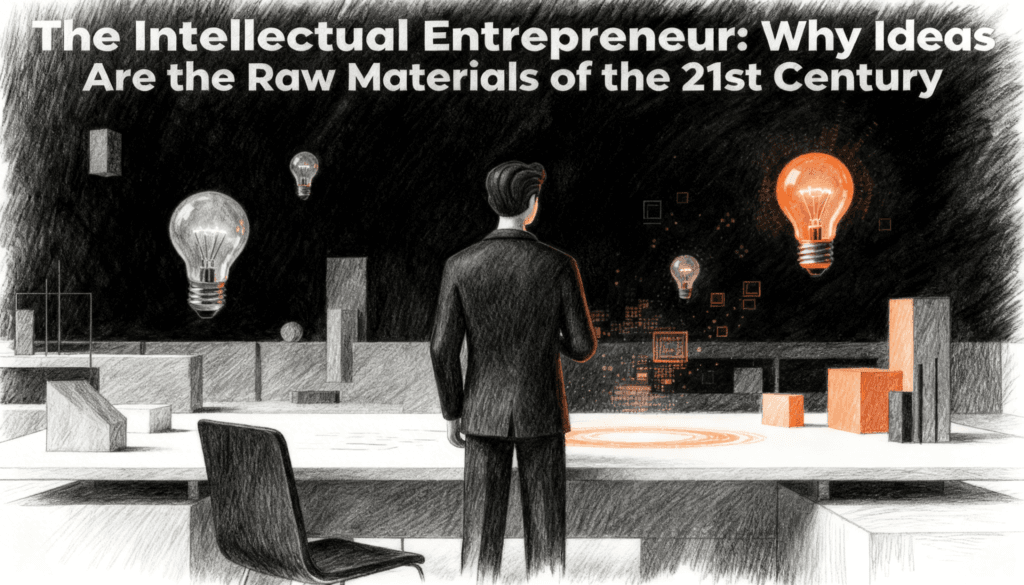
The Intellectual Entrepreneur- Why Ideas Are the Raw Materials of the 21st Century

The Intellectual Entrepreneur: Why Ideas Are the Raw Materials of the 21st Century

In 1803, a French economist named Jean-Baptiste Say made a claim that most people ignored for about two hundred years. He argued that the entrepreneur’s real job was not to own land or accumulate capital. It was to combine knowledge, judgment, and imagination into something the world did not yet know it needed. He called

The Intellectual Entrepreneur: Why Ideas Are the Raw Materials of the 21st Century Read More »

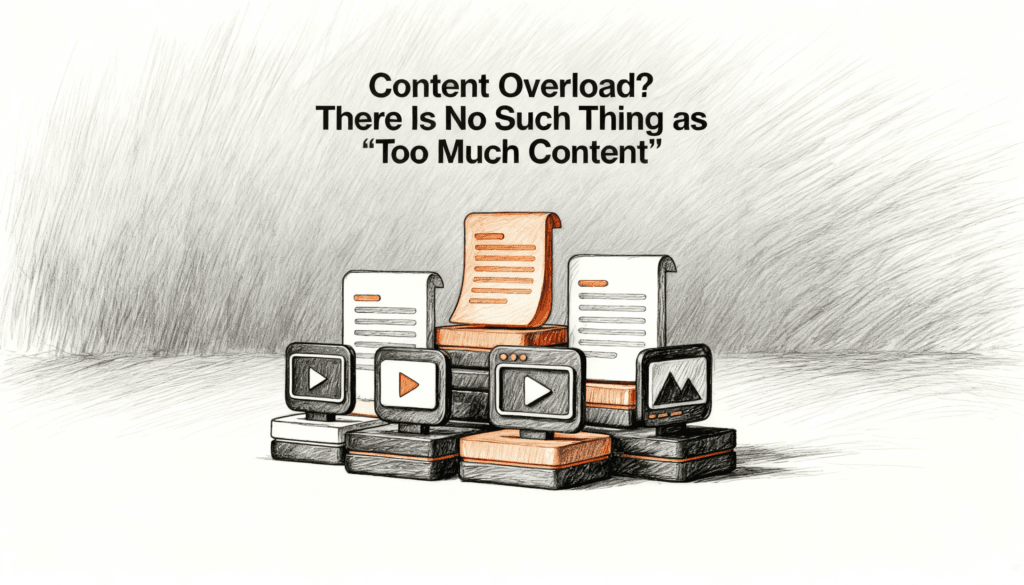
Content Overload? Why J.B. Say Proves There Is No Such Thing as Too Much Content

Content Overload? Why J.B. Say Proves There Is No Such Thing as “Too Much Content”

Every week, someone publishes a think piece about how we are drowning in content. Too many podcasts. Too many newsletters. Too many blogs saying the same thing in slightly different fonts. The internet, we are told, has become an ocean of noise where nothing meaningful can survive. It sounds reasonable. It even sounds wise. But

Content Overload? Why J.B. Say Proves There Is No Such Thing as “Too Much Content” Read More »

Clausewitz the Minimalist- Why the Best Strategy is the One You Can Explain in Three Words

Clausewitz the Minimalist: Why the Best Strategy is the One You Can Explain in Three Words

Carl von Clausewitz wrote a book so dense that most people who quote it have never finished it. “On War” runs over 600 pages of Prussian military theory, nested clauses, and ideas that fold into themselves like origami made of fog. It is, by almost any measure, the opposite of minimalism. And yet the man’s

Clausewitz the Minimalist: Why the Best Strategy is the One You Can Explain in Three Words Read More »

The Billionaire Philosopher- What Voltaire's Wealth Teaches Us About Modern Independence

The Billionaire Philosopher: What Voltaire’s Wealth Teaches Us About Modern Independence

Most people know Voltaire as the sharp tongued French philosopher who mocked the church, irritated monarchs, and wrote Candide. Fewer people know he was also spectacularly rich. Not comfortable. Not well off. Rich in a way that would make modern tech founders pause and do the math. By the time of his death in 1778,

The Billionaire Philosopher: What Voltaire’s Wealth Teaches Us About Modern Independence Read More »

Why ChatGPT Is the New Steam Engine of the Intellectual Class

Why ChatGPT Is the New “Steam Engine” of the Intellectual Class

In 1821, David Ricardo did something unusual for an economist who had spent his career defending machinery. He changed his mind. In the third edition of his Principles of Political Economy and Taxation, he added a new chapter titled “On Machinery,” in which he admitted that the introduction of machines could, in fact, hurt workers.

Why ChatGPT Is the New “Steam Engine” of the Intellectual Class Read More »

Why Friedrich Nietzsche Thought Suffering Is Essential for Greatness

Why Friedrich Nietzsche Thought Suffering Is Essential for Greatness

There is a particular kind of advice that floats around modern culture like a bad perfume. It goes something like this: eliminate stress, avoid discomfort, optimize for happiness. Download this app. Try this breathing technique. Remove toxic people. Curate your environment until nothing scratches you. Friedrich Nietzsche would have found this absolutely pathetic. Not because

Why Friedrich Nietzsche Thought Suffering Is Essential for Greatness Read More »