Economics

The best economic thinking was never just about money. It was about incentives, power, human nature, and the invisible rules that make some people rich and others stuck. At Intellectual Prestige, we publish original essays that connect foundational economic theory – from Ricardo’s trade models to Becker’s analysis of everything – to the financial decisions, career strategies, and policy debates that shape your daily life.

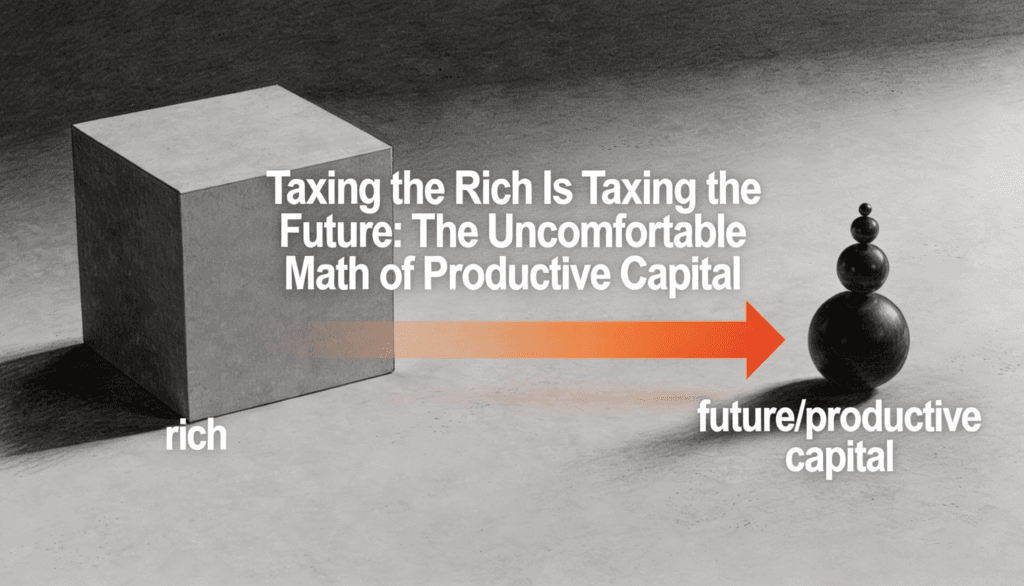
Taxing the Rich Is Taxing the Future- The Uncomfortable Math of Productive Capital

Taxing the Rich Is Taxing the Future: The Uncomfortable Math of Productive Capital

There is a recurring fantasy in democratic politics. It goes something like this: somewhere out there, a small group of extraordinarily wealthy people are sitting on mountains of cash, and if we could just reach into those mountains and redistribute the gold, most of our collective problems would dissolve. Schools would be funded. Healthcare would […]

Taxing the Rich Is Taxing the Future: The Uncomfortable Math of Productive Capital Read More »
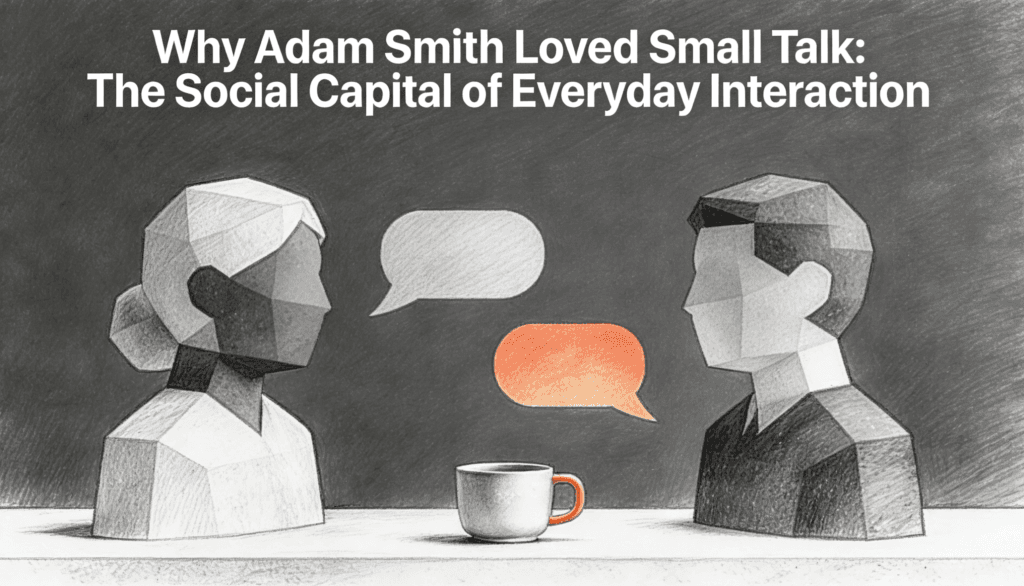
Why Adam Smith Loved Small Talk- The Social Capital of Everyday Interaction

Why Adam Smith Loved Small Talk: The Social Capital of Everyday Interaction

Adam Smith is mostly remembered as the man who explained markets. The invisible hand, the pin factory, the butcher and the brewer pursuing self interest while accidentally feeding the nation. Most people who quote him have not read him, and most people who have read him stopped at The Wealth of Nations. That is a

Why Adam Smith Loved Small Talk: The Social Capital of Everyday Interaction Read More »

Why We Should Charge People to Protest- The Economics of Civil Disobedience

Why We Should Charge People to Protest: The Economics of Civil Disobedience

There is something deeply uncomfortable about putting a price tag on moral outrage. Which is precisely why Gary Becker thought we should do it. Becker, the Nobel laureate who spent his career dragging economics into places it was not invited, had a talent for making people squirm. He applied cost benefit analysis to marriage, crime,

Why We Should Charge People to Protest: The Economics of Civil Disobedience Read More »

Why Markets Are More Fair Than Democracy- The Kirznerian View

Why Markets Are More Fair Than Democracy: The Kirznerian View

Most people assume democracy is the fairest system humans have invented. Markets, by contrast, get treated like a necessary evil. We tolerate them the way we tolerate a loud neighbor. Useful, maybe, but not exactly noble. Israel Kirzner would disagree. Not politely, either. Kirzner, an economist who spent decades at New York University, built a

Why Markets Are More Fair Than Democracy: The Kirznerian View Read More »

Why Resource-Rich Countries Stay Poor- The Modern Dutch Disease Re-examined

Why Resource-Rich Countries Stay Poor: The Modern Dutch Disease Re-examined

There is something deeply strange about a country that discovers oil and then watches its people get poorer. Not strange in the way a magic trick is strange, where you know something clever happened behind the curtain. Strange in the way a fire extinguisher that sprays gasoline is strange. The mechanism that should fix the

Why Resource-Rich Countries Stay Poor: The Modern Dutch Disease Re-examined Read More »

Alfred North Whitehead vs. John Maynard Keynes- The Process View of Liquidity

Alfred North Whitehead vs. John Maynard Keynes: The Process View of Liquidity

Most people think of liquidity as a simple idea. You either have cash or you do not. Your assets either sell quickly or they sit there gathering dust. But two of the twentieth century’s sharpest minds saw something far stranger lurking inside this concept. One was a mathematician turned philosopher. The other was an economist

Alfred North Whitehead vs. John Maynard Keynes: The Process View of Liquidity Read More »

Privatize Everything- Why Even the Police and Fire Departments Should Be Competitive

Privatize Everything: Why Even the Police and Fire Departments Should Be Competitive

There is a thought experiment that most people refuse to take seriously. Not because it fails on logic, but because it attacks something almost sacred. The idea is simple: what if the government did not run the police? What if it did not run the fire department? What if these services, like your morning coffee

Privatize Everything: Why Even the Police and Fire Departments Should Be Competitive Read More »

The Economics of Beauty- Why the Pretty Premium Is the Most Persistent Form of Inequality

The Economics of Beauty: Why the “Pretty Premium” Is the Most Persistent Form of Inequality

There is a tax nobody voted for, no legislature passed, and no court has ever struck down. It is levied at birth, collected daily, and its rates are set by the wandering eyes of strangers. Economists call it the beauty premium. The rest of us just call it life. Gary Becker spent his career dragging

The Economics of Beauty: Why the “Pretty Premium” Is the Most Persistent Form of Inequality Read More »

Why Universal Basic Income (UBI) Is an Economic Dead End- A Sayian Critique of Money for Nothing

Why Universal Basic Income (UBI) Is an Economic Dead End: A Sayian Critique of Money for Nothing

Jean-Baptiste Say never heard of Universal Basic Income. He died in 1832, long before anyone seriously proposed handing every citizen a monthly check just for existing. But if you could resurrect the French economist and sit him down with a pamphlet on UBI, his reaction would probably land somewhere between a polite cough and a

Why Universal Basic Income (UBI) Is an Economic Dead End: A Sayian Critique of Money for Nothing Read More »