Table of Contents
There is something deeply strange about a country that discovers oil and then watches its people get poorer. Not strange in the way a magic trick is strange, where you know something clever happened behind the curtain. Strange in the way a fire extinguisher that sprays gasoline is strange. The mechanism that should fix the problem is the problem.
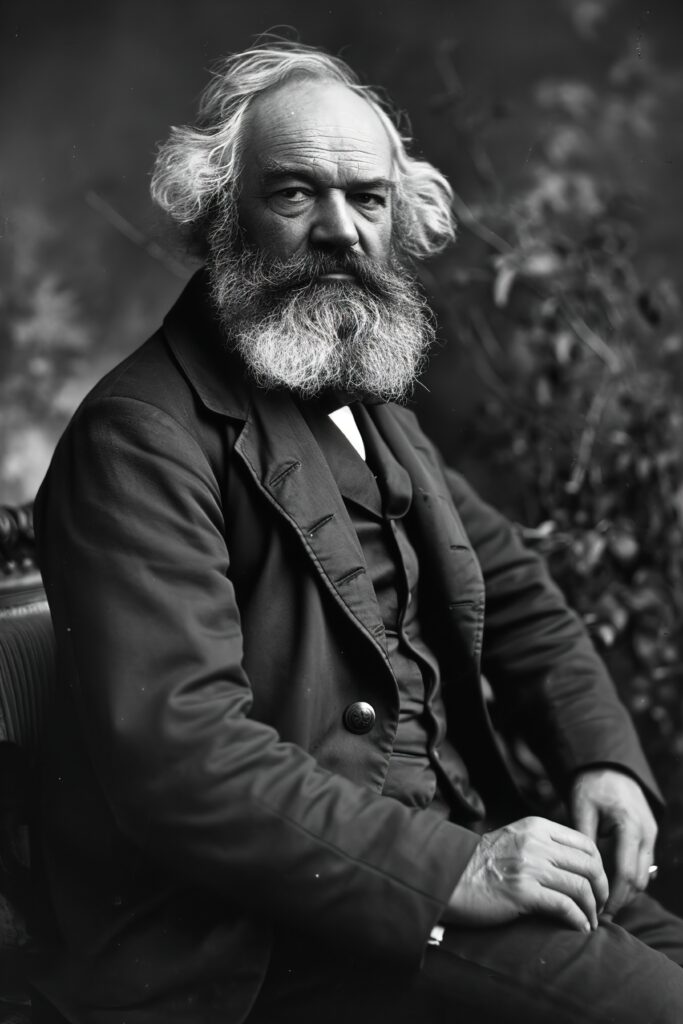
This is the territory Nicholas Kaldor mapped decades ago, long before economists gave it the polite label of “Dutch Disease.” And while the term itself comes from the Netherlands’ experience with natural gas in the 1960s, the underlying logic Kaldor explored is far older, far more brutal, and far more relevant today than most policy discussions acknowledge.
Let us start with the obvious question. If a country finds vast reserves of oil, gas, copper, diamonds, or lithium beneath its soil, why would that country not simply become rich? The answer, as Kaldor’s framework helps us see, is that wealth from the ground and wealth from the factory floor are fundamentally different animals. One of them builds nations. The other, left unmanaged, hollows them out.
The Anatomy of a Curse
The basic mechanics of Dutch Disease are not complicated. A country discovers a valuable natural resource. Foreign currency floods in as that resource gets exported. The local currency appreciates. Suddenly, everything else the country used to export becomes expensive on world markets. Farmers cannot sell their crops abroad. Manufacturers cannot compete. The sectors that once employed millions of people slowly wither, not because they did anything wrong, but because geology blessed the country with something more immediately lucrative.
Kaldor would have recognized this pattern instantly, though he would have framed it differently. For Kaldor, the critical engine of long term economic development was manufacturing. Not because he had some romantic attachment to factory smokestacks, but because manufacturing possessed unique properties that no other sector could replicate. Manufacturing exhibited increasing returns to scale. It generated learning by doing. It created dense networks of suppliers and skills. It was, in Kaldor’s view, the sector where productivity growth actually lived.
When resource wealth kills manufacturing, it does not just eliminate jobs. It eliminates the mechanism through which an economy learns to become more productive over time. This is the part most casual discussions of Dutch Disease miss entirely. The damage is not about today’s unemployment numbers. It is about tomorrow’s capacity to grow.
Think of it this way. A country’s manufacturing sector is like a muscle. Resource wealth is like a motorized wheelchair. The wheelchair gets you where you need to go right now, perhaps even faster than walking. But your legs atrophy. And when the wheelchair breaks down, as commodity prices inevitably crash, you cannot stand up.
Kaldor’s Deeper Insight
What made Kaldor’s thinking on this subject more penetrating than the standard Dutch Disease narrative was his insistence on cumulative causation. Economies, in Kaldor’s framework, do not sit in neat equilibrium. They spiral. Success breeds success. Failure breeds failure.
A country that develops a strong manufacturing base attracts more skilled workers, which increases productivity, which makes its exports more competitive, which generates more revenue for investment, which further strengthens the manufacturing base. This is a virtuous circle. Kaldor borrowed and refined this idea from Gunnar Myrdal, and it became one of the most important concepts in development economics.
Now reverse the process. A country that loses its manufacturing base due to an overvalued currency sees skilled workers emigrate. Productivity stagnates. Investment flows toward the resource sector, which needs relatively few workers. The tax base narrows. Public services degrade. The remaining non-resource economy becomes less competitive, which pushes more capital and labor into resource extraction, which further narrows the economic base.
This is not a one-time shock. It is a self-reinforcing decline. And this is precisely why so many resource-rich developing nations find themselves trapped. They are not simply dealing with a policy mistake that can be corrected with the right exchange rate adjustment. They are caught in a structural spiral that actively resists reversal.
Nigeria is perhaps the most cited example. Before oil dominated its economy, Nigeria had a growing agricultural sector that employed the vast majority of its population and generated significant export revenue. By the 1980s, agriculture’s share of GDP had collapsed. The country that once exported palm oil, cocoa, and groundnuts became a food importer. Decades of oil revenue later, per capita income remains stubbornly low and income inequality has widened. The oil did not create prosperity. It redistributed opportunity away from the many and toward the few who controlled the taps.
The Political Dimension Kaldor Would Not Ignore
Kaldor was never a purely abstract thinker. He advised governments. He understood that economic structures shape political incentives, and political incentives shape economic structures right back. This feedback loop is nowhere more visible than in resource-dependent states.
When a government’s revenue comes primarily from taxing citizens and businesses, that government has a structural incentive to make citizens and businesses productive. More productive citizens mean more tax revenue. This creates, however imperfectly, a kind of accountability.
When a government’s revenue comes primarily from selling resources on international markets, that accountability link snaps. The government does not need its citizens to be productive. It needs them to be compliant. Resource wealth flows through the state apparatus, and whoever controls the state controls the wealth. Politics becomes a zero-sum contest for resource rents rather than a negotiation over how to grow the pie.
This is why resource-rich countries so often develop what political scientists call rentier state dynamics. Authoritarian tendencies. Corruption. Patronage networks. Weak institutions. These are not cultural failings. They are rational responses to a specific set of economic incentives. When the fastest path to wealth runs through the ministry of petroleum rather than through building a business, people will line up at the ministry.
Kaldor would have pointed out that this political deformation further undermines the possibility of manufacturing-led development. You cannot build a competitive manufacturing sector without reliable infrastructure, competent bureaucracy, predictable regulation, and investment in education. These are precisely the public goods that rentier states are worst at providing.
The Counter-Intuitive Success Stories
If the logic of the resource curse were truly inescapable, then every resource-rich country would be poor. They are not. Norway sits on enormous oil wealth and consistently ranks among the most prosperous and equal societies on earth. Botswana built one of Africa’s strongest economies on diamond revenues. Australia and Canada have thrived despite heavy dependence on resource exports.
What separates the successes from the failures is not luck. It is institutional design, implemented before or during the early stages of resource exploitation.
Norway established its Government Pension Fund, commonly known as the oil fund, which channels resource revenues into foreign investments rather than domestic spending. This accomplishes two things simultaneously. It prevents the currency appreciation that would kill other export sectors. And it converts a depleting underground asset into a permanent above-ground financial asset. Norway effectively solved the Dutch Disease problem by refusing to spend most of its resource wealth domestically.
Botswana, more remarkably, managed this trick as a low-income country. It negotiated favorable terms with De Beers, channeled diamond revenues into infrastructure and education, maintained fiscal discipline, and built institutions that, while not perfect, were strong enough to resist the worst forms of rent-seeking.
But notice what both success stories share. They required governments to act against their own short term interests. To save rather than spend. To invest in sectors that would not generate revenue for decades. To build institutions that constrain the very people building them. This is extraordinarily difficult, and it is why the failures vastly outnumber the successes.
The Modern Mutation
Here is where the story takes a contemporary turn that Kaldor could not have fully anticipated but would have understood immediately.
The new Dutch Disease does not always come from oil or diamonds. It can come from foreign aid. It can come from remittances. It can come from any large, sustained inflow of foreign currency that is not tied to the productivity of the domestic economy.
Consider a country that receives massive development aid. The foreign currency flows in. The local currency appreciates. Local manufacturers lose competitiveness. The economy restructures around the aid industry rather than around productive sectors. Sound familiar? The mechanism is identical to classical Dutch Disease, just wearing different clothes.
Some economists have made a similar argument about remittances. Countries where a significant portion of the workforce has emigrated and sends money home experience currency appreciation and declining competitiveness in tradable goods. The Philippines, for instance, has built substantial parts of its economy around labor export and the remittances that flow back. Whether this constitutes a form of Dutch Disease is debated, but the structural similarities are hard to dismiss.
There is even an argument, more speculative but intellectually provocative, that the current scramble for critical minerals like lithium, cobalt, and rare earths is setting up a new generation of resource curse victims. The Democratic Republic of Congo sits atop the world’s largest cobalt reserves. Cobalt is essential for the batteries powering the electric vehicle revolution. If history is any guide, and Kaldor’s framework suggests it is, this geological fortune could easily become another developmental trap unless the institutional groundwork is laid now.
What Would Kaldor Prescribe?
Kaldor was not shy about policy recommendations. He believed in active industrial policy. He believed governments had a role in steering economies toward manufacturing and away from excessive dependence on primary commodities. He would likely have endorsed several interventions that remain controversial today.
First, manage the exchange rate. Do not let resource revenues drive the currency to levels that destroy other export sectors. This might mean capital controls, sovereign wealth funds, or sterilization of foreign exchange inflows. It is not fashionable advice in an era of free capital mobility, but Kaldor was never particularly interested in fashion.
Second, tax resource extraction heavily and invest the proceeds in manufacturing capability. This means education, infrastructure, research, and all the unglamorous inputs that make an economy capable of producing things the world wants to buy.
Third, build institutions before the resource boom, not after. Once the money starts flowing, the political incentives to capture rents rather than build capacity become overwhelming. The window for institutional reform is narrow and early.
Fourth, and this is perhaps the most Kaldorian prescription of all, protect the manufacturing sector explicitly. Use tariffs, subsidies, or whatever policy tools are available to prevent the premature deindustrialization that resource wealth induces. This directly contradicts the free trade orthodoxy that has dominated international economic policy for decades. But Kaldor would have argued, and the evidence increasingly supports him, that comparative advantage in raw materials is not the same as comparative advantage in development.
The Uncomfortable Bottom Line
The resource curse is not really about resources. It is about what resources do to the structure of an economy and the incentives of the people who govern it. The countries that stay poor despite their geological wealth are not victims of bad luck. They are victims of a predictable, well understood economic mechanism that we collectively choose not to address.
Every few years, a new resource boom begins somewhere in the developing world. The cruelest irony of the resource curse is that the countries most in need of the revenue are the ones least equipped to manage it. And the countries best equipped to manage it are the ones that least need it. That asymmetry, more than any geological fact, is what keeps resource-rich countries poor.
Understanding Kaldor does not solve the problem. But it makes the problem impossible to ignore. And in a world that seems determined to repeat the same mistakes with every new mineral discovery, that might be the most valuable resource of all.