Table of Contents
There is something deeply uncomfortable about putting a price tag on moral outrage. Which is precisely why Gary Becker thought we should do it.
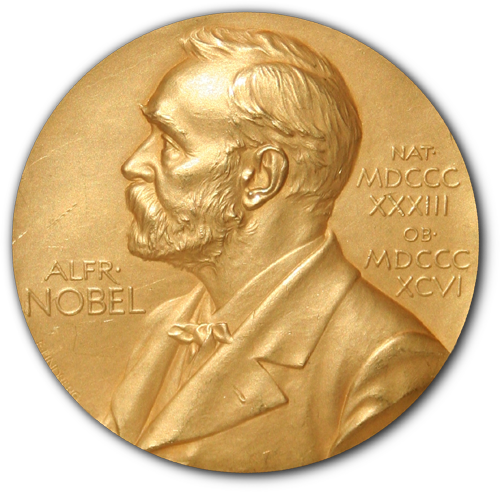
Becker, the Nobel laureate who spent his career dragging economics into places it was not invited, had a talent for making people squirm. He applied cost benefit analysis to marriage, crime, discrimination, and addiction. He treated human beings not as noble creatures driven by passion and principle, but as calculating agents who respond to incentives. And when he turned his attention to protest and civil disobedience, he asked a question that most political philosophers would find offensive: what if we just made people pay for it?
The idea sounds monstrous at first. Charging people to march in the streets feels like something a dystopian novelist would dream up after a particularly bad day. But Becker was not writing dystopia. He was writing economics. And the distinction matters more than you might think.
The Logic Behind the Provocation
To understand Becker, you have to understand his method. He did not start with values. He started with behavior. His framework, sometimes called the economic approach to human behavior, rests on a deceptively simple claim: people respond to costs and benefits, even when they are acting on deeply held beliefs. Protesters are not exempt from this. They weigh the inconvenience of showing up, the risk of arrest, the social rewards of participation, and the emotional satisfaction of standing for something. They might not do this arithmetic consciously, but their behavior reveals the calculation.
Becker observed that protest imposes costs on society. Streets get blocked. Businesses lose revenue. Police departments redirect resources. Traffic grinds to a halt. These are what economists call externalities, costs borne by people who did not choose to participate. When a thousand people march down a city boulevard, the person stuck in traffic for two hours did not consent to that particular form of political expression.
So Becker proposed what economists always propose when externalities show up: make the people generating the costs internalize them. Charge a fee. Issue permits with price tags attached. Let the market sort out which causes are worth the disruption.
The logic is clean. The implications are a mess.
When You Price a Right, What Are You Really Selling?
Here is where things get interesting. Becker was not arguing that protest should be banned. He was arguing something more subtle and, in some ways, more radical. He was saying that the right to protest, like any other resource, has a cost, and pretending it does not have a cost does not make the cost disappear. It just shifts it onto someone else.
This is the same logic behind congestion pricing on highways. When roads are free, everyone uses them, and everyone sits in traffic. When you charge a toll, fewer people drive, and the ones who do value the trip enough to pay. The road works better. Economists love this story. It is elegant. It is efficient. And it completely ignores the fact that poor people might need to get to work too.
The parallel to protest is uncomfortable but instructive. If you charge people to march, you are essentially asking: how much do you care? The people who care enough to pay will show up. The ones who do not will stay home. The protest becomes a revealed preference mechanism, a way of separating genuine conviction from casual solidarity.
But there is a catch, and it is a big one. The ability to pay is not the same as the intensity of belief. A billionaire who finds a tax policy mildly annoying can afford to fund a massive demonstration. A minimum wage worker who is furious about police brutality might not be able to afford the permit fee. Pricing protest does not measure conviction. It measures wealth. And those are very different things.
Becker and the Ghost of Thoreau
It is worth pausing here to consider what civil disobedience actually means. Henry David Thoreau, who more or less invented the concept in its modern form, went to jail rather than pay a tax that supported slavery and the Mexican War. The whole point of his protest was that he was willing to bear the cost. He accepted punishment as the price of conscience.
In a strange way, Becker and Thoreau are not as far apart as they seem. Both recognized that protest has a cost. Thoreau thought bearing that cost was what gave protest its moral weight. Becker thought making that cost explicit was what gave protest its informational value. Thoreau was interested in virtue. Becker was interested in signals.
This is where the economics of civil disobedience gets genuinely fascinating. In signaling theory, which comes from the work of Michael Spence, an action is only a credible signal if it is costly. A college degree signals competence partly because it is expensive and time consuming to obtain. If degrees were free and took a weekend, they would signal nothing.
The same logic applies to protest. A march that costs nothing to join sends a weak signal. It might be full of people who showed up because the weather was nice and they had nothing better to do. A march that requires sacrifice, whether that sacrifice takes the form of money, time, risk of arrest, or social stigma, sends a much stronger signal. The costlier the protest, the more credible the message.
Becker, perhaps without fully intending to, stumbled onto a deep truth about political action. Making protest more costly might actually make it more powerful. The civil rights marchers who faced fire hoses and police dogs were not weakened by the cost they bore. They were strengthened by it. Their willingness to suffer was the argument.
The Uncomfortable Mathematics of Moral Action
Let us push this further. If protest is a signal, then what exactly is it signaling, and to whom?
In most democratic systems, protest serves as an information channel. It tells politicians, businesses, and the broader public that some group of people cares intensely about an issue. Voting happens once every few years. Protest happens in real time. It is a way of saying: this matters enough that we are willing to disrupt our own lives to make you notice.
But here is the problem with free protest. When the cost of participation is near zero, the signal gets noisy. Social media has made it trivially easy to join a cause. You can change your profile picture, sign an online petition, or retweet a hashtag without leaving your couch. This is what some critics call slacktivism, and while the term is a bit dismissive, the underlying observation has merit. When everyone can protest everything at no cost, the information content of any individual protest declines.
Becker might say this is exactly the problem that pricing would solve. A fee would filter out the noise and leave only the signal. The protests that survive the price barrier would be the ones driven by genuine, intense preference.
There is a perverse elegance to this argument. It is also, of course, deeply flawed.
The Flaws That Make the Theory Worth Studying
The most obvious flaw is distributional. Any pricing mechanism favors the wealthy. This is not a minor detail. It is a structural feature. Throughout history, the people who have needed protest most desperately have been the people with the least money. Charging for the right to demonstrate would effectively silence the populations most in need of a voice.
Becker was aware of this objection. He was not stupid. But his framework did not offer a clean solution to it, because the framework itself treats purchasing power as a proxy for preference intensity. If you cannot pay, the model interprets that as not caring enough. This is a limitation of the economic approach, not a refutation of it, but a limitation worth taking seriously.
The second flaw is more philosophical. Some rights are not supposed to be efficient. The right to free speech, the right to assemble, the right to petition the government: these exist not because they produce optimal outcomes but because they reflect a commitment to human dignity. Subjecting them to market logic is like running a cost benefit analysis on friendship. You can do it. The spreadsheet will be very impressive. But you will have missed the point entirely.
The third flaw is practical. Who sets the price? A government that controls the cost of protest controls the content of dissent. Authoritarian regimes would love this framework. Want to suppress opposition? Just raise the permit fee. The market mechanism becomes a censorship tool with better branding.
The Real Lesson
The economics of civil disobedience is not really about whether we should charge people to protest. That was always a thought experiment, a way of forcing us to confront assumptions we would rather leave unexamined.
The real lesson is about the relationship between cost and meaning. In a world where participation is frictionless, where you can support any cause from your phone while waiting for coffee, we face a strange new problem. Not that protest is too expensive, but that it might be too cheap. Not that too few people are involved, but that involvement has become so effortless that it has lost its signal value.
This is not an argument for making protest harder. It is an observation about what happens when we make everything easy. The civil rights movement worked not despite its costs but because of them. The suffragettes did not win the vote by signing petitions. They won it by going to prison, going on hunger strikes, and refusing to be convenient.
Becker, for all his cold eyed calculations, pointed us toward a truth that even the most passionate activist should take seriously. The things that cost us nothing are the things that change nothing. The power of protest lies not in its efficiency but in its sacrifice. You cannot optimize your way to justice. You have to pay for it. Not necessarily with money, but with something much harder to part with: comfort, safety, time, and the willingness to be inconvenienced by your own convictions.
In the end, Becker was right about the economics and wrong about the price. Protest should be costly. It should cost enough of yourself that the world has no choice but to take you seriously.
That is the kind of market correction no economist can put in a spreadsheet.