Contemporary

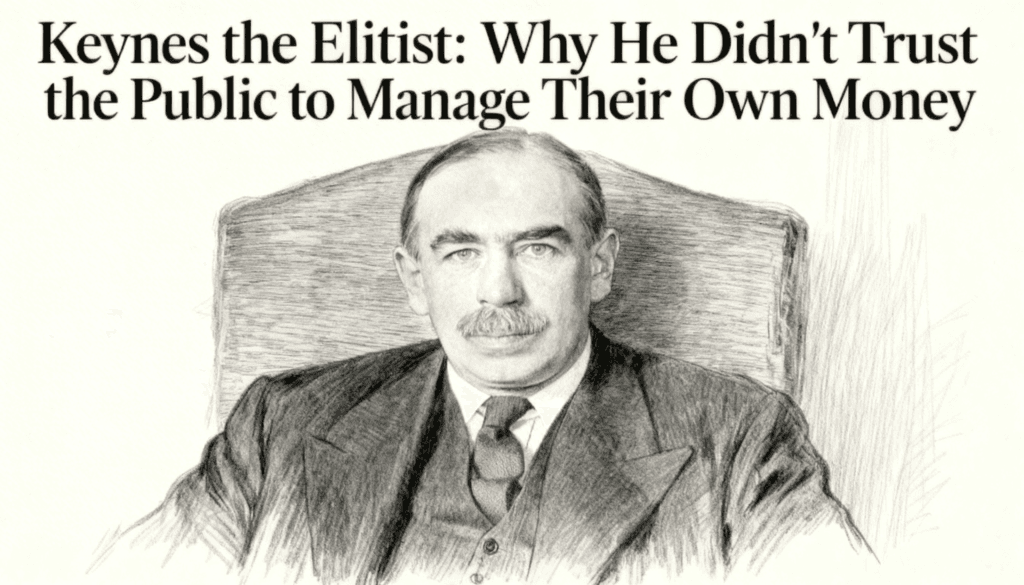
Keynes the Elitist- Why He Didn't Trust the Public to Manage Their Own Money

Keynes the Elitist: Why He Didn’t Trust the Public to Manage Their Own Money

John Maynard Keynes thought you were bad with money. Not you specifically. Everyone. The whole public. He believed that ordinary people, left to their own devices, would make financial decisions so poor that entire economies would collapse. And the frustrating part is that he was mostly right. This is the story of one of the […]

Keynes the Elitist: Why He Didn’t Trust the Public to Manage Their Own Money Read More »

Why the Most Alert Entrepreneurs are Often Social Outsiders (Israel Kirzner)

Israel Kirzner on Why the Most Alert Entrepreneurs are Often “Social Outsiders”

Everyone has walked past a gold mine at some point. The opportunity was there, sitting in plain sight, but we simply did not see it. Later, someone else noticed it and made millions. We slap our foreheads and wonder how we missed something so obvious. Israel Kirzner, an economist who spent decades studying what makes

Israel Kirzner on Why the Most Alert Entrepreneurs are Often “Social Outsiders” Read More »

Why You're Still Single- A Cost-Benefit Analysis of the Modern Dating Market (Gary Becker)

Gary Becker on Why You’re Still Single: A Cost-Benefit Analysis of the Modern Dating Market

You swipe left. You swipe right. You send clever messages into the void. You show up to coffee dates with people who looked better in their photos and told better stories in their bios. Six months later, you’re still doing the same dance. But here’s the twist: staying single might be the most rational decision

Gary Becker on Why You’re Still Single: A Cost-Benefit Analysis of the Modern Dating Market Read More »

Beyond Income Tax- Why We Should Be Taxing Your Lifestyle, Not Your Labor

Beyond Income Tax: Why We Should Be Taxing Your Lifestyle, Not Your Labor (Nicholas Kaldor)

Every April, millions of people experience the same ritual humiliation. They calculate how much money they earned through honest work, then watch roughly a third of it vanish into government coffers through income tax. Meanwhile, the person living off inherited wealth in the penthouse upstairs pays less tax than the janitor who cleans it. Something

Beyond Income Tax: Why We Should Be Taxing Your Lifestyle, Not Your Labor (Nicholas Kaldor) Read More »

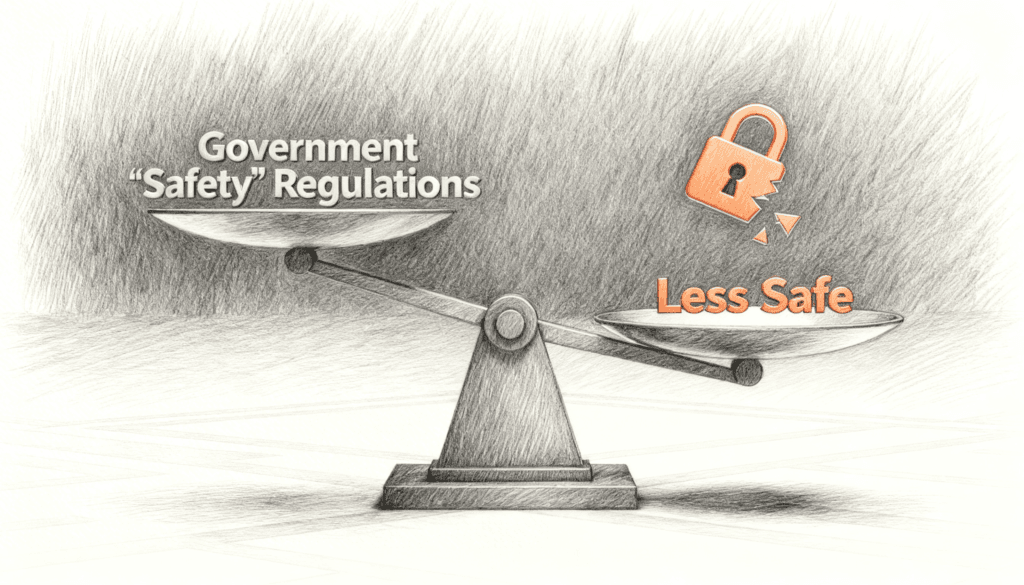
Stigler's Razor- If a Regulation Exists, Someone is Making Money Off It (George Stigler)

George Stigler’s Razor: If a Regulation Exists, Someone is Making Money Off It

The Story We Tell Ourselves About Regulation When you think about regulations, you probably imagine stuffy government bureaucrats protecting you from dangerous products or crooked businesses. That mental picture makes sense. After all, that is what we learn in school. Regulations exist to protect the little guy from the big bad corporation. They keep our

George Stigler’s Razor: If a Regulation Exists, Someone is Making Money Off It Read More »

Why We Judge Others by Their Actions but Ourselves by Our Intentions (Dan Ariely)

Dan Ariely on Why We Judge Others by Their Actions but Ourselves by Our Intentions

You cut someone off in traffic because your child is vomiting in the back seat and you need to pull over immediately. The other driver thinks you’re a selfish idiot. Later that week, someone cuts you off and you think they’re a selfish idiot. You have no idea they’re rushing to the hospital. This isn’t

Dan Ariely on Why We Judge Others by Their Actions but Ourselves by Our Intentions Read More »

The War of the Symbols- Why Hijabs, Flags, and Statues Matter More Than GDP

The War of the Symbols: Why Hijabs, Flags, and Statues Matter More Than GDP

Your economy is booming. Your GDP climbs every quarter. Jobs multiply like rabbits. And yet, people are fighting in the streets over a piece of cloth or a chunk of bronze from 1887. Welcome to the 21st century, where prosperity doesn’t buy peace and economic growth can’t compete with identity. Samuel Huntington saw this coming

The War of the Symbols: Why Hijabs, Flags, and Statues Matter More Than GDP Read More »

Credibility as Currency- Why Losing the Narrative is More Costly than Losing a Battle (Joseph Nye)

Credibility as Currency: Why Losing the “Narrative” is More Costly than Losing a Battle (Joseph Nye)

When Winning Looks Like Losing The tank is stuck in the mud. The general surveys the battlefield and sees his forces retreating. By every traditional measure, he has lost. But three thousand miles away, a different story appears on screens around the world. In this version, the retreat becomes a strategic repositioning. The stuck tank

Credibility as Currency: Why Losing the “Narrative” is More Costly than Losing a Battle (Joseph Nye) Read More »