Table of Contents
There is a particular kind of modern suffering that goes something like this. You feel stuck. You feel anxious. You feel like something is wrong with the way you are moving through the world, and so you do what every reasonable adult does. You book a therapist. You sit on a couch, or more likely a video call, and you describe your childhood to a kind stranger who nods professionally and asks how that made you feel.
A few months pass. You have insights. You have language for things. You know your attachment style, your trauma responses, your inner critic. You can name the wound.
And yet, somehow, you are still the same person making the same decisions.
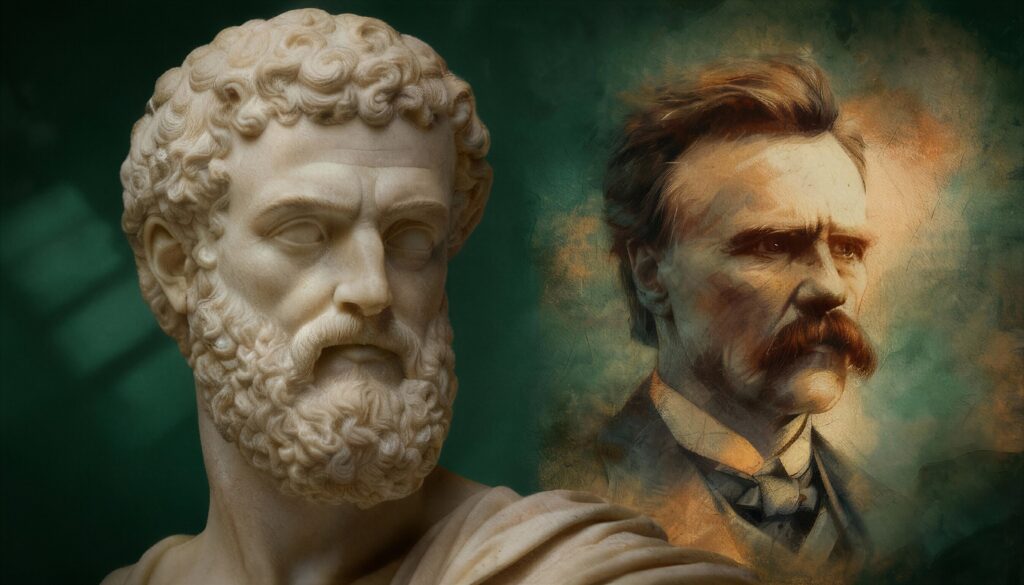
Seneca, writing letters to a young friend named Lucilius almost two thousand years ago, would not have been surprised. He would have had a guess about what was missing. Not insight. Not validation. Not even healing, whatever that word has come to mean. What you were missing was someone to walk in front of you.
You did not need a therapist. You needed a mentor.
The Difference Nobody Talks About
Let us be clear about something before going further. This is not an argument against therapy. Therapy is a real tool, and for people dealing with serious mental illness, trauma, or crisis, it can be the difference between functioning and not functioning. If you are drowning, you do not need a philosophy lecture. You need someone to pull you out of the water.
But most of us are not drowning. Most of us are standing on dry land, perfectly capable of walking, and we have convinced ourselves that we cannot move until we fully understand why our legs feel heavy.
This is where Seneca gets interesting. He spent years writing letters to Lucilius, and what he was doing in those letters was not therapy. He was not asking Lucilius to dig into his childhood. He was not validating his feelings. He was not even particularly gentle, much of the time. What Seneca was doing was modeling a way of being and then handing Lucilius the tools to imitate it.
In one of his letters, he writes something that should be carved into the door of every self help section in every bookstore. He says, more or less, that we should choose someone whose life and conversation pleases us, someone whose face does not betray a hidden self, and then we should keep that person before us as a guard and a standard. We should live, he says, as if that person were watching, and act as if that person could see us.
Read that again. He is not saying go talk to that person about your problems. He is saying live as if that person were watching you.
That is mentorship. And it is something almost no one has anymore.
What Therapy Cannot Give You
Therapy, at its best, helps you understand yourself. It is a mirror. A skilled therapist holds up that mirror at angles you have not seen before, and you notice things. You see patterns. You see why you keep dating people who treat you the way your father treated your mother. You see why you sabotage yourself right before things start working.
This is genuinely valuable. But notice what it is not. It is not a map. It is not a destination. A mirror can show you who you are, but it cannot show you who you could become. For that, you need to look at someone else.
Seneca understood this in a way our age has forgotten. He believed that the path to becoming a better person was not primarily an inward journey. It was an outward one. You found someone who was already living the way you wanted to live, and you studied them. You read them. You spent time with them, in person if possible, in their writing if not. You let their example pull you forward.
This is not about hero worship. It is about gravity. Human beings are imitative creatures, whether we like it or not. We become like the people we spend our time around, and if we do not consciously choose those people, we end up imitating whoever happens to be loudest in our feed.
Look at your phone. Look at who you follow. Look at who is shaping your inner monologue right now, today. There is your mentor, whether you chose them or not.
The Friend in Your Pocket
Here is something a little uncomfortable. Most of us have replaced mentors with content. We watch podcasts where successful people talk about their routines. We read self help books. We listen to interviews. We consume hours of advice every week from people we will never meet.
This feels like mentorship. It is not. It is the appearance of mentorship without any of the friction that makes mentorship work.
A real mentor sees you. A real mentor knows your specific weaknesses, your specific tendencies, your specific excuses, and will name them when you try to slip past. A podcast cannot do that. A book cannot do that. They can give you general principles, which is not nothing, but they cannot apply those principles to the particular mess of your life.
Seneca was writing letters to a specific person. The letters worked because he knew Lucilius. He knew what Lucilius was struggling with. He could be specific in a way that no general advice can be.
When Seneca tells Lucilius to be careful about the company he keeps, he is not giving abstract guidance. He is responding to something he knows about Lucilius. When he tells him to set aside time each day to examine his actions, he is responding to a particular weakness. The relationship is the medium. Without it, the advice is just text.
Why We Avoid Mentors
If mentorship is so powerful, why do so few people have one? A few reasons, and none of them flattering.
The first is that having a mentor means admitting that someone else knows more than you. In a culture that has spent the last twenty years telling everyone that they are the main character, this is harder than it sounds. To submit to a mentor, even loosely, even informally, is to say the words I have something to learn from you and you have something to teach me. Therapy does not require this. Therapy frames you as the expert on your own life, which is flattering and comfortable and, frankly, often untrue.
The second reason is that mentorship requires something therapy does not. It requires you to actually change. A therapist will sit with you for years and never demand that you do anything different. A mentor, by definition, is showing you a path. The whole point is that you are supposed to walk it. There is no walking the path while staying exactly where you are.
The third reason is that mentors are harder to find than therapists. There is no app. There is no directory. You cannot Google search for them. You have to look at the people in your life and your field, identify the ones who seem to be doing it right, and then somehow build a relationship with them. This is awkward. It involves rejection. It involves being patient and useful and humble, which are not skills our culture rewards.
So we settle for the friend in our pocket, or the kind stranger on the video call, and we tell ourselves that is enough.
The Dead Mentor
Here is where Seneca offers something genuinely radical, especially for those of us who live in places where finding a real life mentor feels impossible.
He did not believe a mentor had to be alive.
In another letter, Seneca encourages Lucilius to spend his time with the great minds of the past. Read them, study them, let them shape you. He talks about Epicurus, a philosopher whose school he disagreed with, and yet he quotes him constantly. He treats the dead as if they were still in the room, because in a sense, they are.
This is something almost everyone misses. You can be mentored by someone who has been gone for two thousand years. You can be mentored by someone you will never meet. The key is that you have to do it on purpose. You have to choose them. You have to actually study them, not just consume them. You have to let their thinking become a kind of companion in your head, the voice that asks what would they do here when you are about to make a stupid decision.
Seneca was doing this himself. He was constantly in dialogue with thinkers who had been dead for centuries. They were his mentors. And in turn, he became a mentor for Lucilius, and through those letters, for every generation that followed, including, weirdly, you, reading this right now.
What This Looks Like in Practice
If any of this lands, you might be wondering what to do about it. Not in some grand spiritual way, but tomorrow morning. Here is what Seneca would probably suggest.
Pick someone. Not in theory. Specifically. A real person, living or dead, whose life and work you actually admire. Not the most famous person in your field. The one whose actual existence you would want to imitate. Someone whose values you respect, not just their results.
Then study them. Read everything they wrote. Watch how they handle setbacks, decisions, conflicts. Notice what they do not do as much as what they do. The goal is not to become them. The goal is to absorb their way of being deeply enough that it starts to influence yours.
Then act as if they are watching. This is the part that sounds strange but is actually the engine of the whole thing. Before making a decision, ask what your mentor would think. Not in a paranoid way. In an aspirational way. The point is to import a higher standard into your daily life, one that is not generated by your own current self, which after all is the self that got you into your current situation.
This is not a substitute for working through real psychological wounds, if you have them. But for most of the dissatisfaction most people feel, the issue is not a wound that needs healing. It is a direction that needs setting. And nobody sets a direction better than someone who has already walked it.
The Quiet Argument Underneath All of This
There is something the modern world has gotten almost exactly wrong, and Seneca, somehow, saw it coming. We have decided that the answer to feeling lost is to look inward harder. More journaling. More reflection. More therapy. More self awareness.
Seneca would have said this is half right and half disastrous. Yes, examine yourself. He was a huge believer in self examination, and recommended it daily. But the point of looking at yourself was never to find yourself. It was to compare yourself to a higher standard and figure out where you were falling short. Without that standard, self examination is just rumination with extra steps.
A mentor is the standard. A mentor is the answer to the question that pure self reflection cannot answer, which is what should I be aiming at in the first place.
You probably do not need to spend another year understanding why you are the way you are. You probably need to find someone whose way of being calls you forward, and start, slowly, awkwardly, imperfectly, to walk in their direction.
That is not a hot take. It is just two thousand years old, and we forgot.