Table of Contents
There is a quiet sentence Gary Becker wrote decades ago that still hits harder than most thrillers. He argued that crime, for many people, is not a moral failure or a psychological mystery. It is a job application. A rational one. The unskilled worker who turns to theft is not necessarily broken. He is, in Becker’s framing, doing math.
This idea sounds cold when you first hear it. It feels like it strips away the drama of human choice and replaces it with a spreadsheet. But that is precisely why it is worth sitting with. Because once you see crime as a labor market decision, you stop asking the wrong questions about it. You stop asking why someone would do something so stupid, and you start asking why the legal options on their menu were even worse.
This is the discomfort Becker built his career on. And it is the lens we are going to use today.
The Economist Who Refused to Be Polite
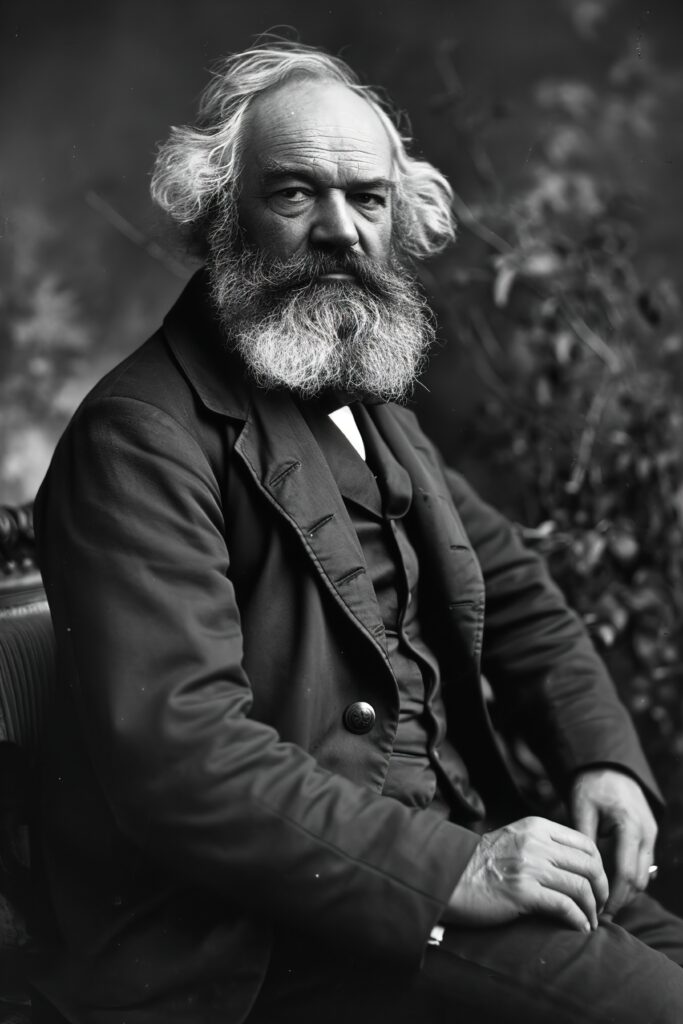
Gary Becker was a Chicago economist who won the Nobel Prize in 1992. He had a habit of taking subjects that sociologists, theologians, and novelists had claimed as their own, and dragging them into the cold light of supply and demand. Marriage. Discrimination. Drug addiction. Education. Crime.
His basic move was always the same. He would ask, what if people are not actually irrational here? What if they are responding to incentives, just like the rest of us, but the incentives they face are uglier, narrower, or stacked differently?
His 1968 paper on crime did exactly this. He proposed that a potential criminal weighs three things. The expected reward from the crime. The probability of getting caught. The severity of the punishment if caught. If the math leans positive, the crime happens. If it leans negative, it does not.
Notice what is missing from this list. There is no demon. No childhood trauma. No bad apple. There is just a person doing arithmetic with a worse calculator than the rest of us would like to admit.
This is where the title of this article comes from. Because if Becker is right, then the people most likely to find that the math leans positive are the ones with the lowest legal earnings. If your hourly wage in the legitimate economy is low enough, almost any reward from the illegitimate economy looks better.
The crime, in a sense, is not the theft. The crime is being unskilled in a society where unskilled work pays poorly enough to make theft competitive.
That is a heavy sentence. Read it twice. It changes the conversation.
The Math Nobody Wants to Do
Let us walk through the logic without the academic dressing.
Imagine two job offers. One pays fifteen dollars an hour, requires you to show up at six in the morning, and offers no future. The other pays nothing reliably, but on a good night might net you eight hundred dollars in a few hours. The second job has a serious downside. If you get caught, you lose years of your life. But you might not get caught. The police are stretched thin. Witnesses do not always cooperate. Cases get dropped.
If you are reading this article, you almost certainly took the first job. Or a much better version of it. And you took it because the expected value of the legitimate path, when you include the value of not being in prison, the value of your reputation, the value of being able to see your family on Sunday, completely dominates the criminal path.
But the expected value calculation is personal. It depends on what you have to lose. A person with a college degree, a clean record, a family that depends on them, and a career ahead of them has enormous reputational and future earnings to lose. A person with none of those things has almost nothing on that side of the ledger.
This is the part of Becker that makes people uncomfortable. He is not saying crime is good. He is saying that for some people, the deterrents we have built are not actually deterring much, because the thing being deterred, the legitimate life, is not much of a prize. You cannot threaten to take away from a person what they never had.
It is the inverse of the old line about the law in its majestic equality forbidding both the rich and the poor to sleep under bridges. Becker’s version would be that the law in its majestic equality threatens both the rich and the poor with prison, but only one of them is being asked to give up something valuable to avoid it.
Why This Reframes Almost Every Policy Argument
If you accept Becker’s framework, even partially, the standard arguments about crime start to look strange.
Consider the longstanding debate about whether harsher sentences reduce crime. Becker’s model says they should, but only up to a point, and only if potential criminals actually believe they will be caught. If the probability of being caught is low, doubling the sentence does not double the deterrent effect. It barely moves it. A small chance of a long sentence is still a small chance of anything happening at all.
This is why economists who work in this tradition often argue that certainty of punishment matters more than severity. A police presence that makes you ninety percent likely to be caught for a small crime deters more than a token police presence that, if it ever does catch you, throws the book at you. Most people do not think they will be the unlucky one.
Now consider the other side of the equation. If a potential criminal weighs the criminal path against the legitimate path, then anything that improves the legitimate path also reduces crime. Better schools. Better job training. A higher minimum wage at the bottom rungs. Apprenticeships. Vocational programs. Even something as basic as functioning public transportation that lets a person living in a poor neighborhood actually reach jobs in a rich one.
These are not soft, bleeding heart interventions in Becker’s framework. They are economic deterrents. They raise the opportunity cost of crime. They make the legitimate calculation lean further into the positive.
The political left and right tend to talk past each other on this. The right emphasizes punishment. The left emphasizes opportunity. Becker’s contribution, and the reason he is interesting, is that he shows both sides are arguing about the same equation. They are just adjusting different variables in it.
The Counterintuitive Bit
Here is something that might surprise you. If Becker is right, the most effective crime prevention program might not look like a crime prevention program at all. It might look like a community college that actually places its graduates in decent jobs. It might look like a tax credit for low income workers that quietly raises their hourly take home pay. It might look like a clean criminal record for someone who got into trouble at nineteen, so they are not locked out of the legitimate workforce at thirty.
None of these things sound like they are about crime. They are about employment, education, and bureaucracy. But each of them changes the math. Each of them improves the value of the path that does not lead to a cell.
The reverse is also true, and worth admitting. Policies that look like they have nothing to do with crime can quietly make it worse. Occupational licensing rules that require thousands of hours of training to braid hair or drive a car for hire make the legitimate economy harder to enter. They do not just keep people out of those jobs. They push some of those people toward jobs the state has not gotten around to licensing yet, including the illegal ones.
There is an irony here that is hard to miss. We spend enormous public energy on punishing crime after it happens. We spend much less on the boring infrastructure of legitimate work. Then we are surprised when the math keeps producing the same answer.
Where Becker Probably Goes Too Far
It would be dishonest to write all this without admitting where the model strains.
Not every criminal is doing a careful calculation. Some are impulsive. Some are addicted. Some are caught up in social environments where the framing of legitimate work as an option simply does not exist in their head. The cool, rational chooser at the center of Becker’s model is a useful fiction. He gets you a long way. But he does not capture everything.
Crimes of passion, in particular, do not fit the framework well. Neither do crimes committed by people who are clearly mentally unwell. And then there is the entire category of white collar crime, which often involves people who already have everything to lose. The accountant who embezzles, the executive who commits fraud, the lawyer who steals from a client account. These are people for whom the legitimate path was paying generously. Becker would say they overestimated the chances of getting away with it, or underestimated the cost of getting caught. That is true. But it also feels incomplete. There is something about ego, social pressure, and the strange way money corrupts people at the top that the equation does not quite reach.
So Becker’s model is a flashlight, not a floodlight. It shines very brightly on one part of the room. The part where ordinary people with bad options make choices we wish they would not make. It tells us a great deal about that part. It tells us less about the other corners.
But the part it illuminates is the part that drives most of the volume of crime in most societies. Property crime. Drug crime. The repeat offenses that keep neighborhoods unsafe. For these, Becker is essential.
The Quiet Insult Inside the Theory
There is something almost rude about taking economics into the territory of crime. It implies that the criminal is not exotic. He is not the dark other. He is you, with a worse set of options. He responds to the same incentives you do. He just faces a different version of them.
Most people do not want to hear this. It is more comfortable to think of criminals as fundamentally different. It allows us to feel safe by being on the right side of a moral wall, rather than on the lucky side of an economic distribution. Becker’s model knocks that wall over. It says that if you put any of us in the bottom decile of the labor market, with no education, a felony record at twenty, and no family safety net, the crime rate among people like us would rise. Not because we became evil. Because the math changed.
This is also why it is hopeful, in its strange way. If crime is largely a response to incentives, then we are not stuck with it. We can change the incentives. We can lower the rewards of crime by making detection more likely. We can raise the rewards of legitimate work by making it more accessible and better paid. We can reduce the lifetime cost of a small mistake by giving people a path back into the legal economy.
These are not naive ideas. They are mechanical ones. They follow directly from the model.
What to Take Away
Becker did not solve crime. Nobody has. But he gave us a way to think about it that is honest about human behavior. He took the conversation away from melodrama and gave it back to math. He showed that the question is not why some people choose crime. It is why, given the menu in front of them, anyone would choose otherwise.
The crime of being unskilled, then, is not really a crime at all. It is a description of an economic position. A position where the legitimate options are so thin that the illegitimate ones start to look reasonable. That is a problem we created, slowly, by neglect. And it is one we can solve, slowly, by attention.
You do not have to agree with every claim Becker made to take this seriously. You only have to accept that the people we punish are not aliens. They are people who looked at the same kind of math you and I look at every day, and got a different answer. The interesting question is what we are going to do about the math.