Table of Contents
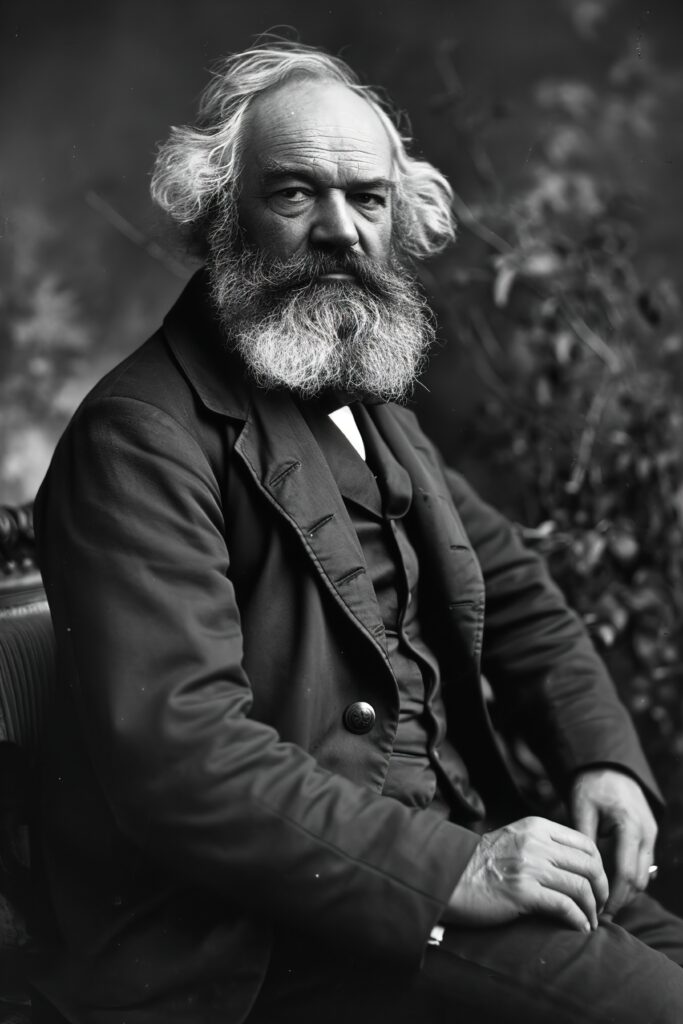
Max Weber died in 1920. He never saw a smartphone, never scrolled through a feed, never watched someone get ratio’d on social media. And yet, if you dropped him into the digital world today, he would probably nod slowly and say something like, “Yes, this is exactly what I was talking about.”
Weber spent much of his career thinking about something he called Stände, which translates roughly to “status groups.” His argument was simple but powerful: class is not the only thing that determines your place in society. There is another dimension, one that operates on what he termed “social honor.” It is the respect, prestige, and esteem that a community assigns to you based on your lifestyle, your manners, your associations, and the symbols you carry. It is not about how much money you have. It is about how much social worth people believe you have.
This distinction mattered in Weber’s time because it explained something that pure economic analysis could not. A professor with modest savings could outrank a wealthy merchant in social standing. A family with an old name but an empty bank account could still command respect at dinner parties. The economy sorted people by wealth. The status order sorted them by honor. And the two did not always agree.
Now look at the internet. Look at how platforms work. Look at how people are ranked, sorted, rewarded, and punished online. What you will find is not a departure from Weber’s framework. It is the most efficient implementation of it that has ever existed.
The Verification Tick as a Coat of Arms
In feudal Europe, your coat of arms told people who you were before you opened your mouth. It signaled lineage, allegiance, and rank. It was visual shorthand for social honor. You did not earn it through merit alone. You earned it through a combination of birth, affiliation, and recognition by the right authorities.
The blue verification tick on social media performs almost exactly the same function. Before anyone reads what you have written, before they evaluate your argument or consider your evidence, they see the badge. And the badge tells them where you sit in the hierarchy. It does not measure intelligence or truthfulness. It measures recognized status.
When platforms began selling verification, something interesting happened. The badge lost its signaling power. If anyone could buy a coat of arms, the coat of arms stopped meaning what it used to mean. Weber would have predicted this. He wrote extensively about how status groups guard the boundaries of their prestige. They do this through what he called “social closure,” the practice of restricting access to the markers of honor so that they retain their value. When Twitter opened verification to anyone with a credit card, the old verified class reacted with something between disgust and panic. Not because the feature changed. Because the boundary changed.
This is not vanity. This is status economics operating exactly as Weber described.
The Algorithm as an Invisible Feudal Lord
Here is where things get genuinely uncomfortable. In Weber’s world, social honor was assigned by communities. People collectively decided who deserved respect and who did not. The process was messy, slow, and deeply human. It happened in salons, churches, marketplaces, and parlors. It required face to face interaction and long histories of reputation building.
Online, that process has been automated. The algorithm decides who gets seen. It decides whose voice carries and whose voice vanishes. It does this not through some neutral, democratic process, but through engagement metrics that function as a proxy for social honor. If people interact with your content, you rise. If they do not, you sink. And you have almost no transparency into how the calculation is made.
Weber distinguished between three types of social stratification: class (economic power), status (social honor), and party (political power). The algorithm collapses all three into a single score. Your visibility on a platform is simultaneously your economic value (because visibility converts to income), your social honor (because visibility signals prestige), and your political power (because visibility determines whose ideas spread). This is a concentration of sorting power that would have made Weber deeply uneasy.
The feudal lord, at least, was a person you could petition. The algorithm is not.
Follower Counts and the Illusion of Meritocracy
One of the most persistent myths of online life is that follower counts reflect quality. That if you have something valuable to say, people will find you. That the cream rises to the top.
Weber would have found this charmingly naive. He understood that status systems always present themselves as meritocratic. Every aristocracy in history has told a story about why its members deserve to be on top. The divine right of kings. The civilizing mission of empires. The natural superiority of certain bloodlines. Each era produces its own justification for the hierarchy, and each era believes its justification is the true one.
The digital version of this story is the myth of organic reach. The idea that if your content is good enough, the numbers will follow. But the evidence tells a different story. Early adopters who built followings before algorithmic changes locked in structural advantages. People with existing fame from traditional media brought audiences with them. Those with the resources to post constantly, to optimize for trends, to invest in production quality, accumulated visibility that compounded over time.
This is not to say that talent does not matter. It does. But talent matters the way it mattered in Weber’s status groups: it is a necessary but insufficient condition. You also need the right connections, the right timing, the right platform, and increasingly, the right budget. The system looks open from the outside. From the inside, the barriers are real.
The Content Creator as the New Petty Nobility
Weber observed that status groups develop distinctive lifestyles. They eat certain foods, wear certain clothes, frequent certain places, and associate with certain people. These lifestyle markers serve a dual purpose. They signal membership to insiders and create barriers for outsiders.
Watch any group of successful content creators for a week. You will see the same pattern. There are specific aesthetic choices that signal membership in the upper tier. Specific editing styles, camera angles, color palettes, and background setups that communicate status before a single word is spoken. There are collaboration networks that function like the intermarriage patterns of European nobility, with creators of similar follower counts partnering together and rarely crossing the invisible lines that separate tiers.
There are even sumptuary laws of a sort. In medieval Europe, actual laws dictated who could wear silk, fur, or certain colors. Online, the equivalent is the unspoken rule that certain types of content are “beneath” creators of a certain status.
This lifestyle policing is not organized. Nobody sits in a room making these rules. But Weber’s point was that status orders never need formal organization. They emerge from collective behavior, from thousands of small judgments about who belongs and who does not. The internet has not disrupted this process. It has accelerated it beyond anything Weber could have imagined.
The Outcast and the Deplatformed
Every status system needs a bottom. Weber studied this too, examining how certain groups were assigned negative social honor. The “unclean” castes. The stigmatized professions. The people whose very presence was considered contaminating.
Online, the equivalent is the deplatformed individual. Someone who has been banned, suspended, or algorithmically suppressed. The digital untouchable. What makes this particularly Weberian is how the stigma attaches not just to the person but to anyone associated with them. If you engage with a deplatformed person’s content, you risk contamination by association. Your own social honor can decrease simply because of proximity.
This is social closure operating in reverse. Instead of restricting access to prestige markers, the community enforces distance from stigma markers. And the enforcement is remarkably efficient online because every interaction is visible. In Weber’s world, you could quietly visit the wrong side of town without anyone knowing. On the internet, every like, follow, and comment is a public declaration of affiliation.
The Counterintuitive Part: Money Follows Honor, Not the Other Way Around
Here is where the Weberian analysis produces its most surprising insight. Common sense says that money determines status. Get rich, and respect follows. But Weber argued the opposite is often true. Status determines economic opportunity. Social honor opens doors that money alone cannot.
Online, this pattern is unmistakable. Creators with high social honor, the ones perceived as prestigious and authoritative, command higher sponsorship rates, better partnership terms, and more opportunities than creators with similar audience sizes but lower perceived status. A creator with 100,000 followers in a high status niche can earn more than a creator with a million followers in a low status one. The money follows the honor.
This also explains why so many people pursue online visibility even when it is not directly profitable. They intuit, correctly, that social honor is a form of capital that can be converted into economic advantage later. The influencer who posts for years without direct income is not irrational. They are investing in status, which is, as Weber understood, a real and powerful resource.
What Weber Would Tell You to Do About It
Weber was not a revolutionary. He did not think you could tear down status systems and build a world without them. He thought status hierarchies were a permanent feature of human social life. What he did think was that you should understand them. That seeing the system clearly is itself a form of power.
So here is what a Weberian analysis of online life actually offers you. Not a way out. A way of seeing.
It tells you that your follower count is not a measure of your worth. It is a measure of your position in a status order that has its own logic, its own gatekeepers, and its own forms of closure. It tells you that the algorithm is not a neutral referee. It is a status assigning mechanism that concentrates power in ways that are historically unusual. It tells you that the feeling of being invisible online, of shouting into the void, is not a personal failure. It is the experience of being on the wrong side of a status boundary.
And it tells you something else, something that Weber understood but that the platforms would prefer you did not think about too carefully. Status systems are most powerful when the people inside them believe the hierarchy is natural. When the ranking feels like it simply reflects reality. The moment you see it as a system, as a constructed order with specific rules and specific beneficiaries, it loses some of its grip.
Not all of its grip. Weber was too honest to promise that. But some.
That might be enough.