Table of Contents
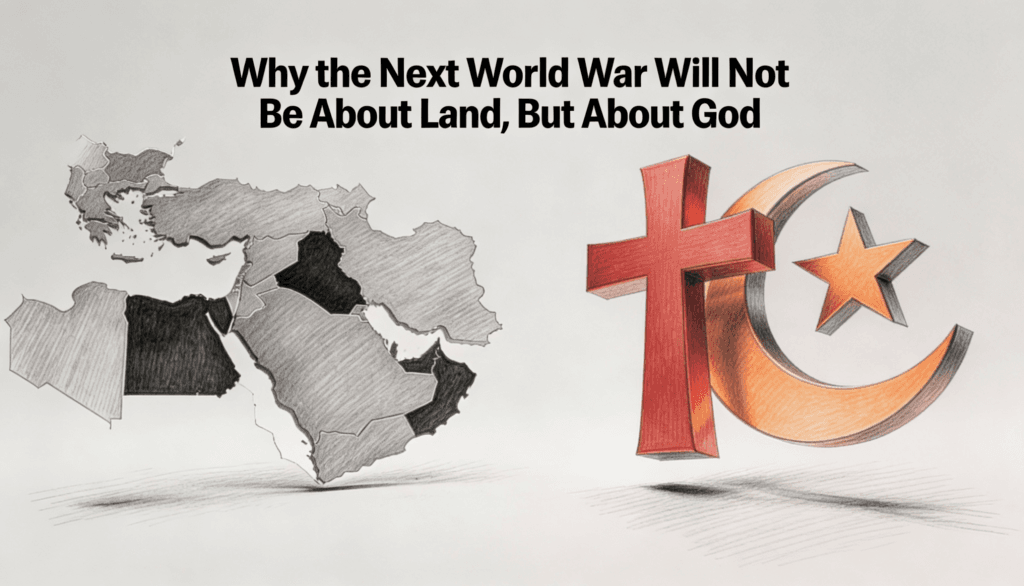
In 1993, a quiet political scientist at Harvard published an essay that made half the world furious and the other half uncomfortable. Samuel Huntington did not predict a new weapon or a new alliance. He predicted something far more unsettling. He said the wars of the future would not be fought over territory, resources, or ideology. They would be fought over identity. Over culture. Over God.
The essay was called “The Clash of Civilizations?” Note the question mark. Huntington was careful enough to frame it as a question. The world was not careful enough to notice.
Three decades later, we are living inside his argument. And whether you think Huntington was a prophet or a provocateur, his thesis demands a serious reckoning. Because if he was even partially right, then the mental models most of us use to understand global conflict are not just outdated. They are dangerous.
The Cold War Ended. The Real War Began.
For forty five years, the world was neatly divided. You were either with Washington or with Moscow. Capitalism or communism. NATO or the Warsaw Pact. It was binary, terrifying, and strangely simple. Every conflict, from Vietnam to Angola, could be mapped onto this grid.
Then the Berlin Wall fell, and Western intellectuals threw a party. Francis Fukuyama declared the “End of History,” suggesting liberal democracy had won the final argument. The assumption was that the rest of the world would now get in line. Markets would open. Democracies would spread. McDonald’s would do the rest.
Huntington looked at this celebration and essentially said: you are not paying attention.
He argued that the ideological curtain had merely been hiding something older and deeper. Beneath the Cold War’s surface, civilizational identities had never disappeared. They had been suppressed, frozen, waiting. And now, with the superpower rivalry gone, those identities would reassert themselves with force.
He identified roughly seven or eight major civilizations: Western, Confucian (later Sinic), Japanese, Islamic, Hindu, Slavic Orthodox, Latin American, and possibly African. The fault lines between these civilizations, he argued, would become the battle lines of the future.
This was not a popular thing to say in 1993.
What Huntington Actually Argued (Because Most People Get It Wrong)
There is a common misreading of Huntington that reduces his thesis to “Islam versus the West.” This is a bit like reading Moby Dick and concluding it is a book about fishing. The clash of civilizations is not about one particular religion being dangerous. It is about the nature of identity itself.
Huntington’s core insight was that culture, religion, and civilizational belonging are not superficial decorations on top of rational economic interests. They are the deepest layer of human identity. Deeper than nationality. Deeper than class. Deeper, even, than self interest.
People do not kill and die for GDP growth. They kill and die for who they believe they are.
This is the part that makes economists and policy wonks uncomfortable. Modern political theory, especially in the West, tends to treat human beings as rational actors motivated by material concerns. Give people enough prosperity and security, and they will behave. Huntington said this is a fantasy. A flattering, Western, Enlightenment fantasy, but a fantasy nonetheless.
He pointed out that modernization and Westernization are not the same thing. A country can build highways, stock exchanges, and nuclear reactors without adopting Western values. In fact, economic modernization often intensifies civilizational identity rather than dissolving it. When people get richer, they do not necessarily become more secular or more liberal. Sometimes they become more confident in their own traditions and more resistant to foreign ones.
Japan industrialized without becoming Western. China is doing the same. The Gulf states built glass towers in the desert without importing the Enlightenment along with the architects.
The God Variable
Here is where the argument gets genuinely provocative. Huntington placed religion at the center of civilizational identity. Not economics. Not technology. Not military power. Religion.
To a secular Western audience, this felt almost medieval. Serious thinkers in New York, London, and Paris had spent decades operating on the assumption that religion was fading. Sociologists called it secularization theory: as societies modernize, they become less religious. It was treated almost as a law of nature.
Huntington saw it differently. He argued that secularization was a uniquely Western phenomenon, and even in the West, it was less complete than intellectuals liked to believe. Across the rest of the world, religion was not declining. It was surging. The Islamic revival, Hindu nationalism, Orthodox Christianity’s return in Russia, Evangelical Christianity’s explosion in Latin America and sub Saharan Africa. These were not temporary hiccups. They were the main current of history.
And this is the counter intuitive part that deserves attention. Huntington was not saying religion causes war the way a spark causes a fire. He was saying something more subtle. Religion provides the deepest answers to the deepest questions: Who are we? What is sacred? What is worth dying for? When political and economic systems fail to provide meaning, people return to these older sources of identity. And when two groups with fundamentally different answers to these questions collide, the conflict is far harder to resolve than a border dispute or a trade war.
You can negotiate over territory. You can split resources. You cannot split God.
The Evidence That Keeps Piling Up
Critics of Huntington have spent three decades trying to bury his thesis. It keeps crawling out of the grave.
Consider the pattern of major conflicts since the Cold War. The wars in Bosnia and Kosovo fell along civilizational fault lines: Western Christianity, Orthodox Christianity, and Islam meeting in the same volatile corner of Europe. The ongoing tensions between India and Pakistan mirror the Hindu and Islamic civilizational divide. Russia’s conflicts with its neighbors, from Chechnya to Ukraine, map onto the boundary between Orthodox and Western civilizations. China’s rise is experienced in the West not merely as an economic challenge but as something more existential, a different civilizational model that does not accept Western assumptions about human rights, governance, or the relationship between the individual and the state.
Even within Western societies, the most explosive debates are civilizational in nature. Immigration controversies in Europe are rarely about economics in any serious way. The numbers do not justify the intensity of the reaction. The real anxiety is cultural. It is about identity, belonging, and the fear that the character of a civilization is changing in ways that feel irreversible.
The rise of populist movements from Budapest to Brasilia often carries an explicitly civilizational vocabulary. Leaders speak of defending Christian values, protecting national culture, resisting globalist homogenization. Whether you find this rhetoric admirable or repulsive, it is hard to deny that it resonates with millions of people. And it resonates precisely along the lines Huntington drew.
Where Huntington Got It Wrong (And Where His Critics Did Too)
His civilizational categories are messy. Where does Turkey fit? Is Latin America really a separate civilization from the West? What about the enormous internal diversity within the Islamic world, where an Indonesian Muslim and a Saudi Muslim may share a faith but inhabit radically different cultural universes?
Huntington also underestimated the power of internal civilizational conflict. The bloodiest wars in the Islamic world have not been between Muslims and the West. They have been between Muslims and other Muslims. The Iran Iraq war, the Syrian civil war, the Saudi Iranian rivalry. These do not fit neatly into a clash of civilizations framework. They fit into a clash within civilizations, which Huntington acknowledged but never fully resolved.
There is also a legitimate concern that the thesis can become self fulfilling. If political leaders organize their thinking around civilizational conflict, they may create the very divisions they claim to be describing. George W. Bush’s “War on Terror” was carefully framed to avoid civilizational language. But the war itself, conducted overwhelmingly in Muslim majority countries, felt civilizational to many people on the receiving end. Perception matters as much as intention.
And yet, Huntington’s critics have their own blind spots. The loudest objections came from liberal internationalists who insisted that globalization, trade, and institutions would override cultural differences. Twenty years of evidence has been unkind to this view. The European Union did not erase nationalist sentiment. The internet, far from creating a global village, has in many ways amplified tribal identities and made civilizational boundaries more visible, not less.
What This Means Now
If Huntington’s framework has any predictive value, and the track record is uncomfortably strong, then the most dangerous flashpoints of the coming decades will not be primarily about oil, water, or shipping lanes. They will be about identity.
The South China Sea is not just a territorial dispute. It is a contest between a Western rules based order and a Sinic civilization that sees those rules as somebody else’s rules. The tensions between Europe and the Muslim world are not going to be resolved by better integration policies alone, because the underlying friction is not administrative. It is existential.
And the growing rivalry between the United States and China is the one Huntington would have been watching most closely. Because it is not just a competition between two states. It is a collision between two civilizational visions of what a good society looks like, what rights matter, what the purpose of government is, and what role the individual plays in the larger order.
This does not mean war is inevitable. Huntington himself was not a fatalist. He argued that understanding civilizational differences was the first step toward managing them. The danger lies not in the differences themselves but in the refusal to take them seriously.
Conclusion
The Western intellectual tradition has spent the last few centuries developing a very particular story about progress. In this story, history moves in one direction: toward reason, secularism, individual rights, and universal values. Religion fades. Tribalism fades. Enlightenment spreads. It is a comforting story.
Huntington’s great offense was not that he predicted conflict. Realists have always done that. His offense was that he told the West its story about itself was not universal. That the values it considered self evident were, in fact, culturally specific. That the rest of the world was not a work in progress on its way to becoming the West. It was something else entirely. Something with its own logic, its own values, and its own God.
This is a hard pill for universalists to swallow. But swallowing hard pills is generally more productive than pretending they do not exist.
The next great conflict, if it comes, will not be settled by whoever has the most aircraft carriers or the largest economy. It will be shaped by whoever best understands the forces that actually move human beings. And those forces, as Huntington tried to tell us thirty years ago, run deeper than interest, deeper than ideology, deeper than reason itself.
They run all the way down to the question every civilization answers differently: What is sacred?
Whether we like it or not, that question is making a comeback.