Table of Contents
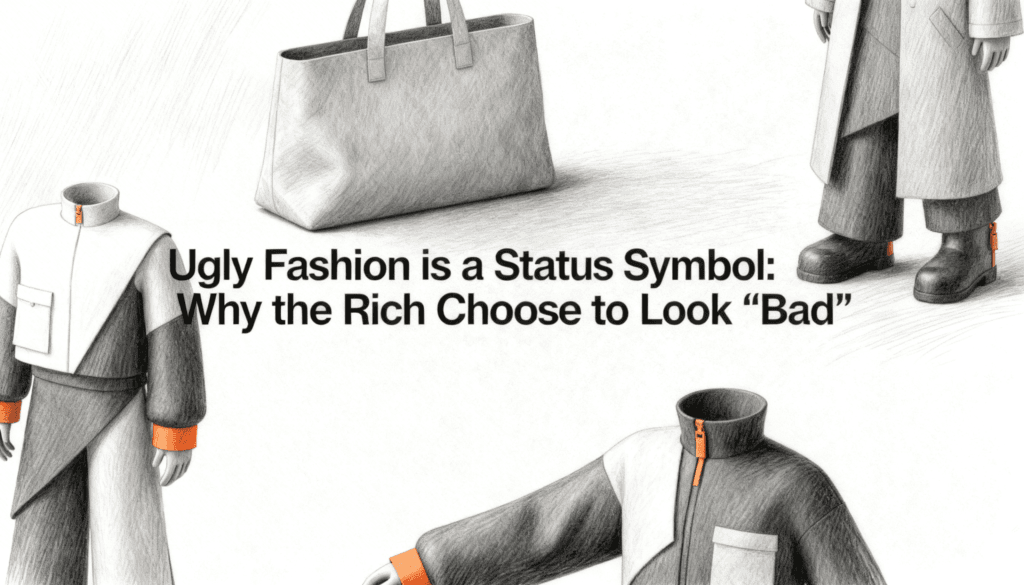
There is a particular kind of confusion that hits you in a luxury department store. You pick up a jacket that looks like it was rescued from a dumpster behind a community theater. It is wrinkled. The color is somewhere between mustard and regret. The fit appears to have been designed by someone who has never seen a human body. Then you flip the price tag: $4,200.
You assume this is a mistake. It is not.
Welcome to the world where looking terrible costs more than looking good, where a pair of sneakers that appear to have survived a house fire sell out in minutes, and where the most powerful people in the room are often the worst dressed. This is not an accident. This is not a failure of taste. This is strategy, and a nineteenth century economist named Thorstein Veblen saw it coming over a hundred years ago.
The Man Who Understood Rich People Better Than They Understood Themselves
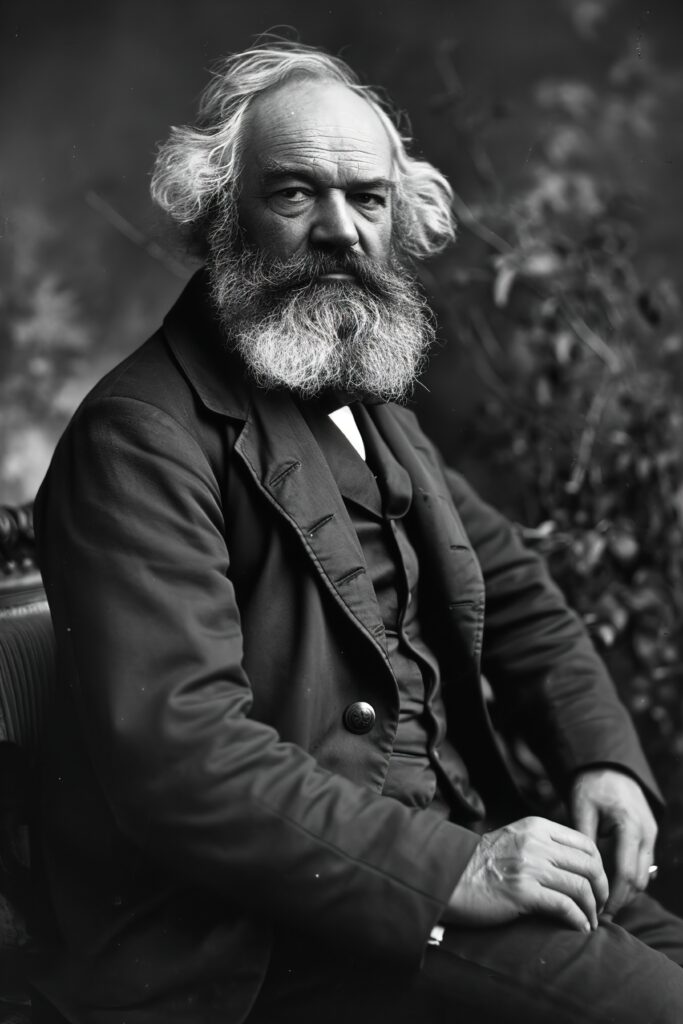
Thorstein Veblen was a Norwegian American economist and sociologist who, in 1899, published The Theory of the Leisure Class. The book was, on its surface, an academic work about economics. Underneath, it was one of the most devastating takedowns of wealthy behavior ever written.
Veblen introduced a concept called “conspicuous consumption,” which is the idea that wealthy people do not buy expensive things because those things are better. They buy them because those things are expensive. The price is the product. The function is irrelevant. What matters is that other people can see you spending money you do not need to spend.
This was a radical idea at the time. The assumption had always been that people bought the best things they could afford because quality mattered. Veblen argued the opposite. He said that once you pass a certain level of wealth, quality becomes meaningless. Everyone in your circle can afford quality. What separates you from the others is your ability to waste, visibly and extravagantly, without consequence.
He called this “conspicuous waste.” And fashion, he argued, was its purest expression.
When Looking Good Became Too Easy
Here is the problem with looking good in the modern world: everyone can do it.
Fast fashion democratized style in a way that would have been unimaginable a century ago. A teenager working a part time job can now buy clothes that look nearly identical to what a celebrity wore on a red carpet. The gap between a $30 dress and a $3,000 dress, in terms of pure visual appearance, has never been smaller. Fabrics have improved. Manufacturing has improved. The ability to copy a design and produce it at scale within weeks has made “looking expensive” accessible to almost anyone.
This is a disaster for the wealthy. Not an economic disaster, obviously. A social one. If the purpose of expensive clothing is to signal that you are rich, and cheap clothing now looks just as good, then looking good no longer works as a signal. The whole system breaks down.
So what do you do when everyone can look polished? You stop trying to look polished. You start looking deliberately, aggressively, unmistakably bad. But bad in a way that costs a fortune.
The $1,850 Trash Bag and Other Masterpieces
Balenciaga released a bag that looked exactly like a garbage bag. It retailed for $1,790. They also sold destroyed sneakers, caked in what appeared to be dirt and wear, for over $1,000. These were not items that happened to look bad. They were engineered to look bad. The ugliness was the entire point.
This is Veblen’s theory operating at full power, except with an additional layer he might not have predicted. It is not just conspicuous consumption anymore. It is conspicuous anti consumption. The signal is no longer “I can afford beautiful things.” The signal is “I am so wealthy that I do not need to look good. I am beyond the need to impress you. My status is so secure that I can wear what appears to be a trash bag and you will still know exactly who I am.”
This is power. Real, structural, social power. And it works precisely because it should not.
The Psychology of Ugly Luxury
There is a concept in psychology called the “pratfall effect.” It was identified by researcher Elliot Aronson in the 1960s. The basic idea is that highly competent people become more likable when they make a mistake. If a brilliant professor spills coffee on themselves during a lecture, the audience likes them more, not less. But this only works if the person is already perceived as competent. If an average person spills coffee, nobody finds it endearing. They just think that person is clumsy.
Ugly fashion operates on the same principle. When a billionaire wears a shapeless, overpriced hoodie to a business meeting, it reads as confidence. When someone without that social capital tries the same thing, it reads as sloppiness. The clothes are identical. The interpretation is completely different. Context does all the work.
This is why ugly fashion is not really about clothes at all. It is about who is wearing them. The garment is just a vehicle for transmitting information about the wearer’s position in a social hierarchy. And the message is always the same: I can afford not to care.
Veblen Goods: When Higher Prices Create Higher Demand
Veblen identified something that contradicts one of the most basic principles in economics. Normal goods follow a simple rule: when the price goes up, demand goes down. People buy less of things that become more expensive. This makes intuitive sense.
But certain luxury goods do the opposite. When the price goes up, demand also goes up. These are now called “Veblen goods,” and they exist because the high price itself is what makes the product desirable. A Hermès Birkin bag is not popular despite costing $10,000 or more. It is popular because it costs $10,000 or more. If Hermès suddenly sold Birkin bags for $200, the people who currently buy them would stop immediately. The bag would be ruined. Not physically. Socially.
Ugly fashion takes this a step further. A Veblen good is expensive and desirable. Ugly luxury fashion is expensive and undesirable, at least by conventional aesthetic standards. This means the price has to work even harder. It has to overcome not just the expectation of value, but active visual resistance. You are paying thousands of dollars for something that, by every traditional metric, looks worse than what you could buy for $40. The premium is not for beauty or craftsmanship. The premium is for the audacity of it.
And people pay it gladly.
The Silicon Valley Uniform and the Art of Studied Carelessness
There is a version of this that does not even involve high fashion. Look at the most powerful people in technology. Mark Zuckerberg spent years wearing the same grey t shirt. Steve Jobs had his black turtleneck. These were not fashion choices in the traditional sense. They were anti fashion choices, but they communicated the same message as a $4,000 Balenciaga jacket that looks like it was found in a storm drain.
The message is: I am too important to think about what I am wearing. My time is too valuable. My mind is occupied with things that matter more than your opinion of my outfit.
This is a form of what sociologists call “countersignaling.” Regular signaling is when you display wealth or status directly. You wear a nice watch. You drive an expensive car. Countersignaling is when you deliberately avoid those displays because your status is so well established that you do not need them. Only people who are insecure about their position need to prove it. People at the very top can afford to opt out entirely.
It is the social equivalent of a chess grandmaster playing a casual game with their eyes closed. The carelessness is the flex.
The Runway as a Sociological Experiment
Fashion designers, whether they articulate it this way or not, are essentially running sociological experiments on the public. When a major fashion house sends a model down the runway in something genuinely hideous, they are testing a hypothesis: can we make people want this purely through branding, price, and social positioning?
The answer, reliably, is yes.
This works because fashion does not operate on the same logic as other consumer products. A car has to drive. A phone has to make calls. These products have objective functions that constrain how much the design can deviate from practicality. But clothing, beyond basic protection from the elements, has no objective function. Its purpose is entirely social. And social meaning is infinitely malleable.
A ripped shirt means poverty in one context and $800 at a boutique in another. The same physical object carries completely different meanings depending on where it was purchased, who is wearing it, and who is watching. This is what makes fashion such a powerful lens for understanding how status works. The product is almost beside the point. The story around the product is everything.
The Treadmill Nobody Can Win
There is something almost tragic about all of this. Veblen described what later economists would call a “status treadmill.” People spend money to signal status. Other people see this and spend money to match. The first group then has to spend more to stay ahead. Nobody actually gains any ground, but everyone spends more.
Ugly fashion is just the latest turn of this wheel. When conventional luxury became too accessible, the wealthy moved to ugly luxury to re-establish distance. But this too will eventually be copied and diluted. Fast fashion brands are already producing their own versions of deliberately ugly, oversized, deconstructed clothing. Within a few years, the aesthetic that was supposed to be exclusive will be available at every mall in the country.
And then the truly wealthy will have to find something else. Some new way to spend conspicuously, some new way to signal that they are above the competition. The content changes. The structure never does.
What This Tells Us About Ourselves
The uncomfortable truth buried in all of this is that we are not nearly as rational as we like to believe. We think we choose clothes because we like how they look. We think we have personal style, individual taste, preferences that belong to us. But the machinery underneath is far less personal and far more structural than we want to admit.
We dress, at least in part, to locate ourselves within a social hierarchy. Every choice we make about what to wear is also a choice about who we want to be associated with and who we want to distance ourselves from. The wealthy wear ugly expensive clothes to separate themselves from the middle class. The middle class wears attractive affordable clothes to separate themselves from poverty. And each group tells itself that its choices are about aesthetics, not status.
Veblen saw through this over a hundred years ago. The honesty of his analysis is what made it so uncomfortable then, and what makes it so relevant now. He did not judge people for playing status games. He simply pointed out that the games were being played, constantly, by everyone, whether they admitted it or not.
The Final Irony
The greatest irony of ugly fashion as a status symbol is that it requires the very thing it pretends to reject: intense attention to appearance.
It takes effort to look this bad on purpose. It takes research to know which ugly is the right ugly. It takes money to buy the correctly ugly items from the correctly prestigious brands. And it takes social awareness to understand in which rooms this ugliness will be read as power and in which rooms it will simply be read as ugliness.
The person in the $3,500 distressed jacket is not someone who does not care about fashion. They are someone who cares so deeply about fashion, about status, about perception, that they have moved past conventional attractiveness into a territory where the caring is disguised as its opposite.
They have not escaped the game. They have simply found a more expensive level to play it on.
Veblen, one suspects, would not have been surprised. He would probably have just looked at the price tag, looked at the jacket, and done what he did best.
He would have taken notes.