Table of Contents
There is a particular kind of madness that strikes otherwise rational people when they walk into a car dealership. The floors are polished. The cars gleam under lights engineered to make sheet metal look like sculpture. A salesperson appears, friendly but not too eager, and begins a conversation that will eventually arrive at the only question that seems to matter: “What monthly payment works for you?”
That question is a trap. Not because the salesperson is dishonest, but because it reframes an enormous financial decision into a small, digestible number. Three hundred a month. Four fifty. Five hundred. It sounds manageable. It sounds like a subscription. And that is precisely the problem.
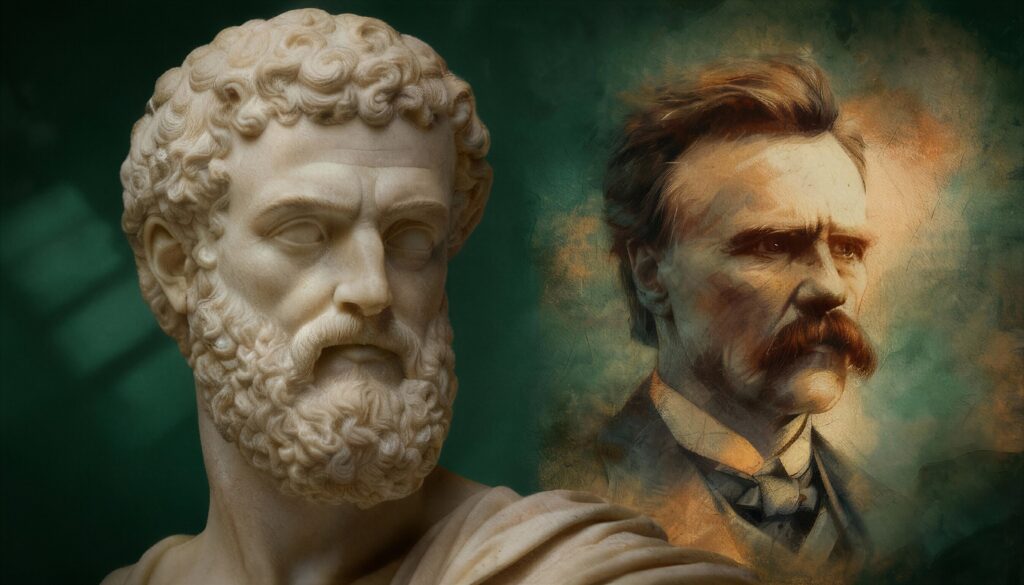
Nearly two thousand years ago, the Stoic philosopher Seneca wrote something that has no business being this relevant to a car purchase: “It is not that we have a short time to live, but that we waste a great deal of it.” He was talking about life, of course. But money and life are not separate categories. Money is stored time. Every dollar you earn represents minutes or hours of your existence converted into currency. When you spend money, you are spending your life. And when you spend it unconsciously, on things that do not actually serve you, you are doing exactly what Seneca warned against.
So let us talk about the true cost of a new car. Not the sticker price. Not the monthly payment. The real cost, measured in the currency that actually matters.
The Illusion of Affordability
The average new car payment in the United States now hovers around $730 per month. The average loan term has stretched to nearly 68 months. Some loans run 72 or even 84 months. The industry has performed a remarkable trick here. As cars got more expensive, they did not expect people to simply buy less car. Instead, they stretched the timeline. The monthly number stays comfortable. The total cost becomes something nobody wants to calculate.
But let us calculate it anyway.
A $45,000 car financed at 7% interest over 72 months costs you roughly $54,000 by the time you make your last payment. That is $9,000 in interest alone. Nine thousand dollars for the privilege of paying slowly. And this is before we get to the expenses that never appear in the dealership conversation.
Insurance on a new car runs significantly higher than on a used one. Depending on your age, location, and the car itself, you might pay $2,000 to $3,000 per year. Over six years, that is $12,000 to $18,000. Then there is depreciation, the silent wealth destroyer that begins the moment you sign the paperwork. A new car loses roughly 20% of its value in the first year and around 60% over five years. Your $45,000 car is worth about $18,000 after five years. You did not just spend $45,000. You lost $27,000 in value while also paying interest on the original amount.
Add registration fees, dealer charges, taxes, and the inevitable maintenance that begins once the warranty period ends. The true five year cost of owning that car is often north of $40,000 beyond the purchase price itself. The monthly payment was $730. The monthly reality is something closer to $1,400 when you account for everything.
Nobody puts that number on the window sticker.
Seneca and the Poverty of Busy Spending
Seneca made an observation that cuts to the heart of consumer culture, even though he was writing in ancient Rome and had never seen a crossover SUV. He noticed that people are extraordinarily protective of their physical possessions but shockingly careless with their time. Someone would guard a piece of land fiercely but give away entire years to trivial pursuits without a second thought.
The new car purchase is a perfect modern example. Consider what that $40,000 in extra cost represents. If you earn $30 an hour after taxes, that car cost you approximately 1,333 hours of your working life. That is 33 full work weeks. Eight months of labor, dedicated entirely to a depreciating machine.
This is what Seneca would call a failure of attention. Not a failure of income. Not a failure of budgeting. A failure to notice what you are actually trading and what you are actually receiving.
Because here is the uncomfortable question: what did you get for those eight months of your life? Transportation, yes. But a reliable used car provides transportation too, at a fraction of the cost. What you really purchased, in most cases, is the new car experience. The smell. The unblemished interior. The satisfaction of being the first owner. The way it looks in your driveway.
These are not trivial pleasures. But they are temporary ones. The smell fades in weeks. The interior gets its first scratch within months. The novelty wears off, as novelty always does, and you are left with a car and a payment. Seneca would recognize this pattern instantly. He wrote extensively about how anticipated pleasures almost never deliver what they promise, and how people keep chasing the next one regardless.
The Opportunity Cost Nobody Mentions
There is a concept in economics called opportunity cost. It refers to what you give up when you choose one option over another. It is not just about what you spend. It is about what that money could have done instead.
This is where the true cost of a new car becomes genuinely painful to examine.
If you took that $40,000 in extra costs and invested it in a broad market index fund returning an average of 8% annually, here is what happens. After 10 years, it grows to roughly $86,000. After 20 years, about $186,000. After 30 years, over $400,000.
You did not just buy a car. You chose a car instead of $400,000.
Now, obviously, you need transportation. This is not an argument for walking everywhere or riding a bicycle in January. But the difference between a new $45,000 car and a reliable three year old used car at $25,000 is significant. That gap, invested consistently over a working career, can represent the difference between retiring at 60 and retiring at 67. Seven years of freedom, traded for new car smell.
This is not hypothetical moralizing. This is arithmetic. And arithmetic does not care about your feelings toward leather seats.
The Psychological Machinery
Why do people keep making this trade? The numbers are not hidden. Anyone with a calculator can run them. Yet new car sales remain enormous, and the average American will buy something like 10 cars in their lifetime.
The answer lives in psychology, not mathematics. Daniel Kahneman, the Nobel laureate who spent his career studying how people make decisions, identified something he called the focusing illusion. His summary was elegant: “Nothing in life is as important as you think it is while you are thinking about it.“
When you are at the dealership, sitting in that new car, running your hands over the steering wheel, the car feels like it matters enormously. It feels like it will change your daily experience in some fundamental way. And for a few weeks, it might. But then you adapt.
You get used to the car. It becomes background. It becomes just the thing you drive to work. And yet the payment persists.
There is also the matter of social signaling. Thorstein Veblen coined the term “conspicuous consumption” in 1899, and it has only become more relevant since. A new car communicates something to the world. It says you are doing well. It says you are successful. It says you belong to a certain class of person. These signals have real social value, which is precisely why they are so expensive. You are not just paying for the car. You are paying for the message the car sends.
Seneca would have found this fascinating and slightly tragic. He wrote about how people enslave themselves to the opinions of others, spending their resources to maintain an image rather than to build a life. The car in the driveway is, in many cases, a monument to someone else is approval.
The Debt Spiral and the Freedom Equation
There is another dimension to this that deserves attention. Car debt does not exist in isolation. It interacts with your entire financial life.
A $730 monthly car payment reduces your ability to save for emergencies. It limits your capacity to invest. It makes you more dependent on your current income, which makes you more dependent on your current job, which makes you less free. This is not a small thing. Financial flexibility is one of the most undervalued assets a person can have. The ability to say no to a bad situation, to walk away from a toxic workplace, to take a risk on a new venture, these options require financial margin. A large car payment eats that margin for breakfast.
Seneca was deeply interested in freedom. Not political freedom, though he valued that too, but personal freedom. The freedom to live according to your own values rather than being pushed around by circumstances. He argued that most people are slaves to their desires and their habits, that they mistake comfort for freedom and consumption for satisfaction.
A person with no car payment, a reliable used vehicle, and money in the bank is freer than a person with a brand new luxury sedan and a 72 month loan. This is counterintuitive in a culture that equates new possessions with success. But it is true. Freedom is not what you own. Freedom is what you do not owe.
The Counterargument, and Why It Is Only Partly Right
At this point, a reasonable person might object. Cars are not just transportation. Some people genuinely love driving. Some people derive real, lasting pleasure from a well engineered machine. A car enthusiast buying a sports car they have dreamed about for years is not the same as someone mindlessly upgrading because their lease expired.
This is fair. Seneca was not an ascetic. He did not argue for deprivation. He argued for intentionality. The problem is not spending money. The problem is spending money without thinking, spending it on things that do not truly serve your wellbeing, spending it because the culture tells you to rather than because you have examined what actually makes your life better.
If you have done the math, you understand the true cost, and you still choose the new car because driving genuinely enriches your life, that is a legitimate decision. Seneca would respect it. He would simply ask that you make it with open eyes rather than under the fluorescent hypnosis of a dealership showroom.
But be honest with yourself. Most new car purchases are not the result of careful reflection. They are the result of expired leases, clever marketing, social pressure, and the intoxicating fiction of the monthly payment.
What Seneca Would Actually Drive
Seneca was, by the way, fabulously wealthy. He was one of the richest men in Rome. This made his philosophy of moderation either deeply hypocritical or deeply earned, depending on your perspective. He had access to every luxury his world could offer, and he still wrote about the importance of needing less.
He practiced what he called voluntary discomfort. Periodically, he would eat simple food, wear rough clothing, and sleep on a hard surface. Not because he had to. Because he wanted to remind himself that his happiness did not depend on luxury. He wanted to defuse the fear of losing what he had.
Imagine applying this to your next car decision. Before you sign anything, spend a week driving the cheapest rental you can find. If your quality of life does not meaningfully decrease, you have learned something important about what you actually need versus what you have been taught to want.
The Real Bottom Line
The true cost of a new car is not $45,000. It is not $54,000 with interest. It is not even the $70,000 or $80,000 you might spend over five years when you include all expenses.
The true cost is measured in time. In freedom. In opportunities permanently foreclosed. In years added to your working life. In financial stress absorbed by your body and your relationships. In the slow, invisible erosion of options that happens when a significant portion of your income is committed to a depreciating asset.
Seneca did not know about auto loans. But he understood the transaction perfectly. We trade our lives for things, and then we wonder where our lives went.
The monthly payment is not the cost. The monthly payment is the anesthetic that keeps you from feeling the cost.
Next time you find yourself in a dealership, under those beautiful lights, listening to a number that sounds so reasonable, remember what you are actually being asked to spend. Then decide if it is worth it.
Most of the time, it is not.