Table of Contents
You wake up tomorrow and gravity stops working. Your coffee floats away. Your car drifts into the sky. The sun decides not to rise.
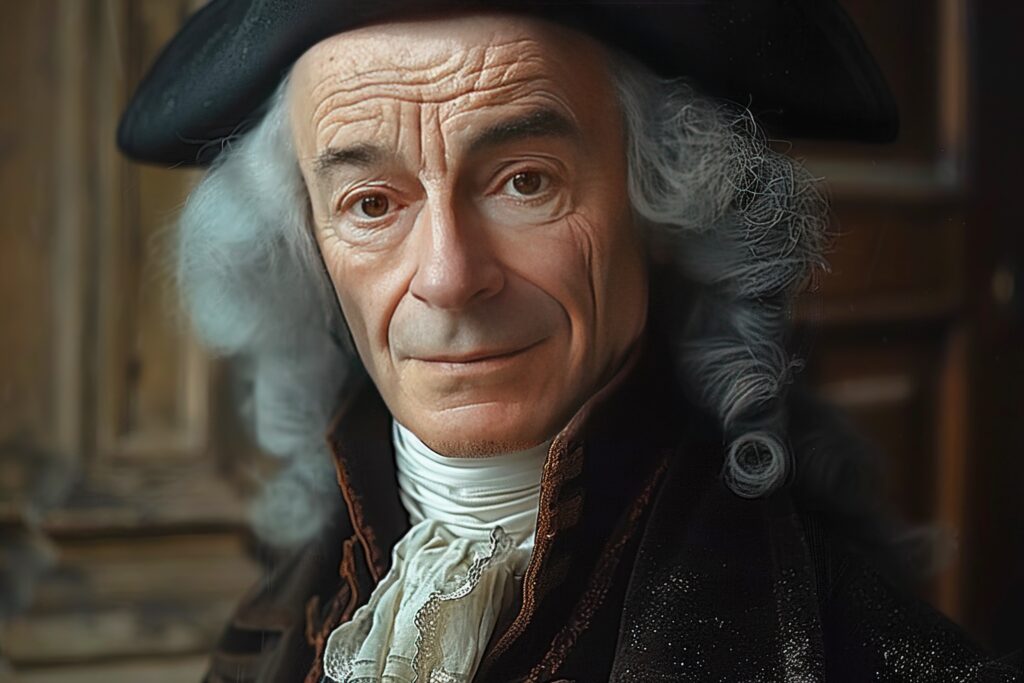
Ridiculous, right? But here’s the uncomfortable question: why are you so sure it won’t happen? Because it never has? Because the laws of physics are reliable? David Hume, the 18th century Scottish philosopher, would smile at your confidence and ask you to prove it.
You can’t. And that’s where things get interesting.
The Breakfast Problem
Every morning, billions of people assume the sun will rise. Not because they’ve done the math or verified the orbital mechanics, but because it always has. This seems perfectly reasonable until you realize what’s actually happening. We’re betting our entire existence on a pattern.
Hume noticed something peculiar about how humans think. We observe the same thing happening over and over, and our minds create an expectation. The mind doesn’t care about logic here. It just gets used to things. Touch a hot stove once, and you learn. Touch it a hundred times, and you’ve formed a habit of avoidance so deep you don’t even think about it anymore.
Science does exactly the same thing, just with fancier equipment.
What Scientists Don’t Tell You at Parties
Here’s the dirty secret of the scientific method: it cannot prove that the future will resemble the past. Not even a little bit. Every scientific law, every prediction, every technology relies on one massive assumption. What happened before will probably keep happening.
Try to prove that assumption, and you run into a wall. You might say, “Well, the future has always resembled the past, so it will continue to do so.” But notice what you just did. You used the pattern of the past to prove that patterns from the past will continue. You’re trying to justify induction by using induction. It’s like asking a liar if they’re lying and accepting their answer.
Hume called this the problem of induction, and it remains unsolved. Not because philosophers haven’t tried hard enough, but because it might be unsolvable.
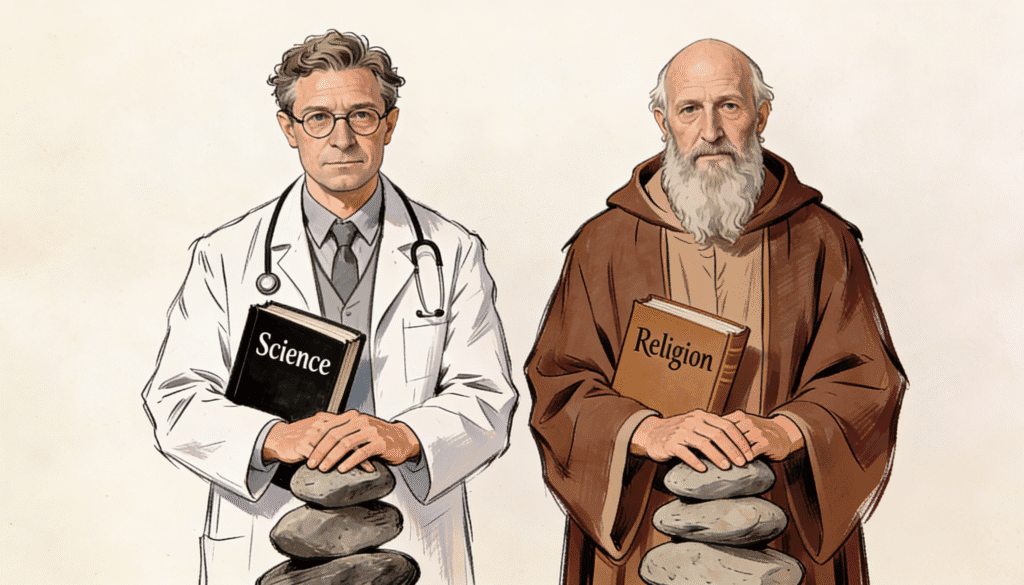
Scientists test hypotheses thousands of times. They gather data, run experiments, build models. And after all that work, what have they actually proven about tomorrow? Nothing, technically. They’ve only shown what happened in the past during specific conditions. The assumption that those conditions will produce the same results tomorrow is just that. An assumption. A habit dressed in a lab coat.
The Faith We Don’t Call Faith
Religious people believe in things they cannot prove. They have faith in sacred texts, divine plans, and invisible forces. We recognize this as belief without empirical evidence.
Now consider the scientist who believes the speed of light will remain constant tomorrow. Where’s the proof? There isn’t any. It’s worked consistently for as long as we’ve measured it, sure. But that’s not proof of tomorrow. That’s faith in patterns. Faith in consistency. Faith in a universe that plays by rules.
The scientist might protest. “But we have theories! We have mathematics! We have predictive models!” Yes, and those models are built entirely on observations of what already happened. They’re sophisticated ways of saying, “It worked this way before, so it should work this way again.” Every equation is a prayer that nature won’t change its mind.
This isn’t a criticism of science. It’s an observation about what science actually is underneath all the graphs and peer review. It’s a formalized system of pattern recognition, built on the human tendency to expect repetition. We’ve just gotten really, really good at it.
Why Hume Isn’t Popular at Research Conferences
Most scientists don’t spend their days worrying about philosophical foundations. They’re too busy doing science. And for good reason. The practical success of science is undeniable. Your phone works. Planes fly. Medicine cures diseases. Who cares if we can’t prove induction when the results speak for themselves?
But this is where Hume’s insight cuts deeper. The success of science doesn’t prove the validity of induction any more than a lucky gambler proves that their lucky socks work. Yes, science has an incredible track record. But past performance, as they say in finance, does not guarantee future results. We’re extrapolating from a sample size of “all of observable history” to make claims about “all of future time.” The math doesn’t work, no matter how good our history has been.
Think of it this way. Imagine an alien civilization that discovered science yesterday. They drop a ball and watch it fall. They drop it again. And again. After a thousand trials, they formulate the law of gravity. Are they doing science? Absolutely. Have they proven anything about drop number 1,001? Not logically, no. They’ve just formed a very strong habit.
We’re that alien civilization. We’ve just been dropping balls for longer.
The Ritual of Repeatability
Science worships at the altar of reproducibility. An experiment means nothing if it can’t be repeated. This sounds perfectly rational until you examine what’s really happening. We’re treating repetition as evidence of truth.
A religious person might pray every morning and feel closer to God. Repeat the ritual enough times, and the behavior becomes sacred. It works, in the sense that it produces the expected psychological outcome. The pattern reinforces itself.
A scientist runs the same experiment in different labs and gets the same results. Repeat the process enough times, and the finding becomes accepted truth. It works, in the sense that it produces the expected empirical outcome. The pattern reinforces itself.
Both are engaged in ritualized repetition that generates confidence through habit. The scientist uses controlled conditions and measurement tools, which certainly seems more rigorous. But the underlying logic? Same structure. Do the thing, get the result, expect it to keep working. The sophistication of the ritual doesn’t change its fundamental nature.
When Habits Break
History is littered with scientific “laws” that stopped working. Not because nature changed, but because we realized our habits were based on incomplete observations. Newtonian physics worked perfectly until it didn’t. The idea that time is absolute seemed obvious until Einstein showed up and ruined everything. Atoms were indivisible until they weren’t.
Each revolution in science reveals the same pattern. We observe, we form habits of thought, we build elaborate systems on those habits, and then something breaks. The new science that replaces the old isn’t logically superior. It’s just better at predicting the patterns we can now observe with better tools.
This should be humbling. Every generation of scientists thought they had figured out the fundamental nature of reality. Every generation was partially wrong. Why should we be different? Our habits are built on better data, sure. But they’re still just habits.
The Paradox of Useful Delusion
Here’s the truly counterintuitive part. Hume wasn’t arguing we should abandon science. He couldn’t even if he wanted to. The habit of expecting patterns is hardwired into human cognition. We literally cannot function without assuming the future will resemble the past. Touch that hot stove once, and your brain creates an expectation automatically. You don’t choose to learn. You just do.
Science works because humans are pattern recognition machines running on biological wetware that evolved to spot regularities and act on them. It’s not that we discovered a method that reveals truth about the universe. It’s that we formalized the way our brains already work and got really good at it.
This makes science simultaneously powerful and philosophically shaky. It’s the most effective tool we have for navigating reality, built on a foundation we cannot justify. Like standing on a floor you can’t prove is solid, but it keeps holding you up anyway.
What This Means for Literally Everything
If science is a religion built on habit, what does that make engineering? Applied prayer? What about medicine? Ritualized hope? This sounds cynical, but follow the thread. Every bridge is built on the assumption that steel will behave tomorrow like it did yesterday. Every prescription assumes biology will continue following patterns. Every technology is a bet that the universe won’t suddenly decide to play by different rules.
And it’s not just science. Your entire life runs on induction. You assume your spouse will still be the same person tomorrow. You plan for retirement based on patterns of aging. You eat breakfast expecting not to be poisoned. None of this is provable. All of it is habit.
Economics is particularly funny in this light. Economists build elaborate models predicting future behavior based on past data, then act surprised when markets don’t cooperate. They’re trying to find patterns in human behavior, which is like trying to find patterns in a kaleidoscope. Good luck proving those patterns will hold.
Even social justice movements rely on induction. We look at historical patterns of oppression and assume they’ll continue without intervention. The entire concept of progress depends on believing that positive changes can build on themselves. We’re all creatures of habit, just pointing our habits in different directions.
The Comfort of Unreason
Most people never think about this because it’s existentially uncomfortable. We want certainty. We want to believe that science gives us truth with a capital T. The idea that it’s all just very successful pattern matching based on habit feels wrong.
But maybe that’s okay. Maybe the genius of science isn’t that it escapes Hume’s critique, but that it works despite being philosophically unjustifiable. We can’t prove induction, but we can refine it, test it, and use it to build things that consistently work. That’s not nothing.
Religious believers often talk about faith in the face of uncertainty. They accept that some things can’t be proven and find meaning in the acceptance itself. Scientists do something similar, just without calling it faith. They accept that induction can’t be proven and proceed to do science anyway. Both groups are making peace with the limits of human knowledge. They’ve just chosen different names for the same basic move.
Living With the Problem
You cannot escape induction. You can recognize it for what it is, a habit baked into consciousness itself, but you’ll keep using it. Tomorrow morning, you’ll assume the sun will rise. You’ll eat breakfast expecting it to nourish you. You’ll trust that gravity still works. Not because you’ve proven any of this, but because you’ve habituated yourself to expect it.
Science has taken this basic human tendency and transformed it into something magnificent. We’ve created methods to test our habits, to refine them, to discard bad patterns and keep good ones.
Hume understood something profound. The foundation of all human knowledge isn’t logic. It’s custom. We are creatures of habit pretending to be creatures of reason. Science is our most sophisticated habit, our most refined pattern recognition system, our most successful ritual. It works not because it’s escaped the problem of induction, but because it’s optimized the process of forming useful habits.
That makes science both more humble and more human than we usually admit. It’s not a divine revelation of eternal truths. It’s a pragmatic tool built by pattern seeking primates trying to navigate an unpredictable universe. We cannot prove it will keep working. We just believe it will, because it always has.
And tomorrow, when the sun rises and your coffee stays in its cup and the laws of physics keep playing by the rules, you’ll take it as confirmation. Not proof. Never proof. Just another data point in a pattern we’re all betting will continue.
Because what else are we going to do?