Table of Contents
Let us begin with a thought experiment. Imagine two countries. One is blessed with fertile soil, deep harbors, vast forests, and mineral deposits that glitter under every hillside. The other has rocks. Just rocks and some stubborn grass and a population with strong opinions about cheese.
Common sense says the first country dominates trade. It produces everything better, faster, and cheaper. The second country should just give up, close its borders, and learn to enjoy the rocks.
Common sense, in this case, is dead wrong.
This is the story of David Ricardo and the idea that changed how we understand the global economy. It is called comparative advantage, and it is one of those rare ideas that sounds impossible the first time you hear it, obvious the second time, and then impossible again the third time when you try to explain it to someone else.
The Man Who Thought Differently
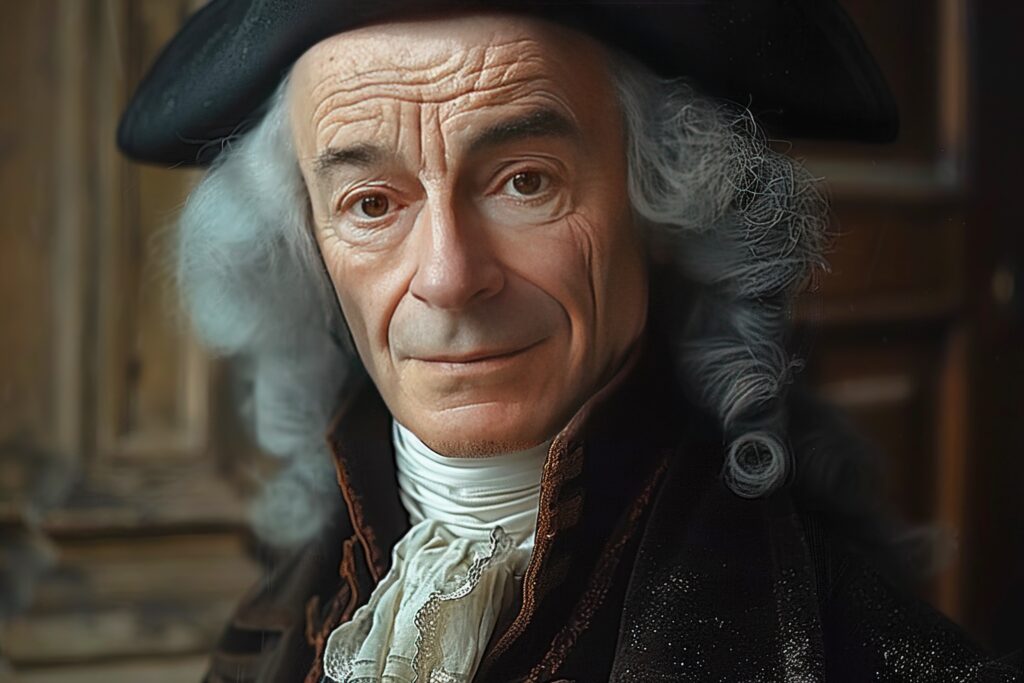
David Ricardo was not a professor. He was not born into the intellectual aristocracy of early nineteenth century England. He was a stockbroker. He made a fortune in government bonds, partly by being sharper than everyone around him, and partly by having the kind of nerve that lets a person bet large sums on the outcome of the Battle of Waterloo.
He picked up Adam Smith’s The Wealth of Nations almost by accident, reportedly while killing time at a resort. That book rewired his brain. Within a few years, he was publishing his own economic theories, engaging in public debates, and eventually winning a seat in Parliament. He did all of this without a university degree. The academic economists of his day must have found this mildly irritating.
But Ricardo’s great contribution was not his biography. It was a single insight that remains, more than two hundred years later, the strongest argument for why nations trade with each other even when the math seems to say they should not.
The Idea That Breaks Your Intuition
Here is the setup. Imagine two countries: England and Portugal. Portugal can produce both wine and cloth more efficiently than England. Portugal is simply better at making everything. In the language of economics, Portugal has an absolute advantage in both goods.
So why would Portugal ever buy cloth from England? England is slower, less efficient, and more expensive. Surely Portugal should just make everything itself and leave England to stew in its own mediocrity.
Ricardo said no. And his reasoning is beautiful.
Even though Portugal is better at producing both goods, it is not equally better at both. Suppose Portugal can produce wine with extraordinary ease but cloth with only moderate ease. England, meanwhile, is bad at wine and only slightly less bad at cloth.
The key question is not “who is better at what?” The key question is “what does each country give up when it chooses to produce one thing instead of another?”
If Portugal dedicates its workers to wine, it sacrifices relatively little cloth production. But if Portugal dedicates those same workers to cloth, it sacrifices an enormous amount of wine. The cost of making cloth, measured in wine not produced, is high for Portugal.
For England, the calculation runs in reverse. Making cloth costs relatively little in terms of wine not produced, because England was never going to produce much wine anyway. English weather being what it is.
So here is the punch line. Portugal should specialize in wine. England should specialize in cloth. They should trade with each other. And both countries end up with more wine and more cloth than if each had tried to do everything alone.
Read that again. Both countries are better off. Even the one that is worse at everything.
This is comparative advantage. And it is one of the few results in economics that almost every economist, regardless of political leaning, agrees is correct.
Why It Feels Wrong
The reason this idea meets resistance is that it violates a deep human instinct. We think about trade the way we think about sports. If one team is better at everything, it should win everything. Trade is not a game. There is no final score. There is no trophy. There is only the question of whether your citizens have more goods available to them at lower prices than they would have otherwise.
We also tend to think in absolute terms rather than relative ones. Telling someone that a country with no natural resources can thrive through trade feels like telling someone that a student who is bad at every subject should still go to school. But the analogy actually holds up better than you might think.
Consider a surgeon who also happens to be the fastest typist in the hospital. Should the surgeon fire the secretary and type all the medical reports personally? Of course not. Every hour the surgeon spends typing is an hour not spent in the operating room, where the value of the surgeon’s time is vastly higher. The secretary is slower at typing, yes. But the cost of the secretary typing, measured in surgeries not performed, is zero. The cost of the surgeon typing, measured in the same terms, is enormous.
The secretary has a comparative advantage in typing. Not because the secretary is better at it in absolute terms, but because the secretary’s opportunity cost is lower.
Scale this insight up from a hospital to a nation and you have Ricardo’s theory.
The Real World Is Messier (But the Logic Holds)
Critics will rush in here and point out that the real world is not a two country, two good model on a chalkboard. They are right. But they are also missing the point.
Comparative advantage does not require a simple world to function. It requires only that countries differ in their relative efficiencies. And countries always differ in their relative efficiencies, because geography, culture, institutional history, labor skills, and a hundred other factors ensure that no two nations face identical tradeoffs.
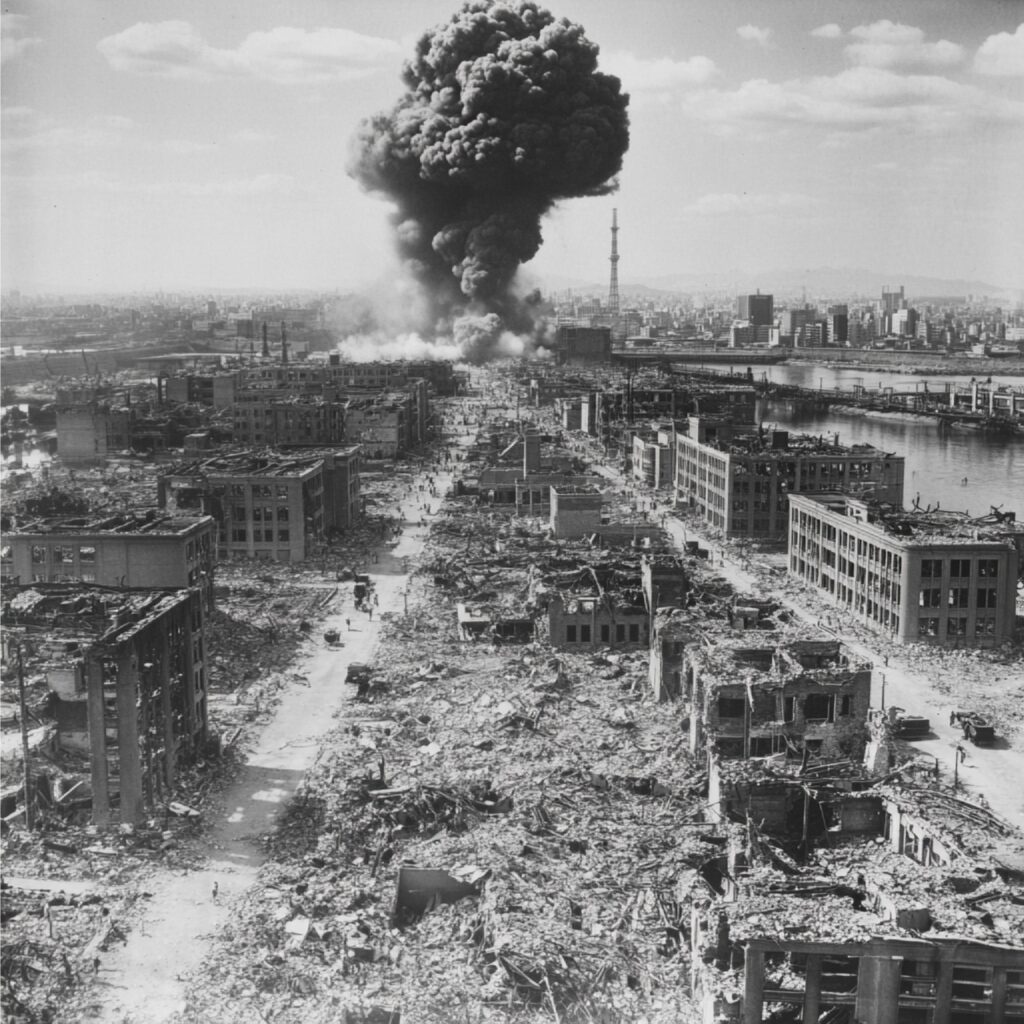
Japan has almost no oil, very little arable land, and a population crammed onto islands that are regularly shaken by earthquakes. On paper, Japan should be an economic disaster. Instead, it became one of the wealthiest nations in history by specializing in manufacturing, electronics, and automobiles. Japan did not need oil in the ground. It needed the ability to import oil cheaply and transform it into Toyotas.
Singapore is a city state with no hinterland, no agriculture, and no natural resources worth mentioning. Its founding prime minister, Lee Kuan Yew, reportedly wept on the day of independence because he was not sure the country could survive. Singapore now has a higher per capita income than most of Europe. It specialized in trade logistics, finance, and refining. It became indispensable not by having things, but by being excellent at moving and transforming the things other people have.
Switzerland is a landlocked country full of mountains. Mountains are not, generally speaking, a resource you can export. Yet Switzerland exports precision instruments, pharmaceuticals, chocolate, and financial services. The mountains, if anything, are a hindrance. But Swiss watchmakers did not need flat terrain. They needed patience, skill, and institutions that rewarded precision. The comparative advantage was never in the rocks. It was in what the people chose to do despite the rocks.
Where Ricardo Meets Darwin
There is a connection here that rarely gets made but is worth making. Ricardo’s logic has a structural parallel in evolutionary biology.
In nature, species do not survive by being the best at everything. They survive by finding a niche. A hawk does not compete with a worm for the same food. They coexist because each occupies a space where its relative advantages are highest. The hawk does not dig through soil. The worm does not hunt from the sky. Ecosystems become richer and more productive precisely because their participants specialize according to their relative strengths rather than all trying to be the apex predator.
Trade between nations works the same way. A global economy where every country tries to produce everything is like an ecosystem where every species tries to be a hawk. It would be poorer, less resilient, and far less interesting.
Ricardo could not have known about Darwin. He published his Principles of Political Economy in 1817, more than forty years before On the Origin of Species. But the deep logic is the same. Specialization according to relative advantage is not just an economic principle. It is a pattern that shows up wherever complex systems organize themselves for mutual benefit.
The Uncomfortable Flip Side
Now, honesty demands that we acknowledge the parts of this story that are less tidy.
Comparative advantage tells us that trade makes countries better off in aggregate. It does not promise that every person within those countries will be better off. When England specializes in cloth and stops trying to make wine, English winemakers lose their jobs. The gains from trade are real, but they are unevenly distributed.
This is not a flaw in Ricardo’s logic. It is a feature of reality that Ricardo’s logic exposes. The question is never whether trade creates winners and losers within a country. It always does. The question is whether the society has the political will and institutional capacity to share the gains widely enough that the losers do not burn down the system.
Many of the populist revolts against free trade in recent decades are not evidence that Ricardo was wrong. They are evidence that governments failed to do the redistribution part. The theory was fine. The implementation was sloppy.
There is a certain irony in this. Ricardo, the stockbroker who profited from the volatility of markets, gave the world an argument for openness and cooperation. But the world kept finding ways to pocket the gains at the top and hand the losses to the bottom. Ricardo provided the map. Nobody followed the full route.
Why This Still Matters Now
In a world increasingly drawn to protectionism, tariffs, and economic nationalism, Ricardo’s insight is more relevant than it has been in decades. The instinct to close borders and produce everything domestically is understandable. It feels safe. It feels sovereign. It also makes almost everyone poorer.
When a country imposes tariffs to protect an industry where it does not have a comparative advantage, it is essentially forcing its own citizens to pay higher prices so that a less efficient domestic producer can stay in business. The citizens do not usually realize this, because the tariff is invisible at the checkout counter. The foreign goods simply cost more, and nobody explains why.
This is not an argument against all industrial policy. There are legitimate reasons for a country to maintain certain capabilities regardless of comparative advantage. National security is one. No country wants to import all of its food or all of its ammunition from a potential adversary. But these are exceptions. The baseline logic remains: specialization and trade make both parties richer, even when one party is worse at everything.
The Deepest Lesson
Ricardo’s genius was not in the math, though the math is elegant. His genius was in seeing that competition between nations is not a zero sum game. One country’s gain does not require another country’s loss. The pie is not fixed. Trade makes the pie larger.
This is hard for people to accept because so much of daily life is zero sum. If you get the job, I do not. If your team wins, mine loses. We are wired to see the world in terms of rivalries and rankings. Ricardo asked us to set that wiring aside and follow the logic wherever it leads.
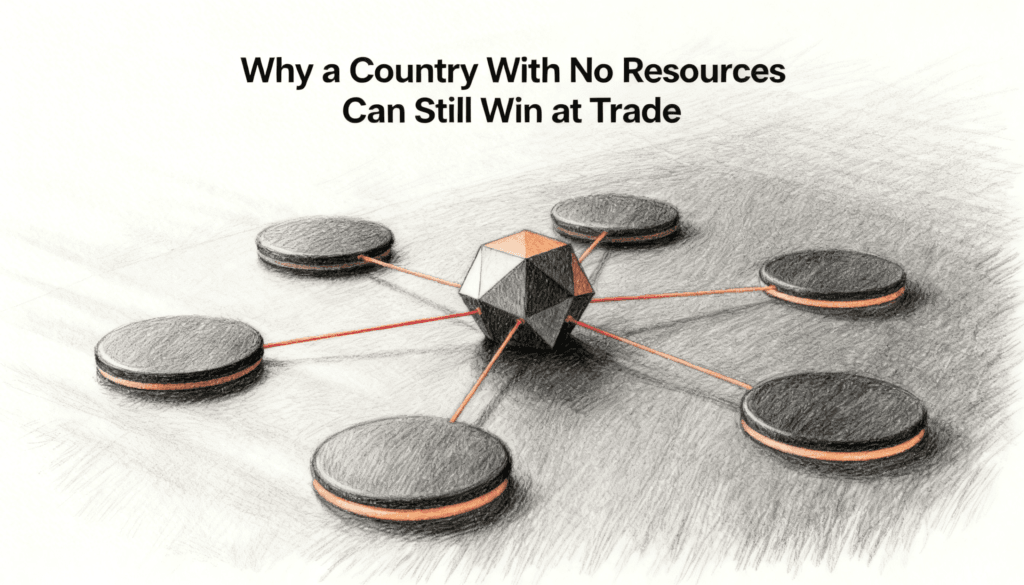
It leads somewhere surprising. It leads to the conclusion that a country with no resources, no natural advantages, and no particular reason for confidence can still prosper through trade. Not by being the best. By being the least bad at something specific and leaning into that specialty with everything it has.
That is the gift of comparative advantage. It means the game is never over before it starts. There is always a seat at the table, always a deal to be made, always a way to contribute.
The country with nothing but rocks and opinions about cheese? It might just end up richer than the country with everything.
Ricardo would not have been surprised. He bet on Waterloo, after all. He understood that the real risk is not playing the game with a weak hand. The real risk is refusing to play at all.