Table of Contents
There is a particular kind of anxiety that grips people when currencies wobble. You see it in the headlines. You hear it at dinner parties where someone who just discovered gold ETFs suddenly speaks with the authority of a central banker. The dollar is dying, they say. Protect yourself. Buy gold. Buy crypto. Buy Swiss francs. Buy anything that is not the dollar.
And yet, two centuries before any of these conversations, a French economist named Jean-Baptiste Say offered a different kind of advice. Not about what to buy, but about what to become. His insight was deceptively simple: production is the real source of wealth. Not the currency it happens to be denominated in. Not the metal sitting in a vault. Not the abstraction on a screen. The thing you make. The value you create. The work that leaves your hands and enters the world as something someone else needs.
This idea, often reduced to the shorthand of “Say’s Law,” has been debated, distorted, and dismissed by generations of economists. But at its core, it contains something that no amount of portfolio rebalancing can replicate. A truth about where security actually comes from.
Let us talk about that.
The Illusion of the Hedge
When people hedge against the dollar, what are they really doing? They are placing a bet. They are saying: I believe this currency will lose value, so I will move my wealth into something that holds value better. On the surface, this sounds rational. Prudent, even. The kind of thing a responsible adult does.
But look closer. A hedge is not a productive act. It is a defensive posture. You are not creating anything when you convert dollars to gold. You are not solving a problem. You are not making anyone’s life better. You are rearranging chairs on a deck that you suspect might be tilting. And if you are wrong about the tilt, you have paid fees, lost liquidity, and spent mental energy on a project that produced exactly nothing.
This is not to say hedging is always foolish. Large institutions with enormous currency exposure have legitimate reasons to manage that risk. A company importing goods from Japan and selling them in the United States has a genuine operational need to think about exchange rates. That is hedging as a business function, not as a worldview.
The problem starts when individuals treat currency hedging as a life strategy. When the guy with a $90,000 salary and a modest savings account starts allocating 20% of his portfolio to commodities because a podcast told him the dollar was about to collapse. That is not risk management. That is fear wearing a suit.
What Say Actually Said
Jean-Baptiste Say was writing in the early 1800s, a time when France was recovering from revolution, Napoleon was reshaping Europe, and the question of what makes a nation wealthy was not academic. It was urgent.
Say’s key contribution was the idea that supply creates its own demand. This gets misunderstood constantly, so let us be precise. He was not saying that if you build something, buyers will magically appear. He was saying that the act of producing something of value gives the producer the means to consume. You grow wheat, and now you have something to trade for shoes. You make shoes, and now you have something to trade for bread. The economy is not a fixed pie waiting to be divided. It is a process of mutual creation.
The implication is radical. Wealth does not come from hoarding the right asset. It comes from being useful. From producing something that the world values enough to exchange for. And here is where it connects to our question about the dollar.
If your income depends entirely on the value of a static asset, you are exposed. Gold does not adapt to changing markets. A pile of Swiss francs does not learn new skills. Bitcoin does not wake up one morning and decide to become more productive. These things sit there. They fluctuate based on forces entirely outside your control.
But you are not a static asset. You can learn. You can adapt. You can produce more, produce better, produce differently. And that capacity, that productive flexibility, is the most robust hedge against any economic uncertainty you will ever face.
Productivity as a Hedge: The Mechanics
Let us make this concrete instead of philosophical.
Imagine two people. Both earn $100,000 a year. Both are worried about inflation eroding their purchasing power.
Person A spends 15 hours a week reading macroeconomic analysis, adjusting portfolio allocations, buying and selling positions in currencies and commodities. Over five years, let us be generous and say this strategy nets a 3% annual improvement over what a simple index fund would have delivered. That is real money. But it cost real time and real attention.
Person B spends those same 15 hours a week developing a new skill, building a side business, deepening expertise in a field, or creating something that generates additional income. Over five years, this person has not just grown their wealth. They have grown their capacity to generate wealth. They have become more valuable to the market. If the dollar crashes, they still have something to offer. If the economy shifts, they can shift with it. Their hedge is not a position in a portfolio. It is a position in the economy.
Person B understood Say. Person A understood CNBC.
Now, you might object: why not do both? In theory, sure. In practice, attention is finite. Every hour spent decoding Federal Reserve minutes is an hour not spent building something. And the returns on productive investment compound in ways that financial hedging simply does not. A new skill does not just earn you money once. It earns you money every time you use it. It opens doors that were previously invisible. It changes what you are capable of offering the world.
The Psychological Dimension
There is something else happening here that rarely gets discussed. The act of hedging against the dollar, or against any external force, places you in a fundamentally reactive position. You are responding to something you cannot control. Your mental orientation is defensive. You are playing not to lose.
Building your own productivity does the opposite. It places you in a creative position. You are not reacting to the economy. You are participating in it. You are not watching the scoreboard and wincing. You are on the field.
This distinction matters more than most financial advice acknowledges. People who spend their energy on production tend to be less anxious about economic fluctuations. Not because they are ignorant of the risks, but because they have a fundamentally different relationship to uncertainty. They know that no matter what the dollar does, they can create value. That knowledge does not show up on a balance sheet, but it shows up in how you sleep at night.
There is an interesting parallel in sports psychology. Athletes who focus on the outcome, the score, the opponent’s performance, tend to choke under pressure. Athletes who focus on their own process, their technique, their preparation, tend to perform better when it matters most. The economy works the same way. Obsessing over macroeconomic outcomes you cannot influence is the financial equivalent of staring at the scoreboard instead of watching the ball.
The Counterintuitive Part
Here is where it gets interesting. You might expect that in periods of genuine economic turmoil, the hedgers would come out ahead. After all, if the dollar really does collapse, surely the person holding gold is better off than the person holding skills?
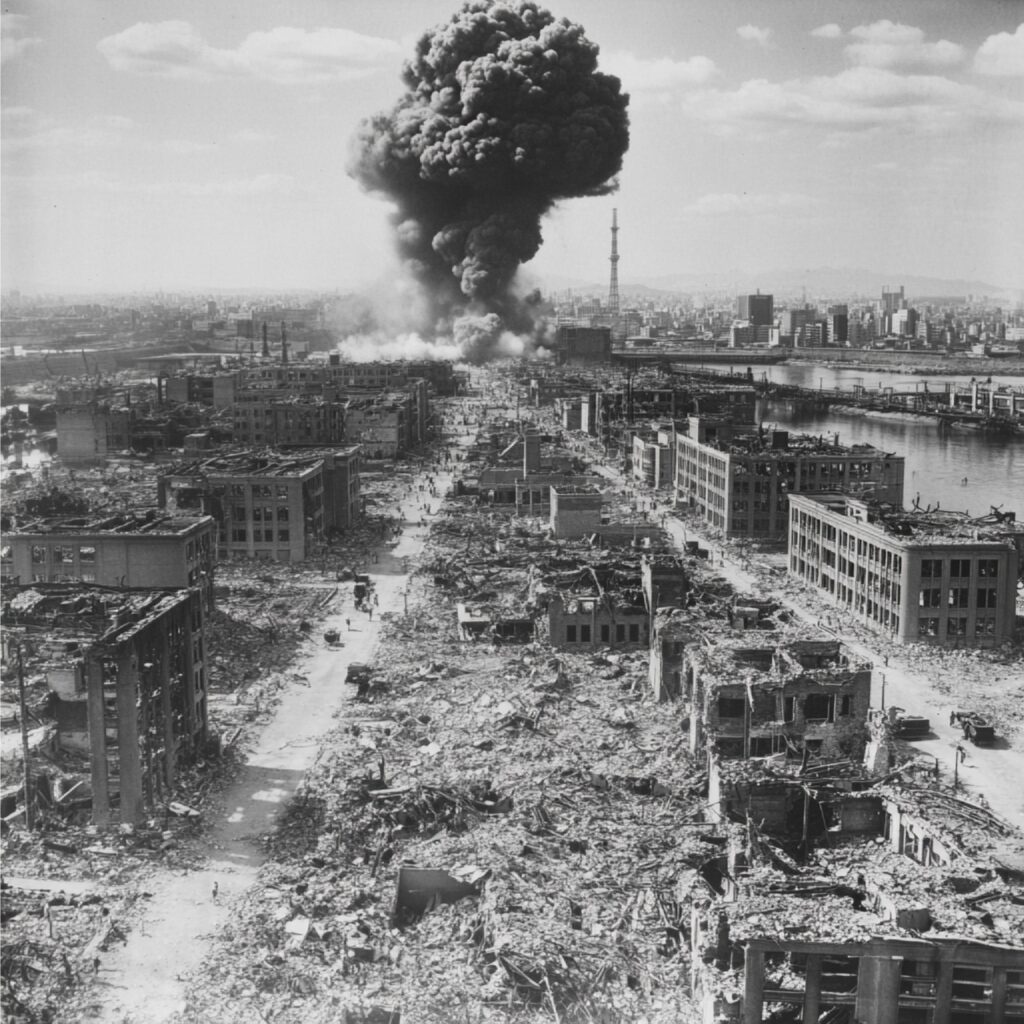
History says otherwise. Look at any period of genuine economic crisis and ask who recovered fastest. It was not the people with the best hedges. It was the people who could produce. After World War II, the nations that recovered most rapidly were those with educated, productive populations, even when their currencies had been destroyed. Germany’s economic miracle was not built on gold reserves. It was built on engineering talent, industrial knowledge, and a culture of production.
On a smaller scale, consider what happens during recessions. Layoffs hit hard. Savings dwindle. But the people who rebound quickest are invariably those with the most versatile productive capacity. The person who can code, write, sell, manage, build, or teach has options that no amount of portfolio diversification can provide. Their “hedge” is themselves.
This is the counterintuitive truth Say was pointing toward. The safest thing you can do in an uncertain economy is not to find a safe asset. It is to become the kind of person who can produce value regardless of which direction the economy moves. Safety is not a thing you own. It is a thing you can do.
The Modern Application
We live in a time uniquely suited to this insight. The barriers to productive enterprise have never been lower. You can learn almost anything for free online. You can start a business with a laptop and a wifi connection. You can reach a global market without a single physical storefront. The tools of production are available to anyone willing to use them.
And yet, a staggering amount of collective attention goes to worrying about the dollar. Scroll through financial media for ten minutes and count how many articles are about currency movements versus how many are about building productive capacity. The ratio is absurd. We have an entire industry built around convincing people that the most important thing they can do with their money is protect it from their own government’s currency. Meanwhile, the most important thing they can do with their time is make themselves more useful.
This is not just an individual issue. It is a cultural one. When a society spends more energy hedging than producing, it starts to stagnate. Capital flows into defensive positions rather than productive investments. Talent goes into financial engineering rather than actual engineering. The economy becomes a game of musical chairs rather than a workshop of creation.
Say would have recognized this pattern immediately. He lived through a version of it. Revolutionary France was full of people trying to preserve wealth through political maneuvering and asset hoarding. The ones who prospered in the long run were the ones who built, created, and produced.
A Note of Realism
I do not want to oversimplify this. There are people in genuine financial precarity for whom any kind of investment, productive or otherwise, is a luxury they cannot afford. There are systemic barriers that prevent productive capacity from being rewarded fairly. Telling someone in a minimum wage job to “just become more productive” without acknowledging the structural constraints they face is not insight. It is cruelty disguised as advice.
Say’s framework works best as a guiding principle, not as a universal prescription. The idea is directional. When you have a choice between spending your next available hour worrying about the dollar or building a skill, choose the skill. When you have a choice between consuming financial fear content and creating something of value, choose creation. This does not solve every problem. But it reorients your attention toward the one variable you actually control: yourself.
The Bottom Line, If You Need One
The dollar might lose value. It might gain value. It might do both in the same week. You cannot control this. You cannot predict it. And the people who claim they can are, with few exceptions, selling you something.
What you can control is what you produce. What you can develop is your ability to create things the world values. What you can invest in is your own capacity to adapt, learn, and build.
Jean-Baptiste Say did not have a podcast. He did not have a newsletter with a premium tier. He was just a French economist who noticed something that should be obvious but somehow never is. The real source of wealth is not the money. It is the production that the money represents. And the safest place to store your economic future is not in any asset class. It is in your own hands.
Stop hedging against the dollar. Start hedging with what you can do.
The returns are better. And you do not have to pay a management fee.