Table of Contents
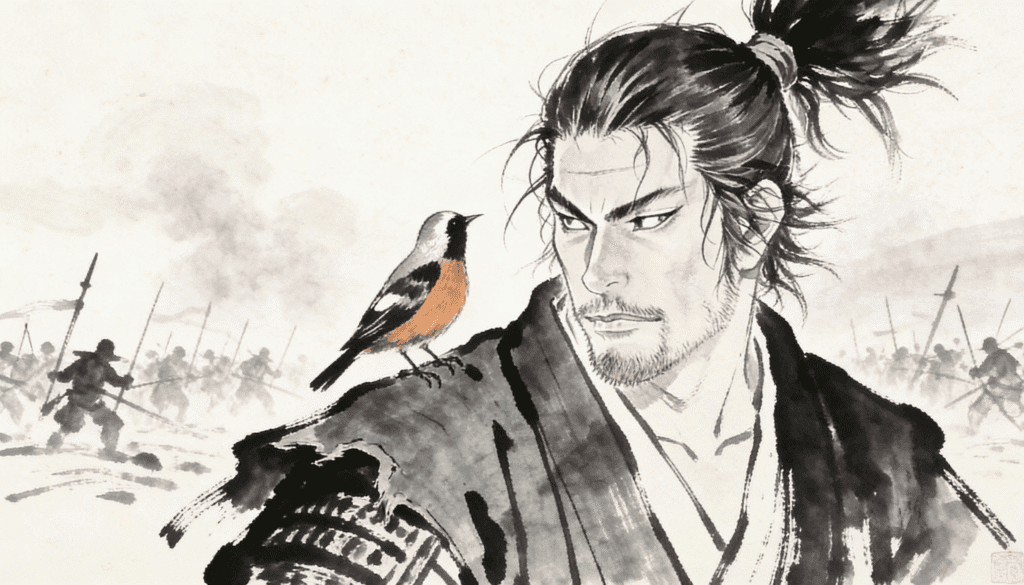
Miyamoto Musashi killed his first man at thirteen. By the time he wrote The Book of Five Rings, Japan’s most legendary swordsman had fought over sixty duels and never lost. His advice on conflict strips away every comfortable illusion we hold about human nature. And nowhere does he savage our modern sensibilities more than in his treatment of empathy.
We’ve built entire industries around empathy. Leadership consultants sell it. TED speakers celebrate it. Corporate training modules mandate it. The word appears in mission statements like a magical incantation that transforms cutthroat capitalism into conscious business. But Musashi would watch this circus with the cold eyes of someone who understood a different truth: in genuine conflict, your empathy becomes the knife your opponent uses to gut you.
This isn’t pleasant. It contradicts everything your kindergarten teacher told you. But Musashi wasn’t interested in making friends or winning popularity contests. He was interested in staying alive while other skilled fighters tried very hard to kill him. That focus clarifies things wonderfully.
The Mechanism of Exploitation
Consider what happens when you empathize during conflict. You model your opponent’s emotional state. You imagine their perspective. You feel what they might feel. This sounds noble until you realize what you’ve actually done: you’ve given your opponent access to your decision-making process.
A chess grandmaster doesn’t feel sorry for their opponent’s weakening position. They exploit it. They press the advantage until the king falls. The moment you start empathizing in competitive conflict, you’re playing two games simultaneously. One against your opponent, and one against your own humanitarian impulses. Your opponent only has to play one game. The math doesn’t work in your favor.
Musashi understood this with painful clarity. When he fought Sasaki Kojiro on Ganryu Island, he showed up late deliberately. Not fashionably late. Two hours late. He wanted Kojiro angry, off balance, emotional. Then he carved a wooden sword from an oar on the boat ride over, making it deliberately longer than Kojiro’s famous blade. When Kojiro saw this crude weapon, his professional pride was insulted. Musashi read these emotions perfectly and used them to kill one of Japan’s finest swordsmen with a piece of carved wood.
This wasn’t cruelty. It was clarity about what conflict actually demands. Musashi felt no need to give Kojiro a fair fight. He felt no need to respect Kojiro’s emotional state. He needed to win, and he arranged every variable to make winning certain. Empathy would have meant arriving on time, using a proper sword, and giving Kojiro the duel his honor demanded. Empathy would have gotten Musashi killed.
The Corporate Translation
You might think this only applies to literal life-or-death combat. You’d be wrong. Watch what happens in corporate negotiations when one side brings empathy to a battle where the other side brings strategy.
A product manager empathizes with the engineering team’s concerns about impossible deadlines. She imagines their stress, their family dinners missed, their mounting technical debt. So she negotiates gentler timelines with leadership. Meanwhile, her counterpart at a competing company treats their engineering team as a resource to be optimized, pushes brutal deadlines, and ships three months earlier. The market doesn’t reward empathy. It rewards shipping.
The empathetic manager will tell herself a story about sustainable pace and long-term thinking. This story may even be true. But it doesn’t change the fact that she allowed her empathy to handicap her competitive position. She brought emotional resonance to a game that runs on different rules.
Venture capitalists understand this instinctively. They’ll tell you about their passion for founders and their mission-driven investment thesis. Then they’ll structure term sheets that transfer risk entirely onto the entrepreneur while maintaining iron control through board seats and liquidation preferences. They empathize just enough to build rapport, then they execute with the cold precision of people who understand what game they’re actually playing.
This doesn’t make them evil. It makes them effective at a specific game with specific rules. Musashi would recognize them immediately.
The Empathy Trap in Modern Warfare
Military strategists face this paradox constantly. Modern warfare increasingly emphasizes winning hearts and minds. Counterinsurgency doctrine preaches cultural sensitivity and empathy for local populations. This represents genuine moral progress from earlier eras of total war. It also creates exploitable vulnerabilities.
An insurgent force that operates without empathetic constraints can use civilian populations as shields, knowing that empathetic opposition forces will hesitate. They can stage attacks from hospitals and schools because they correctly predict that an enemy hampered by empathy will struggle to respond effectively. This isn’t theoretical. It’s been the playbook in conflicts from Gaza.
The side burdened by empathy must fight with one hand tied behind its back while explaining to domestic audiences why the conflict takes so long and costs so much. The side unburdened by such constraints simply executes its strategy. Again, this doesn’t make empathy wrong. But it does make it a tactical liability in zero-sum confrontation.
Musashi would point out that you can have empathy or you can have victory, but pretending you can have both is how you end up dead. The universe doesn’t care about your moral comfort. It cares about cause and effect.
The Sports Arena
Watch professional athletes at the highest level. They’ll hug and laugh with opponents before a match, then spend the next two hours trying to destroy them within the rules of the game.
Muhammad Ali made psychological warfare an art form. He understood that making opponents angry or insecure would disrupt their technical execution. He said things specifically designed to get under people’s skin because emotional opponents make mistakes. Was this empathy? Absolutely. He had to deeply understand his opponents’ psyches to know which buttons to push. But he deployed that understanding as a weapon, not as a bridge to mutual understanding.
The best negotiators work the same way. They empathize enough to model your decision tree, then they use that model to extract maximum value. FBI hostage negotiators call it “tactical empathy.” The word tactical should tell you everything. It’s empathy as a tool, not as a value.
The Paradox of Preparation
Here’s where it gets interesting. Musashi didn’t advocate ignorance of human nature. Quite the opposite. The Book of Five Rings demands ruthless study of opponents. You must understand how people think, how they react, what they fear. This requires a kind of empathy.
But it’s empathy in service of victory, not empathy as an end in itself. It’s the difference between understanding someone to help them and understanding someone to defeat them. The psychological insight is identical. The application differs completely.
Think of a surgeon. She must understand the patient’s anatomy with perfect clarity. She must know exactly how the body will react to each incision. But during surgery, she doesn’t empathize with the tissue she’s cutting. She cuts with precision and purpose. Empathy for the patient happens before and after surgery, not during it.
Conflict demands the same compartmentalization. Study your opponent with cold clarity before the confrontation. Understand their motivations, their fears, their decision patterns. Then when the conflict begins, execute your strategy without the handicap of feeling what they feel. You can empathize again after you’ve won.
Most people can’t make this switch. They either remain ignorant of human nature, making them ineffective, or they empathize continuously, making them exploitable. Musashi’s genius was recognizing that these represent different modes requiring different approaches.
The Relationship Minefield
Personal relationships throw all of this into chaos. Your romantic partner isn’t an opponent in zero-sum conflict. Your friend isn’t someone you need to defeat. Here empathy isn’t a weakness but the foundation of functional connection.
Except when it is a weakness. When a relationship becomes adversarial, when divorce lawyers get involved or business partnerships dissolve, the person who keeps empathizing while the other person starts strategizing will get destroyed. Every family law attorney has watched one spouse try to be fair and reasonable while the other spouse optimizes for maximum extraction. The reasonable spouse gets annihilated.
This creates a terrible bind. You want to be the kind of person who maintains empathy even under stress. That’s admirable. It’s also how you end up signing away assets to someone who learned to weaponize your decency.
Musashi would tell you that the relationship ended when genuine conflict began. What you’re fighting now isn’t your former partner but a strategic opponent who happens to know all your vulnerabilities. Treating them as your partner while they treat you as an opponent is pure strategic stupidity.
Harsh? Absolutely. But Musashi wrote for people serious about winning conflicts, not for people interested in feeling good about their moral purity while losing.
The Evolutionary Context
We evolved empathy for cooperation within groups, not for conflict between them. When your tribe faces another tribe over scarce resources, empathy for the other tribe’s hungry children means your tribe’s hungry children starve. Natural selection doesn’t reward beautiful losers.
This explains why we’re so good at selectively activating and deactivating empathy. We empathize intensely with our group while treating outsiders as abstract threats. Sports fans demonstrate this every weekend. They empathize completely with their team’s struggles while celebrating the other team’s failures. This isn’t hypocrisy. It’s the empathy system working exactly as designed.
Modern life complicates this because we face conflicts in arenas where the opponents aren’t clearly defined enemies. Your business competitor isn’t trying to kill your children. Your rival for a promotion isn’t from an enemy tribe. But the underlying dynamic remains: in competitive scenarios with clear winners and losers, empathy for opponents handicaps your performance.
We’ve built social technologies like sportsmanship and professional courtesy to manage this tension. These are useful fictions that let us compete without activating our full tribal aggression. But they’re fictions nonetheless. The moment you actually need to win, these niceties become weights you carry that your opponent doesn’t.
The Stoic Connection
Ancient Stoics understood something similar from a different angle. They distinguished between what you control and what you don’t. Your opponent’s emotional state? You don’t control it. Your strategic choices? You do.
This isn’t cruelty. It’s proper allocation of attention. You can’t help your opponent and defeat them simultaneously. Trying to do both means you’ll do neither effectively. Choose your goal, then optimize for it without apology.
Musashi and the Stoics agreed: clarity about your actual goals eliminates most confusion. If your goal is to win the conflict, then strategic empathy is useful and emotional empathy is a handicap. If your goal is to maintain your self-image as an empathetic person, then you’re not really trying to win the conflict. You’re trying to win while also looking like a certain kind of person, which is a different and much harder game.
The Modern Dilemma
We live in a world that simultaneously demands empathy and punishes it. We’re told to be understanding leaders while also being told to drive aggressive quarterly results. We’re supposed to empathize with everyone while competing against them for finite resources.
This creates cognitive dissonance that most people resolve by compartmentalizing poorly. They empathize in some contexts, strategize in others, and mostly feel confused about when to do which. The successful ones develop the skill Musashi had: they know exactly what game they’re playing at any given moment, and they bring the appropriate tools.
In collaboration, bring empathy. In genuine conflict, bring strategy informed by understanding but unconstrained by emotional resonance. The difficulty is that many situations contain elements of both. Your coworker is simultaneously a collaboration partner on the team project and a competitor for the next promotion. Navigating this requires uncomfortable clarity about which mode you’re in at any given moment.
Most people prefer comforting ambiguity. They want to believe that being a good person and being strategically effective are the same thing. Musashi offers no such comfort. He tells you that in real conflict, you choose effectiveness or you choose the warm feeling of moral superiority. You don’t get both.
The Final Cut
Musashi died in a cave at age sixty-one, having spent his final years writing and painting. His empathy emerged in his art and his teaching. But he accessed that empathy only after his fighting career ended. He understood something most people don’t: empathy and effectiveness in conflict operate in different registers.
You can empathize before conflict to understand your opponent. You can empathize after conflict to restore relationships or show grace in victory. But during conflict itself, empathy becomes the mechanism through which you lose. Your opponent’s fear or pain become signals you respond to, creating opportunities for manipulation.
This doesn’t mean becoming a sociopath. It means recognizing that conflict has its own logic, and that logic doesn’t reward emotional resonance with opponents. A doctor shows empathy to patients but not to tumors. A firefighter shows empathy to trapped victims but not to fires. The distinction matters.
The modern world asks us to blur these lines because clear lines make us uncomfortable. We want to believe we can be kind and crushing simultaneously, that we can empathize our way to victory, that feeling our opponent’s pain makes us better competitors. Musashi, standing over sixty-one corpses, suggests otherwise.
Your empathy isn’t always your weakness. But when you’re in genuine conflict with someone trying to defeat you, it absolutely is. Musashi’s brutal truth is that pretending otherwise gets you killed. Or in modern terms, outmaneuvered, outcompeted, and wondering why being such a good person didn’t seem to help.
The question isn’t whether empathy has value. It does. The question is whether you can be honest about when it helps and when it hurts. Most people can’t. They’ll choose comfortable delusion over uncomfortable clarity. Musashi chose clarity.
That’s why he lived and his opponents didn’t.