Thinkers

The Ghost of Yesterday- How Tradition Kills Innovation (and Your Creativity)

The Ghost of Yesterday: How Tradition Kills Innovation (and Your Creativity) (Ralph Waldo Emerson)

Ralph Waldo Emerson once wrote that “imitation is suicide.” He wasn’t being dramatic. He was pointing at something most of us spend our lives avoiding: the uncomfortable truth that we’re living someone else’s life, thinking someone else’s thoughts, and calling it wisdom. We love tradition. We wrap ourselves in it like a security blanket. We […]


The Ghost of Yesterday: How Tradition Kills Innovation (and Your Creativity) (Ralph Waldo Emerson) Read More »

The Ontology of Money: Is a Bitcoin More ‘Real’ Than Gold? A Quinean Investigation

You can hold gold in your hand. It has weight, it reflects light in that unmistakable yellow glow, and if you drop it on your toe, you’ll know about it. Bitcoin, on the other hand, exists as entries in a distributed ledger, mathematical relationships between computers, pure information. So which one is more real? The

The Ontology of Money: Is a Bitcoin More ‘Real’ Than Gold? A Quinean Investigation Read More »

Why Financial Literacy is a Form of Governance (Not Freedom) (Michel Foucault)

We are told that financial literacy will set us free. Learn to budget, understand compound interest, diversify your portfolio, and you will escape the chains of poverty and debt. The promise is simple: knowledge equals power, and power equals freedom. But what if this entire framework is backwards? What if financial literacy is not the

Why Financial Literacy is a Form of Governance (Not Freedom) (Michel Foucault) Read More »

The Real Reason We Cannot Agree: The Problem with Having a Private Vocabulary

The Real Reason We Cannot Agree: The Problem with Having a Private Vocabulary (Ludwig Wittgenstein)

You think you know what pain feels like. I think I know what pain feels like. But here’s the uncomfortable truth: we might be talking about completely different things when we use that word. This isn’t just linguistic nitpicking. This is the heart of why your arguments with your spouse go nowhere. Why political debates

The Real Reason We Cannot Agree: The Problem with Having a Private Vocabulary (Ludwig Wittgenstein) Read More »

Why Prediction is Not Strategy: Sun Tzu's Caution Against Future-Gazing

Why Prediction is Not Strategy: Sun Tzu’s Caution Against Future-Gazing

We love predictions. Every January, experts line up to tell us what the stock market will do, which technologies will dominate, who will win elections. By February, most of these predictions are already wrong. By December, we’ve forgotten them entirely. Yet come next January, we’ll listen to the same experts make new predictions with the

Why Prediction is Not Strategy: Sun Tzu’s Caution Against Future-Gazing Read More »

Class vs. Status: Why Being an Influencer Trumps Having a Big Bank Account

Class vs. Status: Why Being an Influencer Trumps Having a Big Bank Account (Max Weber)

A millionaire sits alone in a restaurant, and nobody notices. An influencer with 20,000 followers walks in, and phones come out. The millionaire can buy anything in the building. The influencer gets it for free. Welcome to the strangest reversal in modern economics, and it turns out a German sociologist Max Weber predicted this exact

Class vs. Status: Why Being an Influencer Trumps Having a Big Bank Account (Max Weber) Read More »

Are We Still Humans or Just Data? Arendt on the Loss of Identity in the Cloud

Are We Still Humans or Just Data? Arendt on the Loss of Identity in the Cloud

Your phone knows you better than your mother does. It knows where you go every Thursday at 3pm, what makes you angry enough to type in all caps, and exactly how long you scrolled through your ex’s photos last Tuesday. The question is: does this knowing make you more real, or less? Hannah Arendt never

Are We Still Humans or Just Data? Arendt on the Loss of Identity in the Cloud Read More »

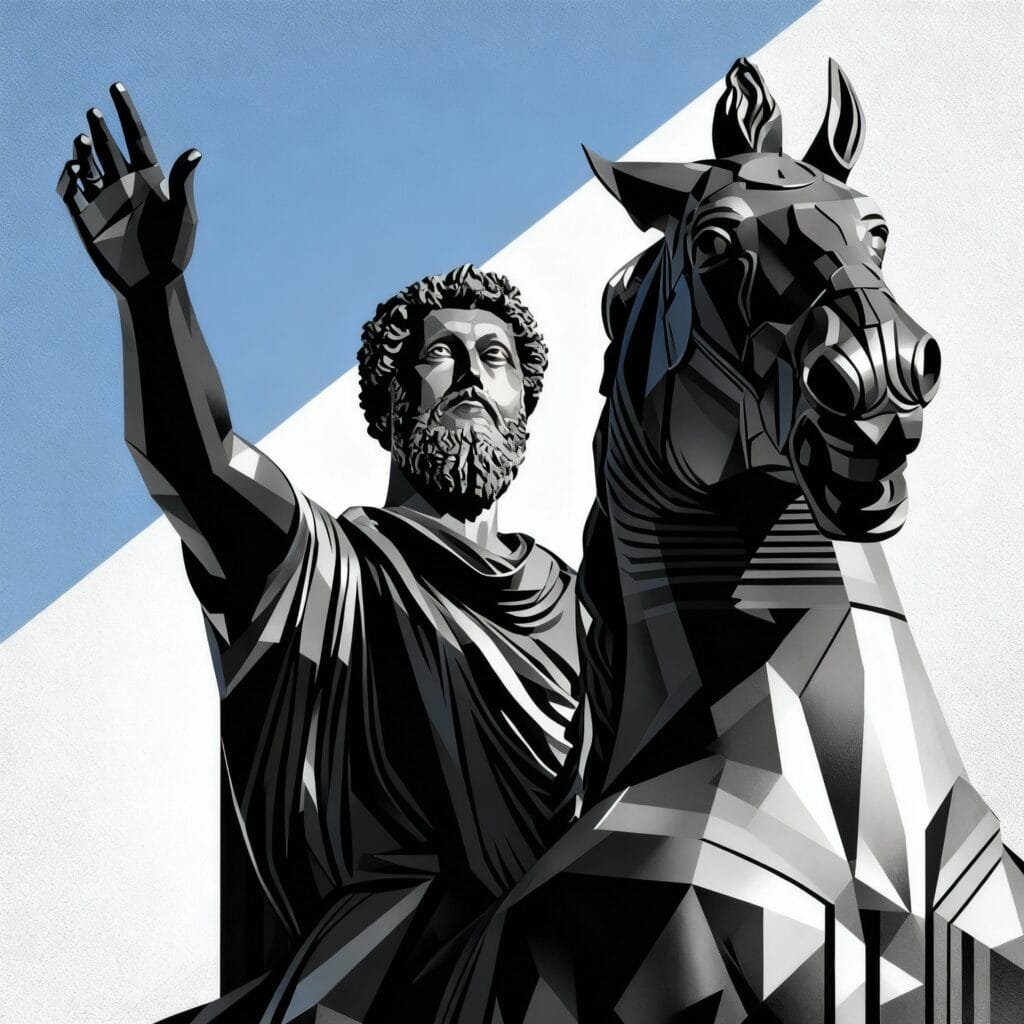
The Roman Emperor Who Knew Why We Crave Constant Entertainment (Marcus Aurelius)

The Roman Emperor Who Knew Why We Crave Constant Entertainment (Marcus Aurelius)

You’re scrolling through your phone again. Another video, another post, another dopamine hit. You tell yourself you’ll stop in five minutes, but five minutes becomes fifty. When you finally put the device down, you feel somehow emptier than before. A Roman emperor figured out why this happens nearly two thousand years ago. He did it

The Roman Emperor Who Knew Why We Crave Constant Entertainment (Marcus Aurelius) Read More »

Why Your Country's Geography Pre-Programmed Its Politics (Montesquieu)

Why Your Country’s Geography Pre-Programmed Its Politics (Montesquieu)

Your government didn’t choose you. The rivers, mountains, and weather patterns did. This is the provocative claim made by Charles-Louis de Secondat, better known as Montesquieu, the 18th century French philosopher who looked at the world and saw something his contemporaries missed. While others debated the divine right of kings or the social contract, Montesquieu

Why Your Country’s Geography Pre-Programmed Its Politics (Montesquieu) Read More »

Is Profit a Sin? Re-examining Adam Smith's View on 'Interest' and the Ethics of Passive Income

Is Profit a Sin? Re-examining Adam Smith’s View on ‘Interest’ and the Ethics of Passive Income

Your landlord just raised your rent again. Your savings account yields 0.5% while inflation runs at 3%. Meanwhile, someone’s trust fund baby Instagram account shows them sipping cocktails in Bali, captioned “passive income life.” And somewhere in your chest, something tightens—a feeling that’s part envy, part moral indignation, and entirely confused about whether it should

Is Profit a Sin? Re-examining Adam Smith’s View on ‘Interest’ and the Ethics of Passive Income Read More »