Philosophy

Why Whitehead's Science and the Modern World Must Be Required Reading for MBAs

Why Whitehead’s Science and the Modern World Must Be Required Reading for MBAs

Business schools teach optimization. They teach market analysis, financial modeling, supply chain efficiency, and strategic planning. They train students to break problems into manageable pieces, to quantify everything that can be quantified, and to make decisions based on measurable outcomes. This approach has built empires and created enormous wealth. It has also, increasingly, created enormous […]

Why Whitehead’s Science and the Modern World Must Be Required Reading for MBAs Read More »

Is Occam's Razor Just Intellectual Laziness in Disguise?

Is Occam’s Razor Just Intellectual Laziness in Disguise?

When you wake up to find your lawn wet in the morning, you probably assume it rained overnight. You don’t immediately suspect a colossal ice cube with legs stomped through your neighborhood. This instinct to reach for the simpler explanation is so natural that we barely notice it. But what if this tendency isn’t wisdom

Is Occam’s Razor Just Intellectual Laziness in Disguise? Read More »

The French Philosopher Who Created a "Religion of Humanity" (Auguste Comte)

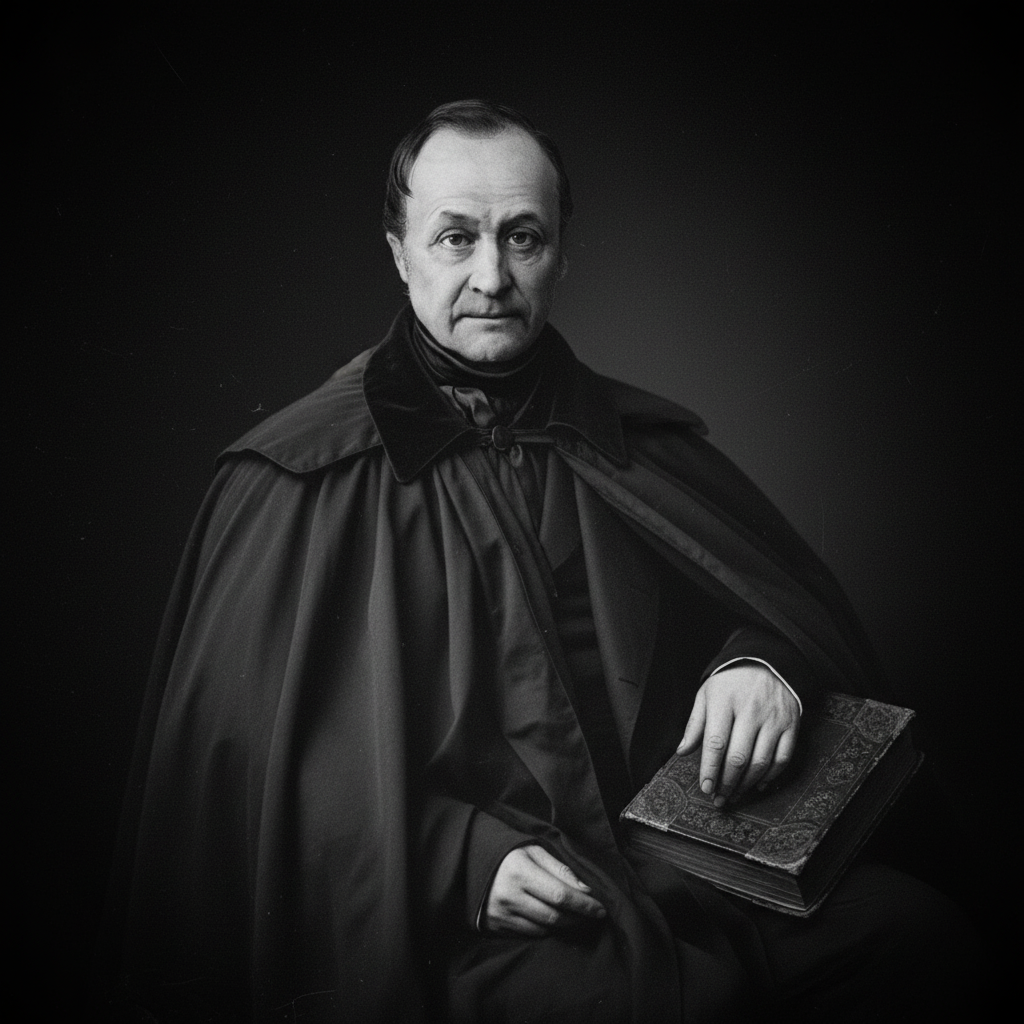
Auguste Comte: Brilliant Man Who Created a “Religion of Humanity”

In the turbulent aftermath of the French Revolution, as Europe grappled with the ruins of old certainties and the promise of new ones, a strange figure emerged from the intellectual salons of Paris. Auguste Comte, a mathematician turned philosopher, would propose something so audacious it still seems fantastical today: a complete religion, with all the

Auguste Comte: Brilliant Man Who Created a “Religion of Humanity” Read More »

Nietzsche vs. Aristotle: Whose Vision of Excellence Wins?

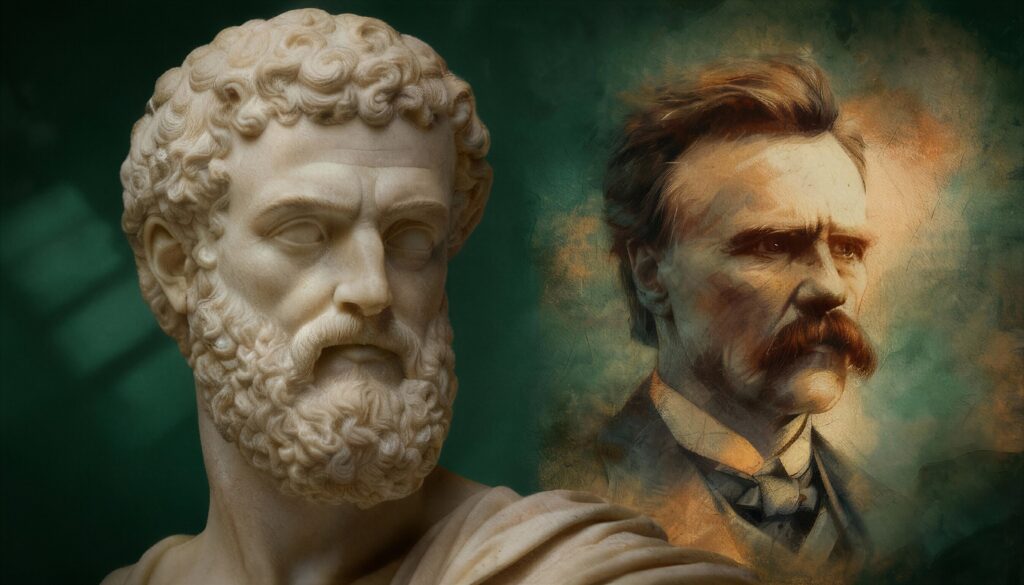
Nietzsche vs. Aristotle: Whose Vision of Excellence Wins Today?

Two of history’s most influential philosophers separated by nearly two millennia offer radically different answers to one of humanity’s most enduring questions: What does it mean to live excellently? Aristotle, the systematic Greek thinker who tutored Alexander the Great, championed a balanced, socially integrated path to human flourishing. Friedrich Nietzsche, the iconoclastic German philologist writing

Nietzsche vs. Aristotle: Whose Vision of Excellence Wins Today? Read More »

Why the AI Revolution Was Predicted in 1637, Netherlands

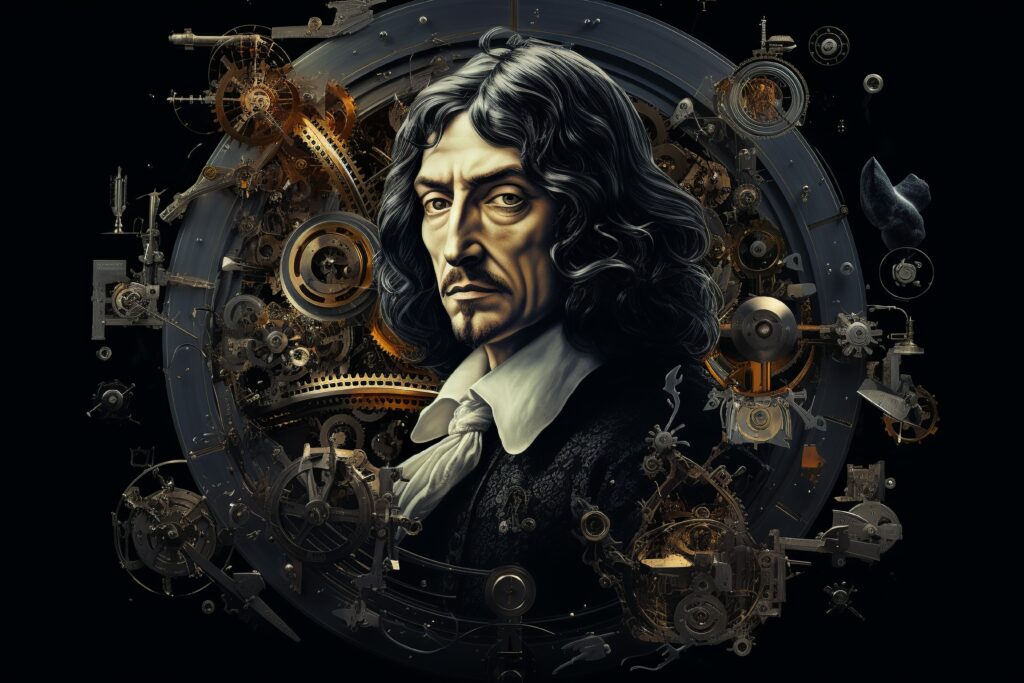
Why the AI Revolution Was Predicted by Radical Rene Descartes in 1637, Netherlands

AI revolution quietly started in a modest room in the Netherlands, where a French philosopher sat by his stove and contemplated the nature of thought itself. The year was 1637, and Rene Descartes was about to publish a work that would inadvertently lay the conceptual groundwork for the artificial intelligence revolution (AI) that would unfold

Why the AI Revolution Was Predicted by Radical Rene Descartes in 1637, Netherlands Read More »

Can Artificial Intelligence Really Think? Let's Ask the Man Who Defined Formal Thought: Gottlob Frege (Artificial Intelligence)

Can Artificial Intelligence Really Think? Let’s Ask the Forgotten Man Who Defined Formal Thought: Gottlob Frege

The question if machines can truly think has haunted us since the first computers began solving mathematical problems at speeds that put human calculators to shame. Today, as artificial intelligence systems write poetry, diagnose diseases, and engage in conversations that can fool us into thinking we’re talking to another person, the question feels more urgent

Can Artificial Intelligence Really Think? Let’s Ask the Forgotten Man Who Defined Formal Thought: Gottlob Frege Read More »

Hume's Intellectual Legacy: The 18th-Century Shock That Still Echoes

Hume’s Intellectual Legacy: The 18th-Century Shock That Still Echoes

When David Hume published A Treatise of Human Nature in 1739, he expected to revolutionize philosophy. Instead, the book, as he later lamented, “fell dead-born from the press.” Yet this initial failure masked what would become one of the most profound intellectual earthquakes in Western thought. Nearly three centuries later, Hume’s ideas continue to reverberate

Hume’s Intellectual Legacy: The 18th-Century Shock That Still Echoes Read More »

Perpetual Peace Immanuel Kant World War

Can Immanuel Kant’s ‘Perpetual Peace’ Stop the Next World War?

In 1795, amidst Europe’s revolutionary war and the looming threat of Napoleon, the German philosopher Immanuel Kant published a concise treatise that would resonate through the ages. “Perpetual Peace: A Philosophical Sketch” introduced a groundbreaking concept for its era: a systematic framework aimed at eradicating war altogether. Over two centuries later, following two devastating world

Can Immanuel Kant’s ‘Perpetual Peace’ Stop the Next World War? Read More »

Voltaire

Exporting Enlightenment: Why Voltaire’s Free Speech Vision Doesn’t Translate Globally

The saying often attributed to Voltaire—“I disapprove of what you say, but I will defend to the death your right to say it”—has become a cornerstone of Western thought on free expression. Although Voltaire never actually wrote these words, they encapsulate an Enlightenment ideal that has influenced constitutional frameworks, particularly in Europe and North America.

Exporting Enlightenment: Why Voltaire’s Free Speech Vision Doesn’t Translate Globally Read More »

Plato and Artificial Intelligence

Plato and Artificial Intelligence: Ancient Wisdom Meets Modern Machines

In the fourth century BCE, Plato asked a question that continues to perplex thinkers and, increasingly, computer scientists: what distinguishes genuine knowledge from mere belief or opinion? As artificial intelligence systems get advanced capabilities, we find ourselves revisiting this ancient idea that combines Plato and Artificial Intelligence. Can machines genuinely possess knowledge, or do they

Plato and Artificial Intelligence: Ancient Wisdom Meets Modern Machines Read More »