IP Team

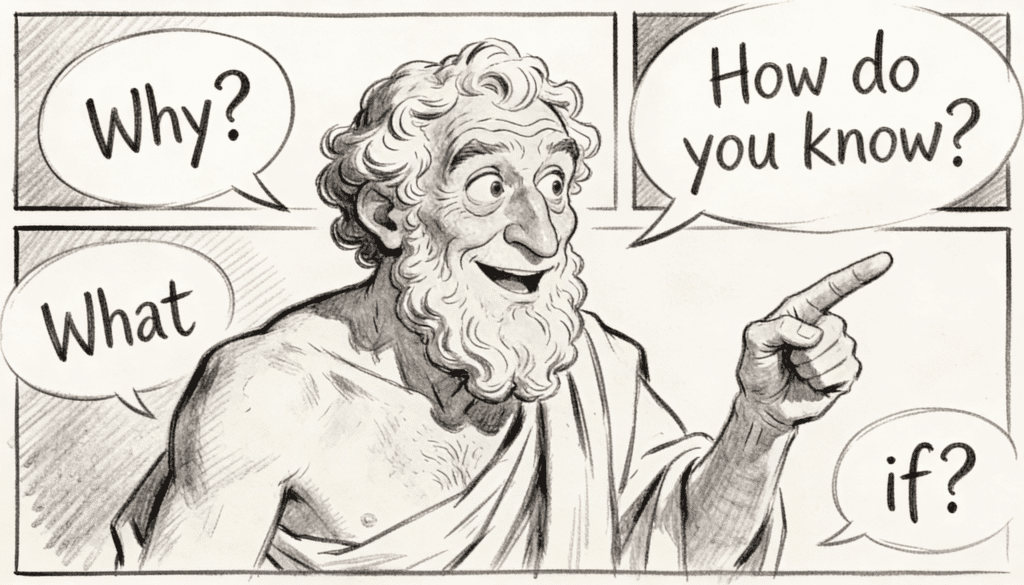
The Paradox of Plenty- Why Specialization Makes You Richer and Dumber (Adam Smith)

The Paradox of Plenty: Why Specialization Makes You Richer and Dumber

Adam Smith never meant to make you stupid. When he wrote about pin factories in 1776, he was trying to explain why England was getting rich. One worker draws the wire, another straightens it, a third cuts it, a fourth points it. Eighteen distinct operations to make a single pin. Ten workers could make 48,000 […]

The Paradox of Plenty: Why Specialization Makes You Richer and Dumber Read More »
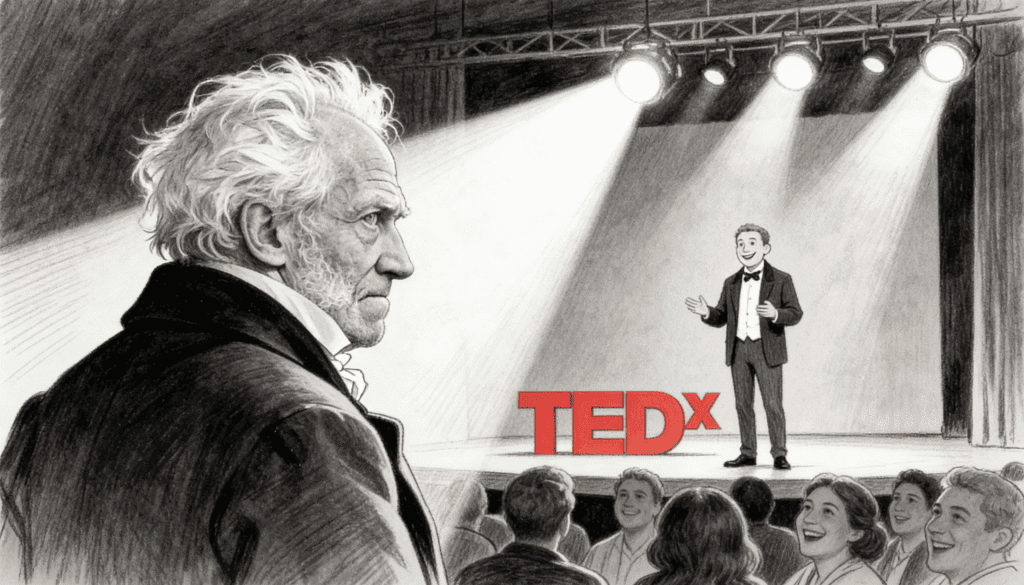
Why Schopenhauer Would Have Hated TED Talks

Why Schopenhauer Would Have Hated TED Talks

Arthur Schopenhauer spent most of his life being ignored. He published his masterwork, The World as Will and Representation, at age thirty. It sold almost nothing. He lectured at the University of Berlin, scheduling his classes to compete directly with Hegel, the most famous philosopher in Germany. Students chose Hegel. Schopenhauer lectured to empty rooms.

Why Schopenhauer Would Have Hated TED Talks Read More »

The One Habit That's Making You Poor (and It's Not Your Latte) (Seneca)

The One Habit That’s Making You Poor (and It’s Not Your Latte) (Seneca)

We love a good financial villain. For years, personal finance experts pointed at your morning coffee like it was drinking your retirement fund through a straw. Skip the latte, they said, and you’ll be rich. But here’s what nobody mentions: the person buying the four-dollar coffee might actually understand money better than the person white-knuckling

The One Habit That’s Making You Poor (and It’s Not Your Latte) (Seneca) Read More »

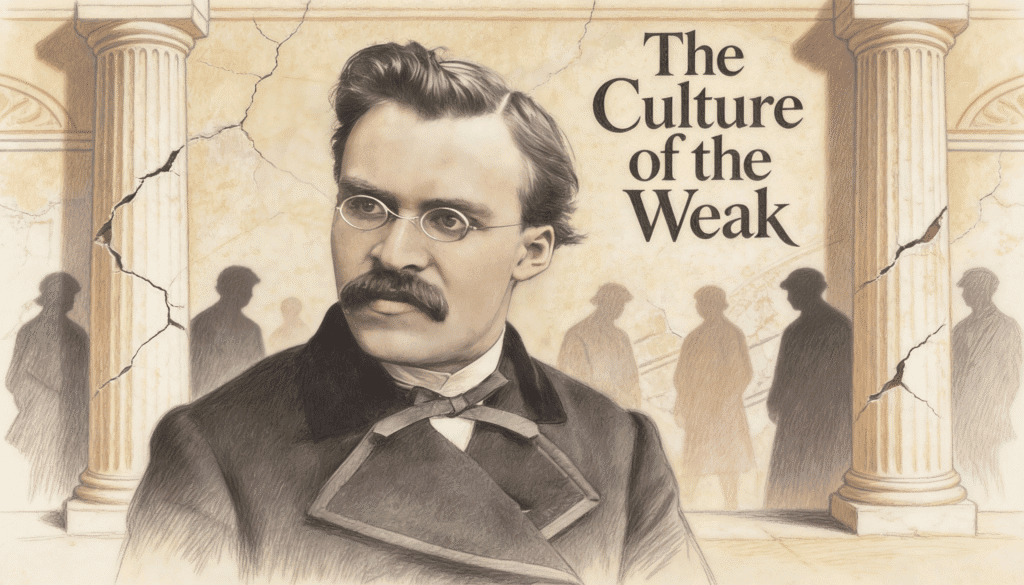
The Culture of the Weak- Friedrich Nietzsche's Warning to Society

The Culture of the Weak: Friedrich Nietzsche’s Warning to Society

Friedrich Nietzsche saw something disturbing in the world around him. It wasn’t poverty or war or disease. It was something more insidious: a moral system that celebrated weakness and punished strength. He called it slave morality, and he believed it was poisoning Western civilization from within. The German philosopher’s critique cuts deeper than most people

The Culture of the Weak: Friedrich Nietzsche’s Warning to Society Read More »

The Final Boss of Philosophy- Why Every Modern Debate Ends with Immanuel Kant Image

The Final Boss of Philosophy: Why Every Modern Debate Ends with Immanuel Kant

You know how every video game has that one boss you can’t skip? The one where all your previous skills get tested, where button mashing won’t work, and where you finally understand what the whole game was preparing you for? That’s Immanuel Kant in philosophy. Except instead of a fantasy dragon or evil wizard, he’s

The Final Boss of Philosophy: Why Every Modern Debate Ends with Immanuel Kant Read More »

The Morality of Profit- Why Being Pro-Business is Actually Pro-Human

The Morality of Profit: Why Being Pro-Business is Actually Pro-Human

There’s a peculiar shame attached to profit in modern discourse. We celebrate the entrepreneur who “gives back” but eye with suspicion the one who simply makes money. We applaud companies that announce charitable initiatives but question those that focus on doing one thing exceptionally well at a good price. This moral framework treats profit as

The Morality of Profit: Why Being Pro-Business is Actually Pro-Human Read More »

The Intellectual Entrepreneur- Why Your Laptop Is the New Textile Mill

The Intellectual Entrepreneur: Why Your Laptop Is the New Textile Mill (Jean-Baptiste Say)

Jean-Baptiste Say never owned a smartphone. He died in 1832, decades before the telegraph, let alone Twitter. Yet the French economist understood something fundamental about wealth creation that applies more today than it did in his era of steam engines and spinning jennies. Say argued that entrepreneurs don’t just shuffle resources around. They create value

The Intellectual Entrepreneur: Why Your Laptop Is the New Textile Mill (Jean-Baptiste Say) Read More »