Table of Contents
The Utopia Salesman Comes to Town
Every technology executive selling artificial intelligence today speaks like a prophet, but reads like a prospectus. Listen carefully to the promises about disease cured, poverty ended, and human potential unlocked, and you will notice something strange: the utopia arrives right around the same time the funding round closes.
This is not a coincidence. It is a business model.
Silicon Valley has always confused marketing with metaphysics, but the current AI cycle has taken the confusion to a new altitude. Founders who could not reliably ship a working chatbot two years ago now speak fluently about superintelligence, post-scarcity economies, and the abolition of human labor. Investors nod. Journalists transcribe. Governments write policy papers responding to promises that have no shipping date, no engineering roadmap, and no falsifiable claim attached to them.
The gap between ai hype vs reality has become the defining economic distortion of the decade. And yet the conversation almost never treats the hype itself as the product. It should. Because the hype is what pays the bills, funds the compute, and justifies the valuations. The product beneath the hype, useful as it sometimes is, cannot support the weight the marketing places on it.
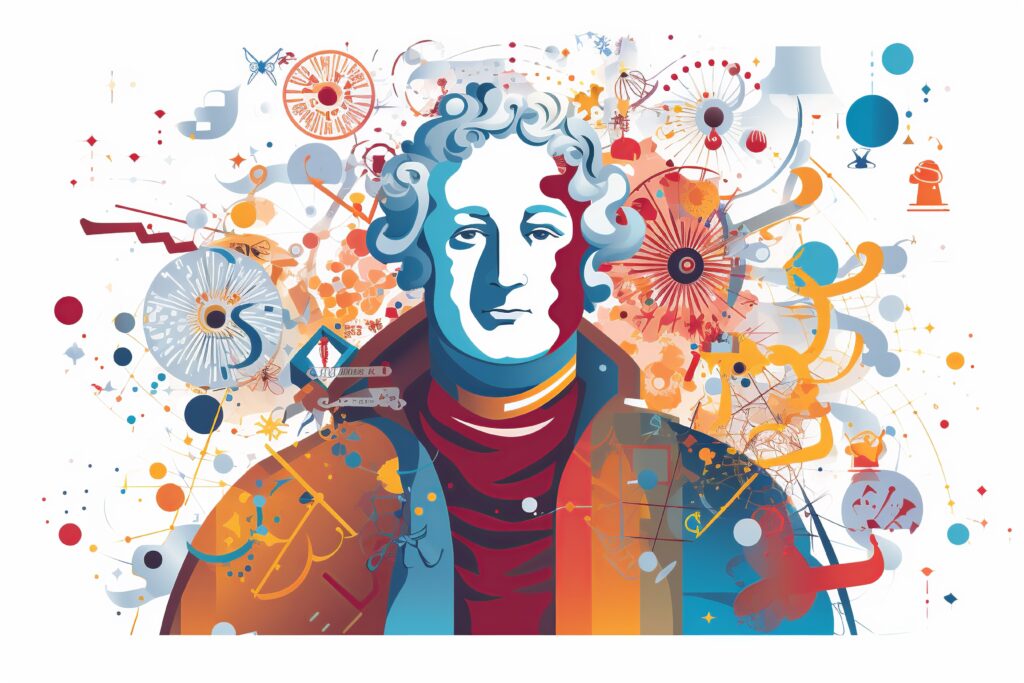
To see this clearly, it helps to consult a thinker who understood the difference between a claim about the future and a sales technique dressed up as one. David Hume, the Scottish philosopher who spent his career dismantling confident predictions built on shaky foundations, offers the sharpest lens available for what is happening now.
Hume’s Warning About Confident Predictions
Hume argued, in his 1748 Enquiry Concerning Human Understanding, that our confidence in the future rests on a habit of mind rather than a proof. Because the sun has risen every day of our lives, we expect it to rise tomorrow. This is reasonable. But it is not certain, and Hume insisted we should never confuse a strong habit of expectation with a demonstrated law of nature.
He was even sharper on the topic of extraordinary claims. In his essay Of Miracles, Hume proposed a rule that has aged beautifully:
A wise man proportions his belief to the evidence.
Apply that rule to the current AI conversation and the room gets very quiet very quickly. The evidence supports a specific, bounded claim: large language models are useful tools for text generation, code assistance, summarization, and pattern recognition across certain domains. The evidence does not support the claim that these systems are on a smooth exponential curve toward general intelligence, economic transformation of every sector, or the replacement of most white collar labor within a decade.
Those larger claims are extrapolations. They rest on the habit of expecting the last 3 years of progress to continue forever in a straight line. Hume would call this the same mental error a turkey makes on December 23rd, having been fed every day of its life with growing generosity.
The Difference Between a Trend and a Law
A trend is what happened. A law is what must happen. Silicon Valley routinely presents trends as if they were laws, because laws justify infinite capital allocation while trends only justify cautious capital allocation.
The scaling laws that governed AI progress from 2019 to 2023 are already showing signs of diminishing returns. Training runs cost more, deliver less marginal capability, and require exotic engineering to squeeze out gains that would have come naturally 2 years ago. This is not a secret. It is discussed openly at technical conferences. But it does not make its way into keynote speeches, because keynote speeches are not about engineering. They are about capital formation.
When someone tells you the curve goes to infinity, ask them what happens if the curve bends. If they have no answer, you are listening to a pitch.
Is AI Overhyped? The Honest Ledger
The question is AI overhyped deserves a more careful answer than either the boosters or the skeptics usually provide. The truth is uneven, and the unevenness is the interesting part.
Here is an honest ledger of what current AI actually does well, what it does poorly, and what it does not do at all.
What AI Genuinely Delivers
- Code assistance: measurable productivity gains for experienced developers, typically in the range of 10 to 30 percent on well defined tasks.
- Drafting and editing: substantial time savings on routine writing, correspondence, and first drafts.
- Information synthesis: useful summaries of documents, meetings, and research when the source material is available and verifiable.
- Pattern recognition in narrow domains: protein folding, medical imaging, materials discovery, and similar structured problems.
- Translation and transcription: near human quality for major language pairs, transformative for accessibility.
These are real gains. They matter. They will compound over the next decade in ways that reshape specific industries. Nobody serious disputes this.
Where AI Consistently Fails
- Reliable reasoning over long chains: models still hallucinate, contradict themselves, and fail on problems that require holding many constraints in mind at once.
- Novel scientific discovery: despite the marketing, no large language model has produced an original scientific insight that survived peer review as its own contribution.
- Judgment under uncertainty: the systems are confident when they should be tentative, and tentative in ways that mimic confidence.
- Learning from small data: humans still vastly outperform AI on tasks that require generalizing from a handful of examples.
- Anything requiring embodied understanding: physical common sense, social context, and the tacit knowledge that comes from having a body in the world.
The gap between these two lists is where most of the money is being spent, and where most of the disappointment is being manufactured. Enterprises that pay for AI expecting the first list are pleased. Enterprises that pay for AI expecting the second list are quietly writing down their investments.
The Economics of Silicon Valley AI Hype
To understand why silicon valley ai hype reaches such extraordinary intensity, follow the capital structure. This is not a moral story about greedy founders. It is a structural story about what happens when a technology requires enormous upfront investment before it can generate proportional returns.
Training a frontier model now costs somewhere between 100 million and 1 billion dollars per generation. The next generation will cost more. The generation after that may cost 10 billion or more. No customer base for AI products currently generates enough revenue to justify these expenditures on standard financial terms.
So the money has to come from somewhere else. It comes from the promise of what these systems will eventually do. The promise must be enormous, because the required capital is enormous. If the promise shrinks, the capital dries up, the training runs stop, and the entire industry contracts to something modest and useful rather than transformative and world historical.
The size of the promise is calibrated to the size of the capital requirement, not to the size of the underlying evidence.
This is the key sentence. Once you see it, the pattern becomes impossible to unsee. Every founder giving a talk about artificial general intelligence is, in effect, running a fundraising campaign whose scale requires them to speak in millennial terms. A modest pitch would fund a modest company. Only an apocalyptic or utopian pitch funds a company that requires 500 billion dollars of infrastructure.
The Two Audiences of Every AI Announcement
Every major AI announcement is written for 2 audiences at once. The first audience is the public, which is meant to feel awe, urgency, and mild fear. The second audience is capital, which is meant to feel that missing this cycle would be like missing the internet in 1995.
The public audience gets the story about curing cancer and solving climate change. The capital audience gets the story about market dominance, network effects, and the winner take all dynamics of foundational infrastructure. These are the same speech, delivered simultaneously, in different registers.
Hume would recognize the technique immediately. He wrote extensively about how religious and political authorities inflate small events into cosmic significance in order to command belief and, more importantly, obedience. Replace priest with founder and miracle with breakthrough, and the mechanics translate without alteration.
What History Tells Us About Technology Cycles
The current moment has clear historical precedents, and the pattern is consistent enough to be predictive.
Railways in the 1840s were going to abolish distance and unite humanity. They eventually reshaped economies, yes, but only after a spectacular financial collapse in 1846 wiped out a generation of investors. Electricity in the 1880s was going to eliminate labor and light every home within a decade. It took closer to 40 years, and the first wave of electrical companies mostly went bankrupt. Radio in the 1920s was going to educate the masses and end war. Aviation in the 1930s was going to make every family a global traveler. The internet in the 1990s was going to flatten hierarchies and end centralized power.
In every case, 3 things happened in sequence.
- The technology was genuinely important and genuinely transformative on long timescales.
- The short term promises were wildly, embarrassingly wrong.
- The people who made money on the transformation were rarely the people who funded the initial hype cycle.
AI will almost certainly follow this pattern. The technology is real. The 5 year predictions are largely marketing. The eventual winners will be companies that do not yet exist or that currently look boring, applying the technology to specific problems in ways that generate cash rather than headlines.
The Compression of the Hype Cycle
What is different this time is not the substance of the hype but its speed. Previous technology cycles took years to build up expectations that could not be met. The AI cycle compressed this into months. This compression matters because it means the disillusionment phase will also arrive faster, and the sorting between genuine and hollow claims will happen while most of the capital is still committed.
This is bad news for investors and good news for careful observers. The gap between promise and delivery is going to become a public event, not a slow private disappointment. Watch for it in 2026 and 2027.
How to Read AI Announcements Like Hume
The practical value of a Humean approach is that it gives you a checklist for evaluating any AI claim before you invest, adopt, or restructure your business around it. Here is the checklist.
Ask What Would Falsify the Claim
A genuine prediction can be wrong. If someone tells you AI will transform your industry, ask what specific outcome, by what specific date, would prove them mistaken. If they cannot answer, they are not predicting. They are marketing. Hume was ruthless on this point. Claims that cannot fail are not claims about the world. They are performances.
Look at the Base Rate of Similar Predictions
How often have similar confident predictions about technology timelines been correct over the past 50 years? The answer is: rarely, and almost never on the timeline stated. This does not mean the current predictions are wrong. It means the prior probability of them being right, absent extraordinary evidence, is low. Proportion your belief to the evidence.
Distinguish Capability from Deployment
A demo is not a product. A product is not adoption. Adoption is not transformation. Each step in this chain takes years and involves failures the demo does not reveal. When someone shows you an impressive AI capability, ask how many years and how much capital will be required to turn that capability into something that actually changes how people work. The answer will surprise you every time.
Watch Who Is Selling What
The person making the prediction usually has a financial interest in you believing it. This does not automatically make them wrong. It does make their testimony less reliable than they present it as being. A cardiologist who owns a stent company should be listened to about heart disease with a slight discount. The same rule applies to AI founders speaking about AI.
Belief should be proportioned to evidence, and evidence should be weighted against the interests of the person providing it.
The Real Opportunity Hidden Beneath the Hype
Nothing in this argument suggests you should ignore AI. That would be the opposite mistake, and it would be equally costly. The point is not to dismiss the technology but to see it clearly, which means separating what it does from what it is sold as doing.
The genuine opportunity in AI, for businesses and individuals, lies in the boring middle. Not the utopian frontier, where superintelligence supposedly waits, and not the skeptical basement, where nothing works. The middle is where current models can be applied to specific, well defined problems with measurable returns.
Companies that will benefit most from AI over the next 5 years are the ones that ignore the visionary rhetoric and instead ask: what is a repetitive, expensive, error prone task in my business that current AI can improve by 20 percent? Then they implement carefully, measure honestly, and expand slowly.
Companies that will lose money on AI are the ones that restructure around the visionary rhetoric, betting that autonomous agents will replace their workforce within 2 years or that a foundation model will unlock capabilities that do not yet exist. These bets are being placed right now, at enormous scale, and most of them will not pay off.
The Individual Reader’s Position
For an individual reading about AI in the news, the correct posture is calm attention. Learn the tools. Use them where they help. Notice when they fail. Do not restructure your career around predictions that no serious engineer would sign their name to. Do not ignore the technology because the marketing offends you.
The people who will do best in the AI era are not the true believers or the true skeptics. They are the ones who match Hume’s description of the wise man: proportioning belief to evidence, willing to update when evidence changes, and immune to the theatrical urgency that always accompanies large capital raises.
The Sales Pitch Ends, the Technology Remains
Silicon Valley’s AI utopia will not arrive on the schedule its salesmen promise. Neither will its apocalypse. What will arrive is a slower, more useful, more disappointing, and ultimately more valuable technology than the marketing suggests. It will reshape some industries and leave others untouched. It will create some fortunes and destroy others. It will look, in retrospect, more like the arrival of electricity than the arrival of the messiah.
The people telling you otherwise are selling you something. This does not make them villains. It makes them founders, which is a role that requires speaking in the future tense with confidence the evidence does not support. That is the job. Understanding that it is the job is the beginning of thinking clearly about what comes next.
Hume, writing 275 years ago about miracles and predictions and the human tendency to believe stories that flatter our hopes, said everything necessary about the current moment. His counsel was not skepticism for its own sake. It was accuracy. He wanted us to see the world as it is, not as the loudest voices in the room insist it must be.
That advice has never been more valuable, or more expensive to ignore, than it is right now.