Table of Contents
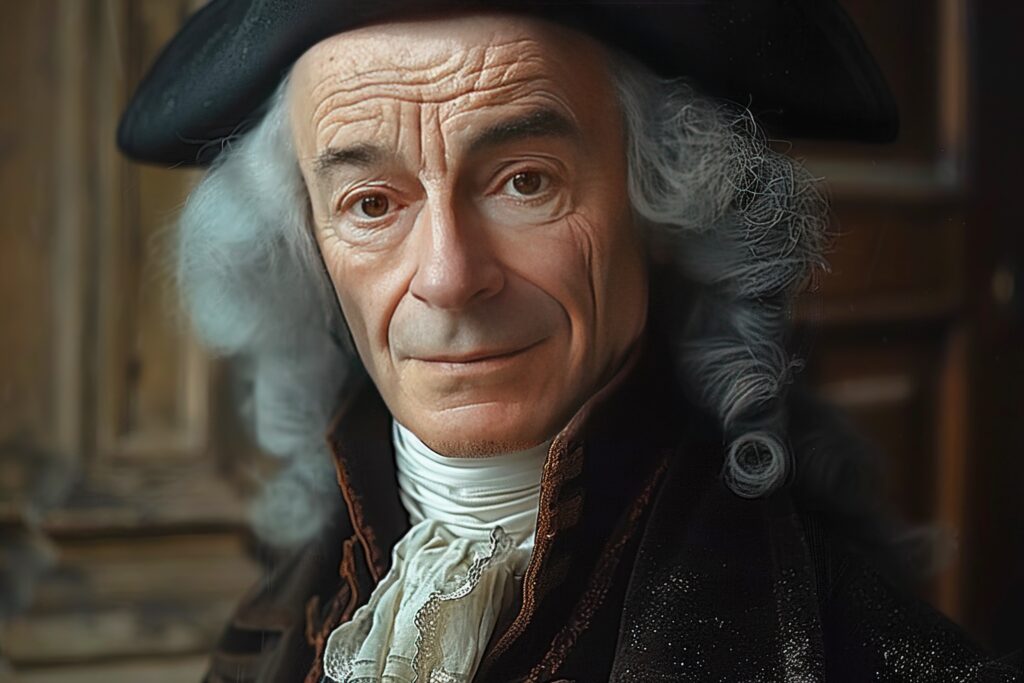
Descartes sat alone in a heated room in 1637, doubting everything he could think of, and arrived at one stubborn truth. He could not doubt that he was doubting. Therefore he existed. Cogito, ergo sum. I think, therefore I am.
Almost four centuries later, we have updated the formula. We do not need to think anymore. We need witnesses.
The new proof of existence runs on a different engine. You went to Rome, but did you post the Colosseum? You ate the pasta, but did the pasta photograph well? You watched the sunset, but did anyone double tap it? If a tree falls in a forest and no one films it for their story, did the tree even bother?
This is not a small shift. It is a quiet revolution in what it means to be alive, and most of us walked into it without noticing.
The strange new metaphysics of the feed
For most of human history, an experience was a private event with a few human witnesses. You went somewhere, did something, told a friend about it later if you felt like it, and that was that. The experience belonged to you. It lived in your memory and maybe in a journal, where it slowly aged into something you could mistrust or romanticize at your leisure.
Now experience has a second life. The dinner is eaten twice. Once with the mouth, once with the camera. The vacation is taken twice. Once with the body, once through the screen of whoever scrolls past it. The wedding is attended twice. Once by guests, once by an audience that did not even know the bride.
We have become, without quite agreeing to it, the curators of our own museums. Every meal a small exhibit. Every outfit a tiny retrospective. Every passing thought a placard explaining itself to strangers.
The strange thing is not that this happens. The strange thing is how much it changes the original experience. The dinner you photograph is not the same dinner you would have eaten without a phone. The trip you film is not the trip you would have taken if you had left the camera at home. Something is added. Something is also quietly subtracted.
When the post becomes the point
There is a thought experiment worth sitting with. Imagine you are given a free trip to a place you have always wanted to see. Paris, Tokyo, the Grand Canyon, anywhere. The catch is simple. You cannot photograph it. You cannot post about it. You cannot even tell anyone you went. As far as the world is concerned, the trip never happened.
Notice your reaction. If something in you deflates a little at the offer, that is the data point. The trip itself has not changed. The food still tastes the same. The buildings are still beautiful. The strangers are still strange in their own charming way. What changed is the audience. And if removing the audience makes the trip feel smaller, then somewhere along the way the audience became part of the experience itself, woven so deeply into our enjoyment that we cannot quite separate the two.
This is the quiet inversion at the heart of the matter. We did not start sharing because experiences were good. The sharing has slowly become the reason we are willing to have the experience in the first place. The post is no longer a souvenir of the moment. The moment is a raw material for the post.
The performance of the unperformed
The most ironic version of this is the so called authentic post. The casual photo that took thirty four attempts. The candid laugh staged by a friend with a tripod. The messy bedroom selfie where the messiness was carefully arranged so the right things were visible and the embarrassing things were not.
Authenticity has become a genre, with its own conventions and its own production standards. It has rules. The lighting must look natural but not unflattering. The caption must sound spontaneous but not careless. The vulnerability must be just deep enough to feel real, but not so deep that it actually makes anyone uncomfortable.
We have invented a new kind of dishonesty, which is the performance of not performing. And we have all silently agreed to clap for it, because pointing it out would mean pointing at ourselves.
The unwitnessed self
There is an old philosophical question about whether a thing exists if no one perceives it. Bishop Berkeley spent his life on it. Esse est percipi, he wrote. To be is to be perceived. He thought God was always watching, which solved the problem nicely. We have replaced God with the algorithm, which is less reassuring and far more demanding.
The algorithm does not love you. It does not even know you. It just measures whether you are interesting enough today to keep around. And so a strange psychological pressure builds. You go through your day with two layers of awareness. The first is the thing you are doing. The second is a quiet running commentary asking whether the thing is worth posting, and what it would look like if you did, and what you would caption it.
This second layer is exhausting in a way that is hard to describe to anyone who has not felt it, which at this point is almost no one. It means you are never quite alone with your own life. There is always a small imagined audience peering over your shoulder, evaluating the frame, suggesting a better angle.
The cost of this is subtle. It is not that we have less fun. It is that the fun we have is slightly thinner, slightly more aware of itself, slightly less able to surprise us. A moment fully given to itself, without performance, without commentary, without future use, has become rare. And rare things tend to be valuable in ways we only notice once they are gone.
Memory, outsourced
Something else is happening, quieter and possibly more important. We are outsourcing our memories to servers we do not own.
Used to be that a memory had to fight to survive. You experienced something, and then your brain decided, through a process nobody fully understands, what to keep and what to let go. The memories that stayed were the ones that meant something. The ones that earned their place. The mind was a careful editor with strong opinions.
Now we have infinite storage. Every meal is preserved. Every birthday is preserved. Every random Tuesday is preserved. And in preserving everything, we have stopped letting the brain do its work. We do not remember the trip anymore. We remember the photos of the trip, which is not the same thing. The photos remember what the camera saw. The brain used to remember what the trip felt like.
There is a real loss here that is hard to measure. A photograph captures the surface of a moment but not its weight. The smell of the rain. The thing your friend said that made everyone laugh and that nobody can quite repeat now. The strange melancholy of a Sunday evening. None of this gets photographed. So when our memories are mostly photographs, the inner texture of our lives starts to feel a little flat, like a postcard of a place we are pretty sure we visited.
The mirror that talks back
The deepest twist is that the audience is not really an audience. We pretend the post is for our friends, but our friends are mostly busy with their own posts. The audience is a kind of fiction, a generalized other we perform for, half real and half invented.
And what we are really doing, when we post, is looking at ourselves through their imagined eyes. The post is a mirror. Likes are the reflection. We curate, we share, we wait, and then we look back at our own life through the metrics it generated, and we use that data to decide how the life is going.
This is a strange way to live. Imagine taking every conversation you have and, instead of just having it, also pausing to ask a panel of strangers whether the conversation was good. Imagine eating every meal and asking a focus group whether the meal was enjoyed correctly. We would call this insane in any other context. We call it normal when it happens through a screen.
The mirror does not just reflect. It shapes the face that looks into it. Over time, we become the kind of person who would post the things we post. The feedback loop closes. The performance becomes the personality. The mask, worn long enough, begins to take the shape of the face.
The case for the unposted life
None of this is an argument for throwing your phone in a river, though that might be cheaper than therapy. It is an argument for noticing.
There is a small act of rebellion available to anyone who wants it. Have an experience you do not share. Not because it was bad. Not because it was secret. Just because it was yours. Eat a meal without photographing it. Take a walk and tell no one. See a sunset that ends with the sunset, and not with you composing a caption for it.
The first few times this is uncomfortable. The instinct to reach for the phone is strong. But something interesting happens after a while. The unshared moment is heavier somehow. It sits more firmly in the mind. It belongs to you in a way that posted things do not. It is yours alone, and that turns out to be a real thing rather than an empty one.
There is also something quietly stabilizing about not needing the witness. A life that requires constant confirmation is a fragile life. It can be undermined by a slow day on the timeline, a post that did not land, a vacation that nobody envied loudly enough. A life that does not need confirmation is harder to shake. Its meaning sits inside it rather than hovering around it waiting for applause.
Back to Descartes, slightly older and tired
Descartes wanted certainty. He wanted to find one thing he could not doubt, and build the whole world back up from there. His answer was the thinking self. The mind aware of itself was, for him, the bedrock.
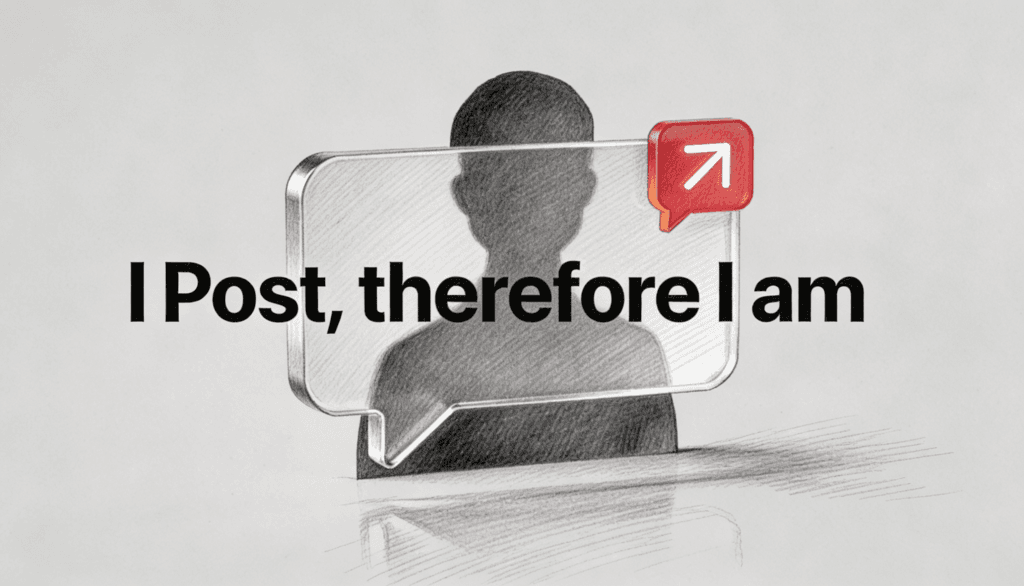
The modern revision, I post therefore I am, sounds like a joke, and it is, but it is also a confession. We have moved the bedrock outside ourselves. We have made our existence depend on something we cannot control, which is whether other people notice us. This is not a new human urge. The need to be seen is probably as old as the species. What is new is the technology that makes the urge so easy to feed, and so easy to mistake for a meal.
The question worth asking is not whether to use these tools. They are not going anywhere, and there is real joy in them when they are kept in their place. The question is whether you would still recognize your life if the audience disappeared tomorrow. If the answer is yes, you are doing fine. If the answer makes you a little nervous, that is worth sitting with.
You exist before the post. You existed before there were posts at all. Somewhere underneath the captioned, filtered, curated version of yourself is a person who is alive whether or not anyone is looking. Finding that person again is one of the small, important projects of being awake right now.
The unwatched life is not a lesser life. It might just be the only one that was ever really yours.