Table of Contents
There is something almost painfully optimistic about a man who believes mathematics can fix politics. Not improve it. Not nudge it in the right direction. Fix it. Permanently. With equations.
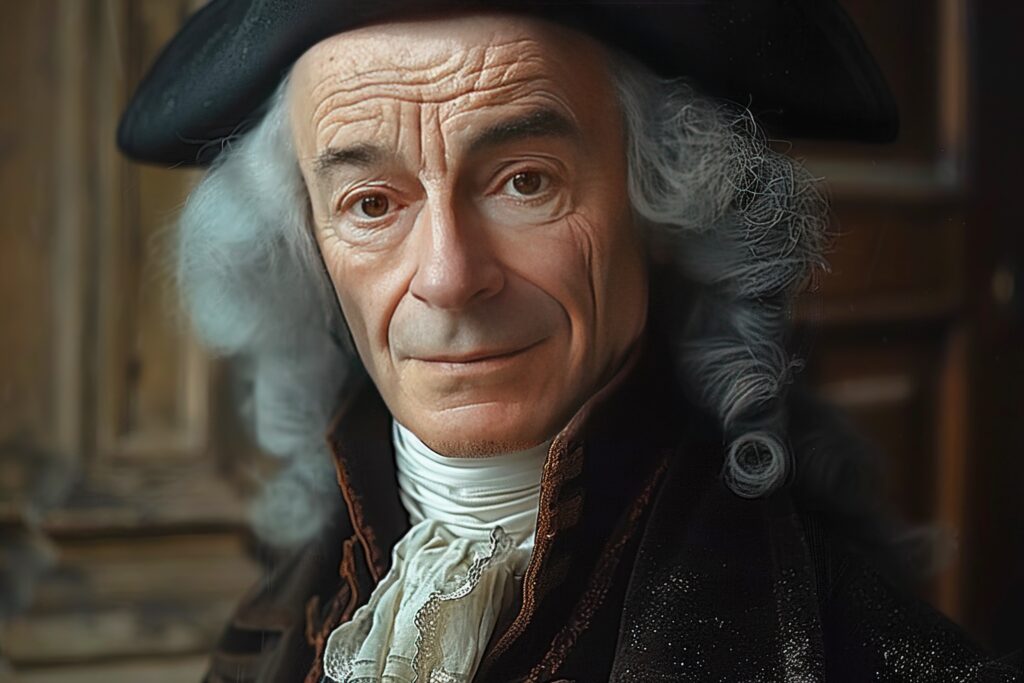
That man was Marie Jean Antoine Nicolas de Caritat, Marquis de Condorcet. And if you have never heard of him, that is partly because history has a habit of forgetting people who were right too early.
Condorcet was born in 1743 into a minor aristocratic family in northern France. His father died weeks after his birth. His mother, gripped by religious devotion, dressed him in white gowns until he was eight, reportedly to fulfill a vow to the Virgin Mary. This detail matters because it tells you something about the world Condorcet grew up resisting. He spent the rest of his life trying to replace superstition with reason, faith with evidence, and tradition with something he believed was far more reliable: math.
He was not wrong about the problem. He may have been wrong about the solution. But the attempt itself is one of the most fascinating intellectual projects of the eighteenth century.
The Mathematician Who Wandered Into Politics
Condorcet made his name young. By his early twenties, he was publishing serious work in integral calculus. By twenty six, he was elected to the French Academy of Sciences. He was, by all accounts, brilliant in the way that makes other mathematicians uncomfortable. His mentor was Jean le Rond d’Alembert, co-editor of the Encyclopédie, and through him Condorcet fell into the orbit of Voltaire, Turgot, and the broader circle of philosophes who believed the universe could be understood and improved through reason.
This was the Enlightenment at its most confident. The idea was not just that people could think clearly about the world. The idea was that clear thinking, applied systematically, could produce a better society the way Newtonian mechanics had produced a better understanding of gravity. You did not need kings or priests to tell you what was true. You needed data. You needed logic. You needed, Condorcet increasingly believed, probability theory.
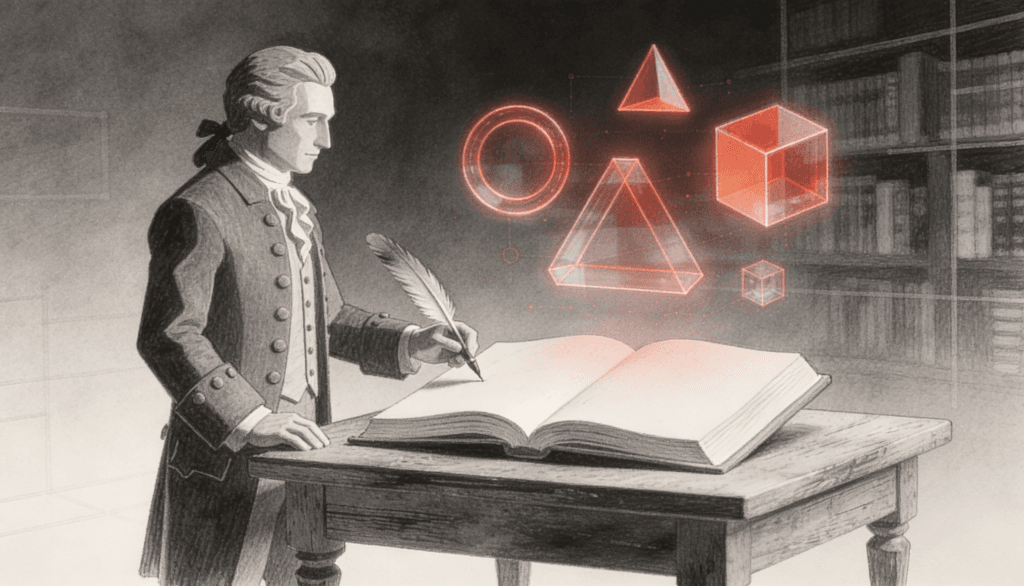
Here is where things get interesting. Most Enlightenment thinkers stayed in the realm of philosophy. They wrote essays. They debated in salons. Condorcet did something different. He tried to build a machine. Not a physical machine. A conceptual one. A system that would take the messy, irrational process of collective human decision making and turn it into something mathematically rigorous.
He wanted to make democracy scientific.
The Jury Theorem and Its Strange Implications
In 1785, Condorcet published his most famous work, the Essai sur l’application de l’analyse à la probabilité des décisions rendues à la pluralité des voix. The title alone is a kind of manifesto. Roughly translated: an essay on applying mathematical analysis to the probability of decisions made by majority vote.
The centerpiece is what we now call the Condorcet Jury Theorem. The idea is deceptively simple. Suppose you have a group of people voting on a yes or no question, and suppose each person has a better than even chance of being right. Say, 51 percent. Condorcet proved that as the group gets larger, the probability that the majority reaches the correct answer approaches certainty. Add enough voters who are each slightly more likely to be right than wrong, and the group becomes almost infallible.
This is a genuinely profound result. It is also, if you think about it for more than a few minutes, deeply unsettling.
Because it cuts both ways. If each voter is slightly more likely to be wrong than right, say 49 percent chance of being correct, then larger groups become almost certain to reach the wrong answer. The math is symmetric and merciless. The same mechanism that could make democracy a truth finding engine could also make it a truth destroying one. Everything depends on that razor thin assumption about individual competence.
Condorcet understood this. It is why he spent so much energy on education. If the theorem was going to save democracy, you needed voters who were, on average, slightly better than a coin flip. That meant public education. Universal public education. For women too, which in 1785 was not a popular position even among people who considered themselves progressive.
Voting Paradoxes and the Limits of Rationality
But Condorcet did not stop with the jury theorem. He kept digging into the mathematics of collective choice, and what he found was more disturbing than reassuring.
He discovered what is now called the Condorcet Paradox. Imagine three voters choosing among three options. Voter one prefers A over B and B over C. Voter two prefers B over C and C over A. Voter three prefers C over A and A over B. Each voter is perfectly rational. Each has clear, consistent preferences. But when you aggregate those preferences through majority rule, you get a cycle. The group prefers A over B. The group prefers B over C. And the group prefers C over A.
This is not a bug in a particular voting system. It is a feature of collective decision making itself. Individual rationality does not automatically produce collective rationality. Three perfectly reasonable people can, through nothing more than the structure of their disagreement, produce a group that appears to have lost its mind.
If you want to understand why modern democracies sometimes seem to make decisions that nobody actually wants, this is a good place to start. Condorcet found this problem in 1785. We have not solved it since. Nearly two centuries later, Kenneth Arrow would prove that no voting system can fully escape this kind of paradox, earning a Nobel Prize for what is essentially a formal restatement of Condorcet’s nightmare.
There is an irony here that Condorcet probably would not have appreciated. The man who tried to use mathematics to save rational governance was also the man who proved, mathematically, that rational governance has inherent limits. He built the weapon and discovered it could wound the wielder.
The Revolutionary Who Was Too Reasonable
Then came 1789, and theory met practice in the most violent way possible.
Condorcet threw himself into the French Revolution. He was elected to the Legislative Assembly and later to the National Convention. He drafted a proposed constitution. He advocated for the abolition of slavery, for women’s suffrage, for a system of public education that would be free, universal, and secular. He was, in many ways, the most genuinely liberal mind in revolutionary France.
This was his problem.
Revolutions do not reward nuance. They reward conviction, volume, and the willingness to declare your opponents enemies of the people. Condorcet had conviction, but he also had the mathematician’s habit of seeing complexity where others saw simple answers. When the Girondins and the Jacobins went to war over the future of France, Condorcet found himself caught in the middle. He opposed the execution of Louis XVI, not because he supported the monarchy but because he opposed the death penalty. He criticized the Jacobin constitution because he thought it was poorly designed.
You can imagine how well that went over during the Reign of Terror.
In October 1793, a warrant was issued for his arrest. He went into hiding. For eight months, a woman named Madame Vernet sheltered him at enormous personal risk, apparently without even knowing who he was at first. During those months, hiding from a revolution he had helped start, Condorcet did something remarkable. He wrote.
The Last Optimist
The work he produced in hiding is called Sketch for a Historical Picture of the Progress of the Human Mind. It is one of the most extraordinary documents of the Enlightenment, and it was written by a man who had every reason to believe the Enlightenment had failed.
The Sketch divides human history into ten epochs, each representing an advance in knowledge and freedom. The tenth epoch, which had not yet occurred, was a vision of the future. Condorcet predicted the abolition of inequality between nations. He predicted the abolition of inequality within nations. He predicted the indefinite improvement of human beings themselves through better education, better nutrition, and what he vaguely described as improvements in the biological sciences.
He predicted, in other words, something very close to what we would now call progress. And he predicted it while hiding in an attic, waiting to be arrested and probably killed by the very people who were supposed to embody that progress.
This is either inspiring or delusional, and the line between the two is not always clear.
What makes the Sketch remarkable is not its accuracy, though Condorcet got some things startlingly right. He anticipated public health improvements, the decline of infectious disease, the extension of human lifespan, and the spread of literacy. What makes it remarkable is the intellectual commitment behind it. Here was a man whose own life was proof that reason does not always win, that knowledge does not always protect you, that the arc of history does not automatically bend toward anything. And he sat down and wrote a book arguing that it does. That it will. That it must.
You have to decide for yourself whether that represents the highest form of courage or the deepest form of denial.
The Death and the Afterlife
In March 1794, Condorcet left his hiding place. The reasons are unclear. Some accounts say he feared bringing danger to Madame Vernet. Others say he simply could not stand confinement any longer. He wandered for several days, was arrested at an inn after ordering an omelet that apparently revealed his aristocratic origins (the story goes that he ordered a twelve egg omelet, and when asked how many eggs the locals would normally use, he had no idea, because he was a marquis who had never cooked in his life). He was thrown into a cell in Bourg la Reine.
The next morning, he was found dead. Whether he took poison, suffered a stroke, or died of exhaustion remains debated. He was fifty years old.
The French Revolution, which had consumed so many of its architects, had added another name to the list. But Condorcet’s death carries a specific weight that others do not. Danton was a politician. Robespierre was an ideologue. Condorcet was something rarer. He was a systems thinker who believed you could design fairness, that justice was an engineering problem. His death was not just the loss of a person. It was the collapse of a particular kind of faith.
Why He Still Matters
Condorcet occupies a strange position in intellectual history. He is not famous enough to be widely read but too important to be ignored. His work on voting theory anticipated entire fields of modern mathematics, economics, and political science. Social choice theory, mechanism design, even aspects of machine learning owe debts to the questions he asked first.
There is a connection here to something happening right now. The current debates about artificial intelligence and algorithmic decision making are, at their core, Condorcet’s question in new clothing. Can you build a system that makes better decisions than individuals? What happens when you aggregate preferences at scale? When does a wisdom of crowds become a madness of crowds? Every time someone argues about whether an algorithm should decide who gets a loan, who gets parole, or what news you see in your feed, they are walking ground that Condorcet surveyed two and a half centuries ago.
He did not have the answers. He had something arguably more valuable. He had the questions, and he had the honesty to show that some of those questions do not have clean answers. The Condorcet Paradox is not a failure. It is a discovery. It tells us something true and uncomfortable about what happens when individual minds try to act as one.
There is also something worth noting about his stance on education. Condorcet did not just argue for universal education because it was morally right, though he believed it was. He argued for it because his own theorem demanded it. The jury theorem only produces good outcomes if voters are competent. Competence requires education. Therefore, democracy without education is not just unjust. It is, by Condorcet’s own math, actively dangerous. It is a system designed to amplify error.
Read that again and tell me it does not sound like a diagnosis of problems we are living through right now.
The Algebra of Hope
Condorcet’s life is a study in contradictions. He was an aristocrat who fought for equality. A mathematician who entered politics. A rationalist who lived through the most irrational period in French history. An optimist who had every reason not to be.
But the deepest contradiction may be this: his greatest contributions were also his greatest warnings. The jury theorem says democracy can work. The paradox says it can break. Both are true. Both are his. And the tension between them is not something that can be resolved with more algebra.
He tried anyway. And in that trying, in that refusal to accept that the world could not be made more rational, more fair, more decent through the careful application of thought, there is something that outlasts the math.
Can we do better? And if so, how would we know?
Condorcet did not survive long enough to see his tenth epoch. Neither have we. But the fact that we are still asking his questions, still running into his paradoxes, still arguing about education and voting and the limits of collective reason, suggests that the man who tried to save the Enlightenment with algebra may have been onto something after all.
Even if the algebra, in the end, could not save him.