Table of Contents
There is a particular kind of person that every society claims to celebrate but quietly tries to crush. The inventor who talks to himself. The neighbor who paints his house purple. The teenager who would rather study fungi than play football. The philosopher who says things that make everyone at dinner uncomfortable.
We call these people eccentric. And if John Stuart Mill was right, they might be the only thing standing between civilization and slow, comfortable death.
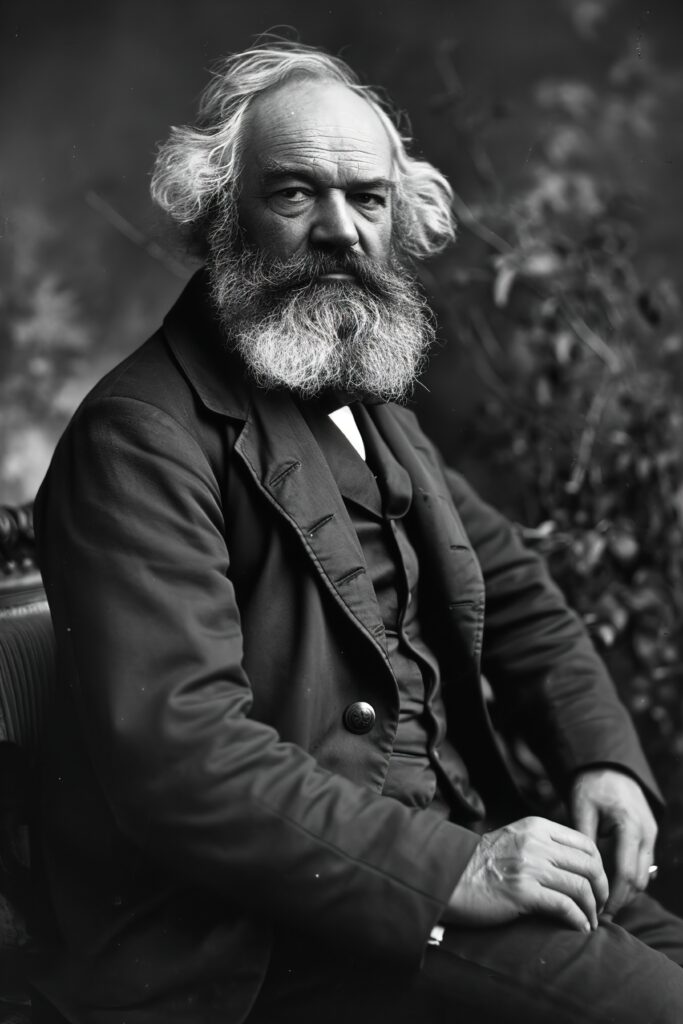
Mill wrote On Liberty in 1859, which makes it over 160 years old. You would think a book that old about freedom would feel like a museum piece. It does not. If anything, it reads like a warning letter written specifically for this decade. Because Mill was not just defending the right to say unpopular things. He was making a much stranger argument. He was saying that a society without weird people is a society that has already started to die. It just does not know it yet.
The Tyranny Nobody Talks About
Most people, when they think about threats to freedom, think about governments. Dictators. Secret police. Censorship laws. Mill thought about all of that too, but he was far more worried about something else. He called it the tyranny of prevailing opinion.
This is not a dictator telling you what to think. This is your coworkers, your family, your social media feed, your entire social world gently and persistently pressing you into a mold. Nobody passes a law against being strange. Nobody has to. The raised eyebrow does the work. The awkward silence after you share an unusual idea at a meeting. The slow social death that comes from being the person who does not fit in.
Mill understood that this pressure is, in many ways, more dangerous than state censorship. A government that bans a book at least does you the courtesy of making the oppression visible. Social conformity does something worse. It makes you censor yourself so thoroughly that you forget you ever had an original thought to begin with. You do not feel oppressed. You feel normal. And that is precisely the problem.
Think about it this way. A prison you can see is a prison you can escape. A prison you have mistaken for your own living room is one you will sit in forever.
Why Mill Thought Eccentrics Were Essential
Mill did not defend eccentricity because he thought weird people were entertaining, though he probably did think that. He defended it because he believed eccentric individuals performed a vital function for the rest of society. They were experiments in living.
This is one of his most powerful ideas, and it tends to get overlooked. Mill argued that nobody actually knows the best way to live a human life. We have guesses. We have traditions. We have customs that have worked reasonably well for some people in some places at some times. But we do not have proof. Life is not a math problem with one correct answer.
So how do we figure out better ways to live? The same way we figure out anything else. We experiment. And for Mill, eccentric people are the experimenters. The person who drops out of law school to become a beekeeper is running an experiment. The community that organizes itself around shared ownership of resources is running an experiment. The individual who rejects marriage, or embraces an unconventional form of it, is running an experiment.
Some of these experiments will fail. Many will. But some will succeed, and when they do, they provide the rest of society with new options, new models, new evidence about what a good life can look like. Without the eccentrics willing to go first, the rest of us would be stuck repeating the same patterns forever, not because those patterns are best, but because nobody ever tried anything different.
The Comfort Trap
Here is where Mill gets counterintuitive, and frankly, a bit uncomfortable to read. He argues that the greatest enemy of human progress is not ignorance or cruelty. It is comfort. Specifically, the comfort of custom.
When a society settles into established ways of doing things, those customs start to feel not just familiar but inevitable. Natural. Right. People stop asking why they do what they do. They just do it. And Mill thought this was catastrophic, not because customs are always wrong, but because unexamined customs are always dangerous.
He pointed to China as his example, which is historically interesting and a bit ironic given that he was writing from Victorian England, a society not exactly famous for its openness to eccentricity. Mill argued that Chinese civilization had stagnated precisely because it had been so successful at producing conformity. It had created such effective mechanisms for standardizing thought and behavior that it had, in his view, crushed the individual originality needed for continued progress.
Now, you can argue with Mill’s historical analysis. Scholars certainly have. But the underlying logic is hard to dismiss. A society that gets very good at making everyone think and act the same way is a society that has optimized for stability at the expense of adaptability. And in a world that keeps changing, adaptability is not optional.
This connects to something researchers in organizational psychology have been studying for decades. Companies that enforce rigid cultural conformity tend to perform well in stable environments but collapse when conditions change. The ones that survive disruption are almost always the ones that tolerated internal dissent and diversity of thought. The same principle scales up. What is true for a company of 500 people is true for a civilization of 500 million.
The Paradox of Tolerance for Weirdness
There is a genuinely strange paradox at the heart of Mill’s argument that most commentators gloss over. He is essentially saying that a healthy society must tolerate things it finds distasteful, annoying, or even threatening to its own values. Not because those things are right, but because the freedom to be wrong is inseparable from the freedom to eventually be right.
Consider this. Every major moral advance in human history started as eccentricity. The abolition of slavery was, for most of human civilization, a fringe position held by people who were considered naive at best and dangerous at worst. The idea that women should vote was eccentric. The notion that children should not work in factories was eccentric. The concept of religious tolerance itself was, for centuries, the most eccentric idea in Europe.
The pattern is almost comically consistent. A handful of strange people start saying something that everyone else finds absurd. They are mocked, marginalized, sometimes imprisoned or killed. Then, slowly, their idea spreads. Eventually, it becomes so widely accepted that people forget it was ever controversial. And then those same people who now hold the once eccentric view start looking at the next batch of eccentrics with suspicion.
Mill saw this cycle with devastating clarity. He understood that the person saying the ridiculous thing today might be saying the obvious thing tomorrow. And he understood that the only way to protect tomorrow’s obvious truths is to protect today’s ridiculous claims.
What Mill Did Not Say (But Should Have)
For all his brilliance, Mill had blind spots. His defense of eccentricity was largely framed around individuals, specifically educated, articulate individuals who made deliberate choices to live differently. He had less to say about the eccentricity that comes from being born into a marginalized group, from having no choice but to be different because society has decided your identity itself is the aberration.
This matters because the courage to be weird is not equally distributed. It is much easier to be a charming eccentric when you are a wealthy Victorian gentleman than when you are a working class woman or a person of color. Mill’s framework needs to be extended to recognize that some people are labeled eccentric not because they have chosen to deviate from norms but because the norms were never designed to include them.
That said, the extension actually strengthens his argument. If eccentricity is valuable because it generates alternatives to dominant ways of living, then the perspectives of people who have always been outside the mainstream are not just tolerable. They are invaluable. The person who has been forced to build a life outside conventional structures often has insights about those structures that the people inside them cannot see.
The Modern Eccentric’s Dilemma
Mill wrote in an age of drawing rooms and pamphlets. We live in an age of algorithms and engagement metrics. And this changes the dynamics of eccentricity in ways he could not have anticipated.
On one hand, it has never been easier to be publicly weird. The internet gives every eccentric a platform, a potential audience, a community of fellow deviants. You can find your people no matter how obscure your interests or unconventional your lifestyle.
On the other hand, it has never been easier to be punished for it. A moment of genuine weirdness, captured on video and stripped of context, can follow you forever. Social media creates a panopticon that Mill would have recognized immediately as a conformity machine. The platforms reward performance of individuality while punishing actual individuality. You can be quirky. You can be relatable. You can be authentically yourself, as long as your authentic self fits into an algorithm’s model of engaging content.
The result is a strange inversion of Mill’s fears. We have not eliminated eccentricity. We have commodified it. We have turned nonconformity into a brand, a lifestyle product, an aesthetic category. And in doing so, we have drained it of the very quality that made it valuable: its genuine challenge to prevailing norms.
Being weird on the internet in 2026 is often just another form of conformity. A different mold, perhaps, but a mold nonetheless.
So What Do We Actually Do?
Mill was not naive. He did not think every eccentric was a genius. He did not think every unconventional lifestyle was an improvement. He knew that most experiments in living would fail, that most strange ideas were strange because they were wrong.
But he also knew something that we keep forgetting. The cost of suppressing eccentricity is always higher than the cost of tolerating it. Every weird idea you silence carries with it the small but real possibility that it was the idea your society desperately needed. And you will never know which one it was, because you killed it before it could grow.
This is not a comfortable position. It means tolerating people and ideas that irritate you. It means resisting the very human urge to enforce conformity on the people around you. It means sitting with the discomfort of difference and choosing not to eliminate it.
Mill was asking something genuinely hard. He was asking us to value what makes us uncomfortable. Not because discomfort is inherently good, but because a society that cannot tolerate discomfort cannot change. And a society that cannot change is a society that has chosen a slow, dignified, entirely preventable decline.
The eccentric is not a bug in the system of human civilization. The eccentric is what keeps the system running. Every purple house, every strange hobby, every life lived outside the lines is a tiny act of defiance against the gravitational pull of sameness. And that pull, left unchecked, will flatten everything.
Mill knew this. He wrote it down. He published it for the world to read. And then the world went right back to telling its weirdos to quiet down and fit in.
Perhaps the most eccentric thing any of us can do in 2026 is actually listen to him.