Table of Contents
You have access to more information right now than every human who lived before 1900 combined. You carry a device in your pocket that connects you to the sum total of recorded knowledge. You can learn quantum physics at breakfast and Renaissance art history over lunch.
And yet you are not meaningfully smarter than your grandparents.
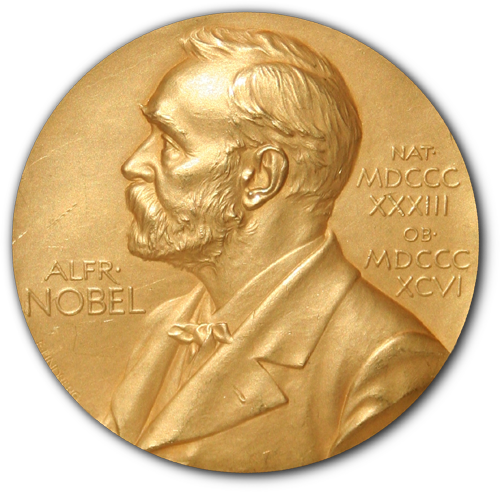
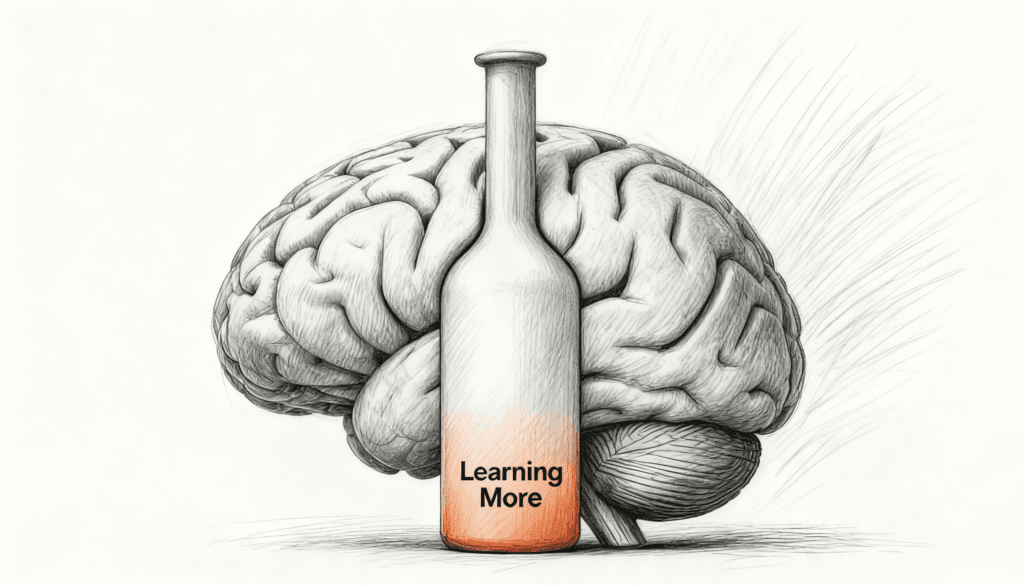
This is not an insult. It is a observation that Nobel laureate Herbert Simon spent decades trying to get people to understand. The problem is not that you lack information. The problem is that your brain was never designed to handle the volume you keep trying to shove into it. You are pouring water into a glass that has been full since Monday, and then wondering why the table is wet.
Simon called it bounded rationality. The idea is deceptively simple. Human beings do not make decisions by carefully weighing all available options. They cannot. The machinery between your ears has hard limits on how much it can process, store, and retrieve at any given moment. You are not a computer with a slow processor. You are a computer with a small desk. No matter how many filing cabinets you add to the room, you can still only spread so many papers across that desk at once.
This was a radical idea when Simon introduced it in the 1950s. Economics at the time was built on the assumption that people are rational actors who optimize their choices. Simon looked at that assumption, looked at actual human beings, and essentially said: have you met people? They do not optimize. They satisfice. They pick the first option that clears a minimum threshold of acceptability and move on with their lives.
He won a Nobel Prize for this. For telling economists that people are not very good at thinking.
The Attention Tax
Here is where it gets interesting for anyone living in the current century. Simon did not just describe the limits of human cognition. He predicted, with unsettling accuracy, what would happen when information became abundant.
In 1971, he wrote something that reads like it was composed last week: “A wealth of information creates a poverty of attention.” Read that again. He said this before the internet. Before social media. Before you had fourteen browser tabs open while pretending to work.
What Simon understood is that information and attention exist in an inverse relationship. They are not partners. They are rivals. Every piece of information you consume levies a tax on your attention. And attention, unlike information, does not scale. You cannot download more of it. You cannot upgrade it. You cannot subscribe to a premium plan that gives you extra focus.
This creates a situation that most people respond to in exactly the wrong way. When faced with a complex problem, the instinct is to gather more data. Read another book. Take another course. Watch another tutorial. Subscribe to another newsletter. The assumption is that the bottleneck is knowledge. If you just knew more, you would make better decisions.
Simon spent his career demonstrating that this assumption is almost perfectly backwards.
The bottleneck is not knowledge. It is processing. It is the ability to take what you already know and actually do something useful with it. And every hour you spend consuming new information is an hour you did not spend learning to think clearly about what you have already consumed.
The Library Paradox
Think about it like a library. Imagine you need to write a single persuasive essay. You have access to a library with ten books on the topic. That is manageable. You read them, synthesize the arguments, and write your essay.
Now imagine the library has ten thousand books on the topic. Are you ten times better off? A hundred times? You are not better off at all. You are worse off. Because now you have a new problem that did not exist before: choosing which books to read. Evaluating sources. Managing contradictions between authors. The original task was to write an essay. The new task is to manage a mountain of information, and somewhere beneath that mountain, the essay still needs to get written.
This is the situation most knowledge workers live in every single day. The task is buried under the preparation for the task.
Simon recognized that in environments of information abundance, the critical skill is not acquisition. It is filtration. Not learning more, but learning to ignore almost everything. This sounds irresponsible. It sounds lazy. It is neither. It is a precise allocation of your scarcest resource.
Satisficing is Not Settling
Now, most people hear about satisficing and interpret it as giving up. As mediocrity wearing a lab coat. This is a misunderstanding.
Satisficing is not about lowering your standards. It is about recognizing that the cost of finding the optimal solution almost always exceeds the benefit of having it. The difference between the best possible decision and a good enough decision is usually tiny. The difference in the time and energy required to reach each one is usually enormous.
Consider hiring. A company needs to fill a position. The optimizing approach would be to interview every qualified candidate on earth, evaluate them on every possible dimension, and select the single best one. No company does this because it would take years and cost millions. Instead, they interview a reasonable number of candidates and hire the first one who exceeds their threshold. They satisfice. And the business continues to function.
This is not laziness. This is intelligence operating within real constraints.
Simon argued that the mark of genuine expertise is not knowing everything about a domain. It is knowing what to ignore. Chess masters do not evaluate every possible move on the board. They immediately discard ninety percent of the possibilities and focus their attention on the handful that matter. They have not learned more than novices in any simple sense. They have learned what is irrelevant, which turns out to be far more valuable.
The Consumption Trap
There is an entire economy built on the assumption that your problem is insufficient knowledge. The self improvement industry. The online course industry. The business book industry. These are not evil. Many of them produce genuinely valuable content. But they all share an implicit promise that is, according to Simon, fundamentally flawed: that more information will produce better outcomes.
The numbers tell an interesting story. The average American consumes about thirty four gigabytes of data per day. That number has been climbing steadily for decades. During the same period, measures of decision quality, life satisfaction, and productivity have not climbed at the same rate. Some have stagnated. Some have declined.
We are consuming more and benefiting less. Simon would not have been surprised.
The trap works like this. You feel uncertain about something. Uncertainty is uncomfortable, so you seek information to reduce it. The information temporarily soothes the discomfort. But it also introduces new questions, new angles, new complexities. So the uncertainty returns, often stronger than before. And you seek more information. The cycle continues. At no point do you stop consuming and start deciding, because there is always one more article, one more perspective, one more data point that might make the picture complete.
The picture will never be complete. Simon proved this mathematically. In any sufficiently complex environment, complete information is not just difficult to obtain. It is impossible. The quest for it is not diligent. It is delusional.
What Simon Actually Recommended
If more information is not the answer, what is?
Simon spent the later decades of his career studying expertise, artificial intelligence, and organizational decision making. His conclusions were remarkably consistent. The people and organizations that performed best did not have access to more information than their competitors. They had better processes for filtering, organizing, and acting on limited information.
He advocated for what he called procedural rationality. Instead of trying to make the best possible decision by analyzing all options, focus on having a good process for making decisions quickly and correcting course when needed. The emphasis shifts from the quality of any single decision to the quality of the decision making system itself.
This is counterintuitive for most people. We celebrate the brilliant insight, the perfect call, the genius move. Simon suggested that these moments are mostly retrospective narratives we construct after the fact. What actually drives good outcomes is a boring, repeatable process: define clear criteria for what good enough looks like, search until you find something that meets those criteria, choose it, move forward, and adjust based on feedback.
It is not romantic. It does not make for a compelling memoir. But it works, and it works precisely because it respects the bottleneck instead of pretending it does not exist.
The Modern Application
The implications for how you spend your time are significant. If Simon is right, and the evidence strongly suggests he is, then large portions of what passes for productive learning are actually sophisticated procrastination.
Reading your fifth book on productivity instead of doing the work is not learning. It is avoidance wearing a clever disguise. Taking your third online course on a skill you have not practiced since the first one is not development. It is consumption without production, which is just entertainment that makes you feel responsible.
The genuine leverage is not in knowing more. It is in three things Simon identified repeatedly across his research.
First, build better filters. Decide in advance what information you will pay attention to and what you will ignore. This means accepting that you will miss things. You will miss things anyway. The question is whether you miss them intentionally while focusing on what matters, or accidentally while drowning in everything.
Second, develop clear decision criteria before you need them. Most bad decisions are not caused by insufficient data. They are caused by unclear standards. If you do not know what good enough looks like, no amount of information will help you recognize it when it appears.
Third, practice acting on incomplete information. This is uncomfortable. It is supposed to be. The discomfort is the feeling of your brain operating within its actual constraints rather than pretending it has no limits. That discomfort is the price of functioning effectively in a complex world. Avoiding it by consuming more information feels productive, but it is just paying a different price: the price of perpetual preparation for a moment of action that keeps receding into the future.
The Uncomfortable Truth
Herbert Simon spent a career studying the gap between how people think they think and how they actually think. The gap is wide. We imagine ourselves as rational processors limited only by the information available to us. In reality, we are emotional creatures with modest cognitive bandwidth, navigating a world that generates more data in a day than we could process in a lifetime.
The response to this reality determines a great deal. You can ignore it and continue trying to learn your way to certainty. You can be frustrated by it and resent your own limitations. Or you can accept it and start designing your life around the bottleneck rather than against it.
The last option is what Simon recommended. It is also, ironically, the option that requires the least information and the most courage. You do not need another book. You do not need another course. You almost certainly do not need any more data than you already have.
You need to decide. With what you know right now. Knowing it will not be perfect. Knowing you will have to adjust. Knowing that the glass on your desk is already full and pouring more water has never once made it hold more.
That is the lesson. It cost Simon a lifetime of research and one Nobel Prize.
It should probably not cost you another browser tab.