Table of Contents
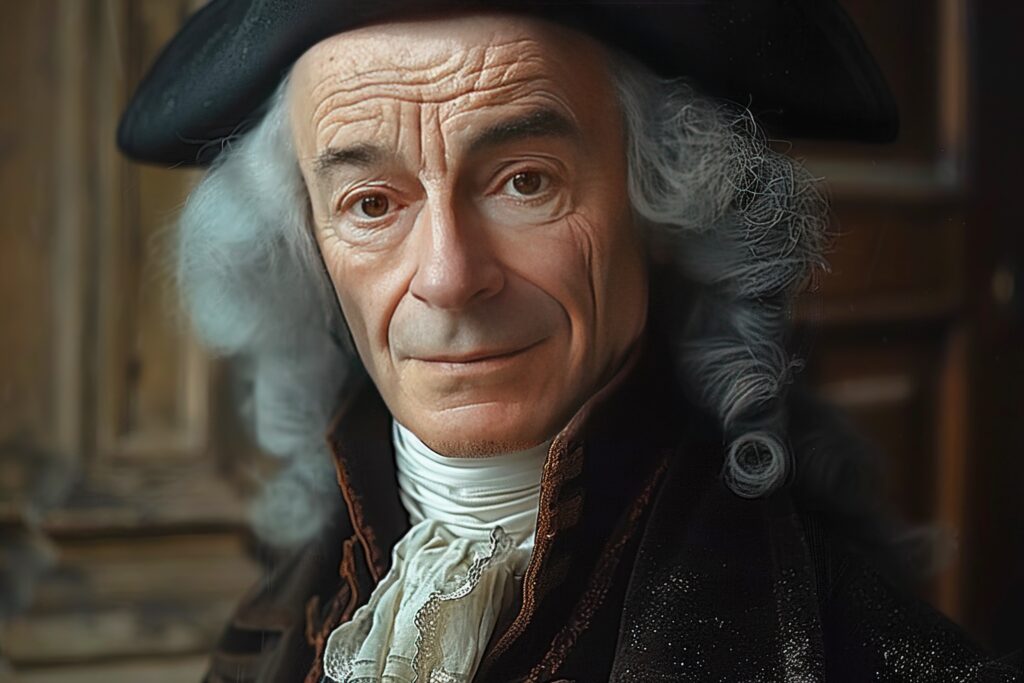
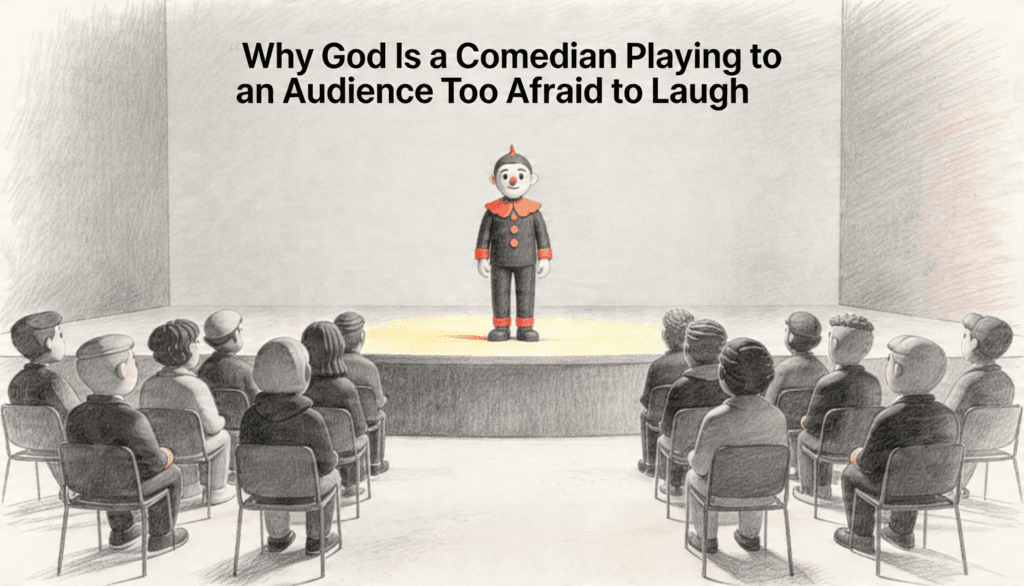
There is a quote attributed to Voltaire that refuses to die. It has been printed on coffee mugs, shared in Instagram stories, and dropped into philosophy essays by undergraduates hoping to sound clever. “God is a comedian playing to an audience too afraid to laugh.” Whether Voltaire actually said it is debatable. But whoever said it managed to compress an enormous truth into a single sentence.
The truth is this: life is overwhelmingly absurd, and most of us spend our entire existence pretending it is not.
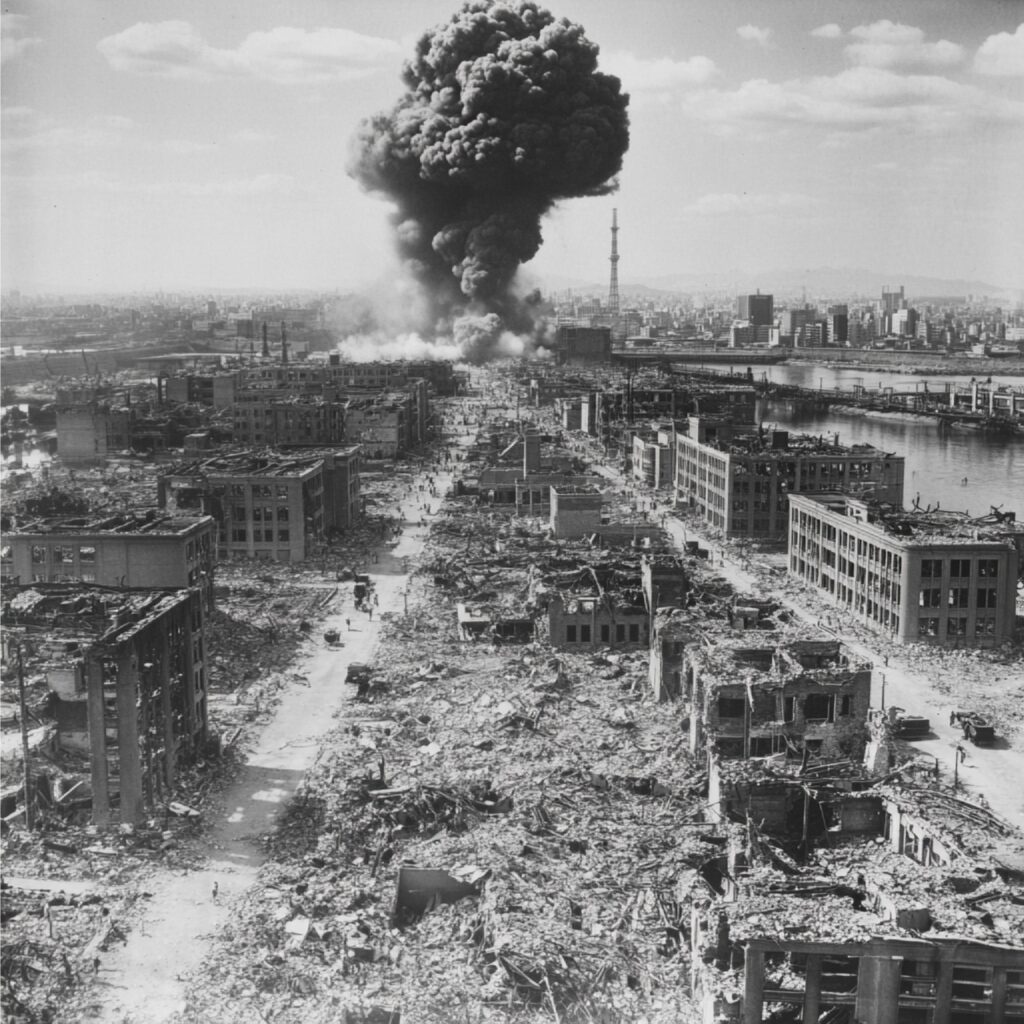
We build systems. We write constitutions. We design five year plans and ten year goals and retirement portfolios. We act as though the universe has a filing system and we just need to find the right drawer. And then a pandemic shuts the world down because someone, somewhere, ate the wrong animal. The punchline arrives. Nobody laughs.
This is not an article about atheism. It is not about theism either. It is about the strange, persistent human habit of taking existence so seriously that we miss the comedy embedded in its structure. And it is about what happens when you start to notice it.
The Setup Nobody Asked For
Every good joke has a setup and a punchline. The setup creates expectation. The punchline destroys it. If you look at human life through this lens, the setup is essentially everything we are told from birth. Work hard and you will succeed. Good things happen to good people. There is a plan. You are special. The universe cares about your ambitions.
The punchline is reality.
You work hard and your industry collapses. You eat well and exercise and get diagnosed with something you cannot pronounce. You fall in love with someone who falls in love with someone else. You spend thirty years building a business and a nineteen year old with a laptop makes it obsolete in six months.
This is not pessimism. This is pattern recognition. Tragedy and comedy are separated by nothing more than camera angle.
When a man slips on a banana peel, it is comedy. When you slip on the banana peel, it is tragedy. The event is identical. Only the perspective changes. Voltaire’s line is really an invitation to change the camera angle on existence itself.
The Audience and Its Fear
So why are we too afraid to laugh?
There are layers to this. The first is evolutionary. Human beings are pattern seeking creatures. We survived not by appreciating irony but by identifying threats. The rustle in the grass might be wind. It might be a predator. The humans who assumed it was always a predator lived long enough to reproduce. The ones who laughed at the rustle did not. We are the descendants of the anxious, not the amused.
This hardwiring means we default to seriousness. We treat uncertainty as danger. We treat the unknown as hostile. Laughing at the absurdity of existence feels reckless, like letting your guard down in a jungle that is actively trying to eat you.
The second layer is cultural. Most civilizations have built themselves on narratives of cosmic order. Religions provide meaning. Political ideologies provide direction. Economic systems provide the illusion of meritocracy. These narratives work only if people take them seriously. Laughter is a threat to any system that depends on unquestioned belief.
This is why court jesters were historically the only people allowed to mock the king. The laughter had to be contained, licensed, controlled. Unauthorized laughter is dangerous because it implies that the emperor might, in fact, have no clothes.
The third layer is personal. Laughing at the absurdity of life requires admitting that you do not have control. That your plans might be irrelevant. That your suffering might be random rather than meaningful. For most people, this admission is terrifying. We would rather believe our pain has a purpose than accept that it might just be noise.
The Comedian and the Cosmos
Now consider the comedian in Voltaire’s metaphor. Whether you interpret this as God, the universe, fate, or simply the structure of reality, something interesting emerges.
Comedy requires intelligence. You cannot be funny by accident. A joke works because it recognizes a pattern, sets up an expectation, and then subverts it. If existence itself is structured like a joke, then whatever force is behind it possesses a kind of intelligence that delights in subversion.
Look at the platypus. An egg laying mammal with a duck bill, venomous spurs, and the ability to sense electrical fields. If you described this animal to someone who had never seen one, they would assume you were joking. It reads like a creature designed by a committee that could not agree on anything. And yet it exists. It thrives. It is perfectly adapted to its environment.
Look at quantum physics. At the subatomic level, particles exist in multiple states simultaneously until observed. The act of looking at something changes what it is. This is not mysticism. This is peer reviewed science. It is also, structurally, a joke. The universe is playing peekaboo with physicists.
Look at history. The unsinkable ship sinks on its maiden voyage. The fireproof building burns down. The peace treaty triggers a war. The safety measure causes the accident. Over and over, reality sets up expectations and then flips them with the timing of a seasoned stand up comic.
If there is a comedian behind this, the material is extraordinary.
The Philosophy of the Absurd
Voltaire was not the only thinker to notice the joke. In the twentieth century, Albert Camus built an entire philosophy around it.
Camus argued that humans have an innate need for meaning, but the universe provides none. This collision between our demand for answers and the universe’s stubborn silence is what he called the absurd. His most famous illustration was the myth of Sisyphus, condemned to push a boulder up a hill for eternity, only to watch it roll back down every time.
The traditional reading of this myth is tragic. Endless, pointless labor. But Camus made a radical move. He said we must imagine Sisyphus happy. Not because the task is meaningful, but because Sisyphus can choose to find joy in the act itself. He can laugh at the boulder. He can appreciate the mountain. He can find freedom in the very fact that the punishment has failed to crush his spirit.
This is remarkably close to what Voltaire’s quote suggests. The comedian is performing. The joke is existence. The only question is whether we will sit in the audience with clenched jaws or actually laugh.
There is something counterintuitive here worth sitting with. The people who take life most seriously are often the least resilient when things fall apart. They have invested everything in the narrative that life should make sense. When it does not, they break. The people who have learned to laugh at absurdity, not in a nihilistic way but in a genuinely amused way, tend to bend without breaking. Their relationship with chaos is not adversarial. It is almost friendly.
The Practical Value of Getting the Joke
This is not just philosophical entertainment. There is a real, measurable benefit to adopting this perspective.
Research in psychology has consistently shown that humor is one of the most effective coping mechanisms available to human beings. Not denial. Not suppression. Humor. The ability to look at a bad situation and find something absurd in it does not minimize the pain. It contextualizes it. It creates a tiny gap between you and the suffering, just enough space to breathe.
Viktor Frankl, the psychiatrist who survived Auschwitz, wrote about humor as a survival tool in the concentration camps. He described prisoners making jokes about their own horrific circumstances. This was not madness. It was a form of radical defiance. A refusal to let the situation define the boundaries of their inner life. If you can laugh, you are still free somewhere inside yourself. No external force can take that from you.
Learning to Laugh
So how do you become the person who laughs instead of the person who sits frozen in the audience?
You do not do it by becoming cynical. Cynicism is not laughter. It is disappointment wearing a mask. The cynic expected the world to make sense and is bitter that it does not. That is still taking the joke seriously. Just from a different angle.
You do it by cultivating sense of humor that comes from seeing yourself as small against the backdrop of the infinite. Not small in a demeaning way. Small in a liberating way. Your mistakes are not cosmic catastrophes. Your failures are not permanent verdicts. Your embarrassments are not tragedies. They are scenes in a comedy so vast that no single character can ruin the show.
You do it by noticing the irony when it appears. You planned a perfect outdoor wedding and it rained. You spent a year learning a skill that became automated the month you finished. You finally achieved your dream and discovered it was not what you wanted at all. These are not just disappointments. They are punchlines. And the sooner you hear them as punchlines, the sooner you stop being crushed by them.
You do it by holding your beliefs lightly. Not abandoning them. Holding them lightly. The people who grip their worldview like a weapon are the ones most devastated when reality contradicts it. The ones who hold their views with open hands can adjust, adapt, and occasionally laugh when they turn out to be wrong.
The Final Bit
Voltaire, or whoever gave us this line, was not offering comfort. They were offering a diagnosis. Humanity has a condition. We are an audience watching the greatest comedy ever performed, and we are sitting there with our arms crossed, demanding that the show be a drama instead.
The comedian does not stop performing because we refuse to laugh. The platypus still exists. Quantum particles still behave absurdly. History still repeats itself in ways that would be hilarious if they were not so costly. The jokes keep coming.
The only thing that changes is us. We can keep sitting in the dark, insisting that life is serious business and that none of this is funny. Or we can do the braver thing.
We can laugh.
Not because nothing matters. But because laughter is what you do when you finally see things clearly. When you stop demanding that the universe explain itself and start appreciating the performance. When you realize that the fear was never protecting you. It was just keeping you from enjoying the show.
The comedian is waiting. The lights are on. The material is exquisite.
All that is left is the laughter.