Table of Contents
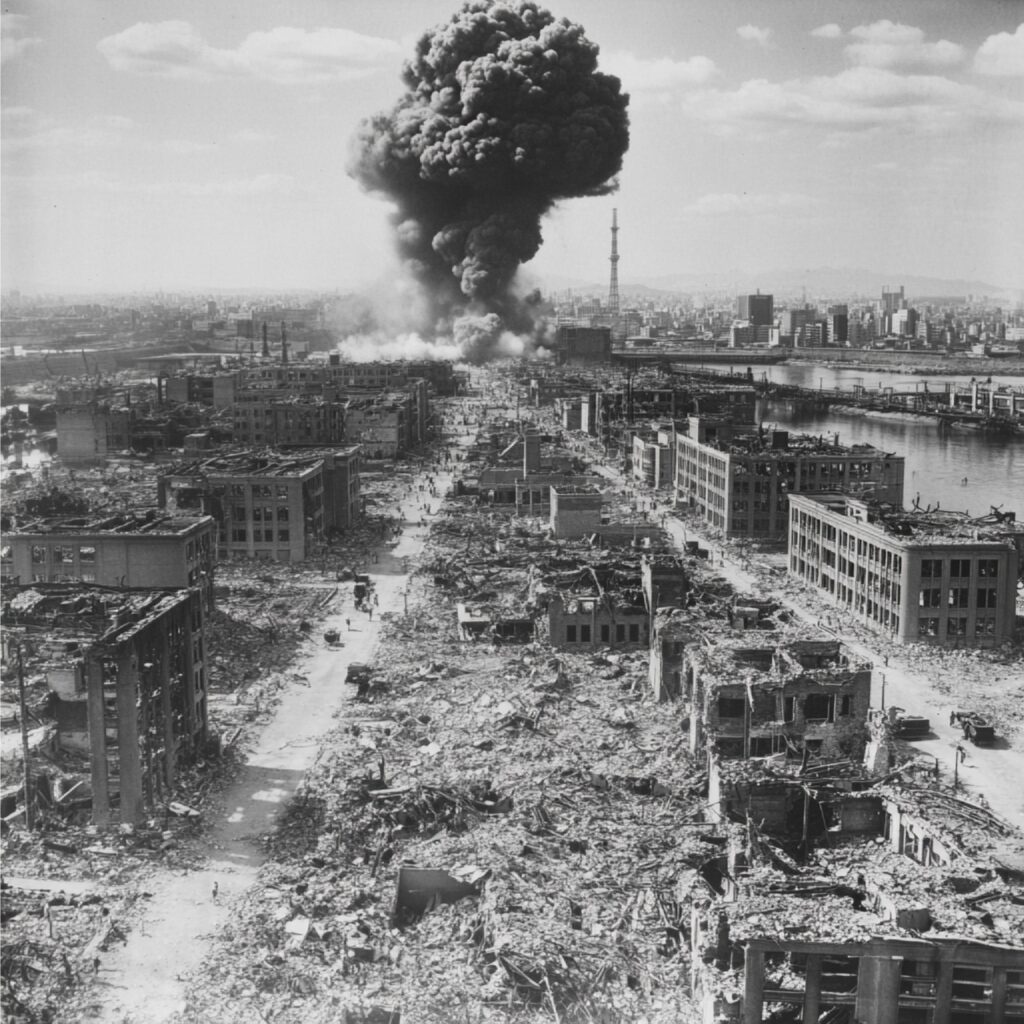
There is a particular kind of bankruptcy that no bailout can fix. It does not show up on balance sheets or in GDP reports. No central bank can print its way out of it, and no tax policy can reverse it once it takes hold. Montesquieu saw it coming three centuries ago.
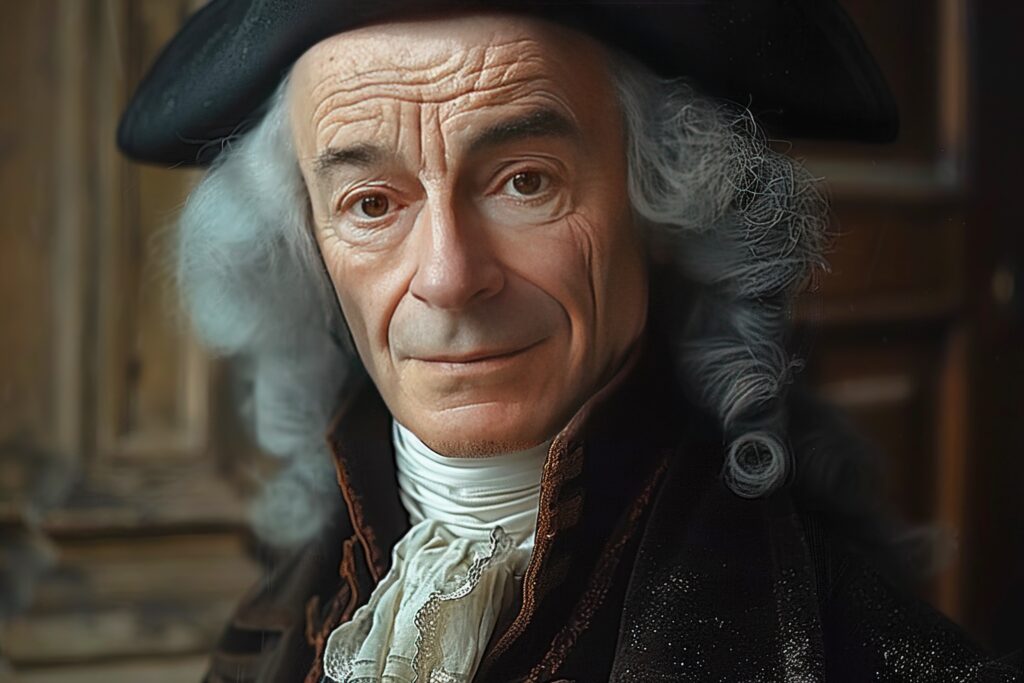
Charles-Louis de Secondat, Baron de La Brède et de Montesquieu, had the kind of name that sounds like it belongs on a château wine label. But behind the aristocratic packaging was one of the sharpest political minds of the Enlightenment. His 1748 masterpiece, The Spirit of the Laws, did not just influence the framers of the American Constitution. It laid out an argument so fundamental that we keep rediscovering it every time a nation collapses and everyone acts surprised.
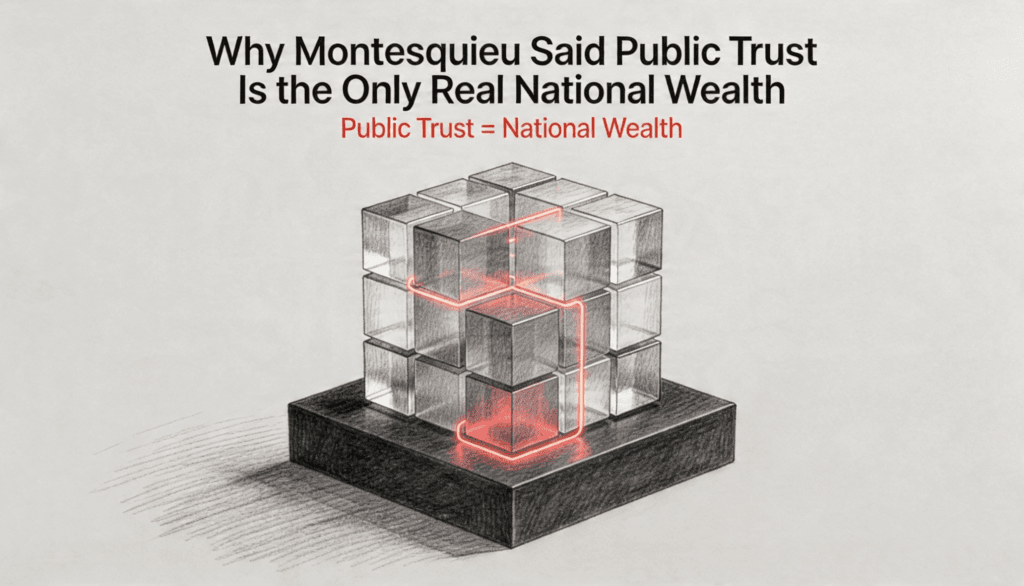
The argument is this: the real wealth of a nation is not its gold, its army, its trade surplus, or its natural resources. It is the trust its citizens place in its institutions, its laws, and each other. Everything else is a consequence of that trust, or a symptom of its absence.
This was not a soft, sentimental claim. Montesquieu was making a structural observation about how societies actually function. And the longer you sit with it, the more radical it becomes.
The Economy Is a Trust Machine
Most people think of wealth in material terms. Money, land, factories, barrels of oil. Montesquieu did not deny that these things matter. But he understood something that modern economics often forgets: material wealth does not create itself. It requires cooperation. And cooperation requires trust.
Think about what happens when you deposit money in a bank. You are handing over your earnings to an institution based on nothing more than a belief that the money will be there when you come back for it. That belief is not based on the physical vault or the marble columns in the lobby. It is based on a web of laws, regulations, and norms that you trust will be enforced. Remove that trust, and the entire banking system is just a collection of buildings with very heavy doors.
Montesquieu grasped this before anyone had a word for it. He observed that in republics where citizens trusted their government and each other, commerce flourished almost automatically. In despotisms where trust was absent, even abundant resources could not prevent stagnation. The gold was there. The people were there. But the invisible connective tissue was missing.
This is the part where modern readers might think he was being obvious. He was not. In his era, the dominant theory of national wealth was mercantilism. Nations measured their power by how much gold and silver they could hoard. Wars were fought over trade routes and colonial extraction. The idea that something as intangible as public trust could outweigh a mountain of bullion was, frankly, bizarre to most of his contemporaries.
What Trust Actually Does
To understand why Montesquieu elevated trust above all other forms of wealth, it helps to think about what trust accomplishes in practical terms.
First, trust lowers the cost of everything. When citizens trust their courts, they sign contracts without hiring armies of lawyers. When businesses trust regulators, they invest without hiding capital offshore. When people trust their neighbors, they leave doors unlocked and children play outside. Each of these small acts of trust eliminates a friction cost that would otherwise drain resources from productive activity.
Second, trust enables long term thinking. A farmer who trusts that the government will not seize his land next year will plant trees that take a decade to bear fruit. An entrepreneur who trusts the legal system will invest in a business that might not turn a profit for five years. A scientist who trusts that funding will continue will pursue research with no immediate application.
Third, trust creates what we might call compounding social capital. This is where the idea gets genuinely interesting. Trust begets trust. When institutions function reliably, people develop habits of cooperation. Those habits become cultural norms. Those norms make institutions function even more reliably. The cycle feeds itself, and the resulting social infrastructure becomes a form of wealth that is extraordinarily difficult to build and frighteningly easy to destroy.
Montesquieu saw this dynamic playing out across the governments he studied. He was not merely theorizing in a library. He traveled extensively, observed different political systems firsthand, and compared how they functioned under stress. His conclusions were empirical before empiricism was fashionable.
The Despotism Problem
One of Montesquieu’s most penetrating insights was his analysis of despotic governments and why they are, in the long run, always poor. Not poor in resources. Poor in capacity.
A despot might sit atop vast territories and command enormous armies. But despotism rules by fear, and fear is the opposite of trust. In a system governed by fear, every interaction carries a hidden tax. Officials hoard information because sharing it might get them killed. Merchants hide profits because displaying wealth attracts confiscation. Citizens avoid innovation because standing out is dangerous.
The result is a society where enormous potential energy sits locked in place, like a battery that can never be connected to a circuit. Montesquieu compared despotic states to fertile lands left barren. The soil was good. The climate was right. But nothing grew because the social conditions made growth irrational.
Here is the counterintuitive part. Despots often appear wealthy precisely because they concentrate resources at the top. The palace gleams while the provinces rot. But Montesquieu argued that this concentration is itself a sign of poverty, not wealth. When one person or one faction controls everything, it means the broader system has failed to generate distributed prosperity. The crown jewels are not evidence of national wealth. They are evidence that national wealth has been captured by a parasite.
This observation has aged remarkably well. Consider any modern state where a small elite controls the vast majority of resources while the broader population struggles. The pattern Montesquieu described in 1748 maps onto it almost perfectly. The resource curse, where nations rich in oil or minerals often remain poor and unstable, is essentially a specific case of his general principle. Resources without trust produce extraction, not prosperity.
The Republican Virtue Connection
Montesquieu tied his theory of trust to a broader concept he called republican virtue. This was not virtue in the religious or moralistic sense. It was something more structural. Republican virtue was the willingness of citizens to prioritize the public good over personal advantage, not because they were saints, but because they understood that their own long term interests depended on the health of the whole.
This is a deeply unfashionable idea in an era of radical individualism. We have been trained to think of self interest as the engine of progress, thanks largely to a selective reading of Adam Smith that would have horrified Smith himself. But Montesquieu was making a subtler point. He was not asking people to be selfless. He was arguing that enlightened self interest naturally produces public spirited behavior when institutions are designed correctly.
In a well designed republic, serving the public good and serving your own interests are not in conflict. They are aligned. The merchant who pays fair prices builds a reputation that generates more business. The official who applies the law impartially earns the legitimacy that keeps him in office. The citizen who contributes to public infrastructure enjoys the benefits of that infrastructure. Trust makes the alignment visible, and visibility makes the alignment self reinforcing.
When trust breaks down, the alignment breaks down with it. Self interest and public interest diverge. The merchant cheats because everyone cheats. The official takes bribes because the system is already corrupt. The citizen evades taxes because the revenue will be stolen anyway. Each defection is individually rational but collectively catastrophic. Montesquieu understood this as a structural failure, not a moral one. Blaming individuals for behaving rationally within a broken system was, in his view, missing the point entirely.
A Brief Detour Through Game Theory
It is worth noting that modern game theory has essentially formalized what Montesquieu was arguing through political philosophy. The prisoner’s dilemma, the tragedy of the commons, the concept of Nash equilibrium in repeated games: all of these describe the same fundamental dynamics he identified.
In repeated interactions where participants trust each other, cooperative equilibria emerge naturally. In one shot interactions or environments where trust is absent, defection dominates. The mathematical models confirm what Montesquieu observed through historical comparison. Trust is not a nice to have. It is the precondition for any outcome better than mutual destruction.
Robert Axelrod’s famous tournaments in the 1980s, where he pitted different strategies against each other in iterated prisoner’s dilemma games, showed that the simplest cooperative strategy, tit for tat, consistently outperformed more aggressive approaches. The lesson was elegant. In a world of repeated interactions, being trustworthy is not naive. It is optimal. Montesquieu would not have been surprised.
Why Trust Is So Hard to Rebuild
If trust is so valuable, why do societies keep destroying it? Montesquieu had an answer for this too, and it is not comforting.
Trust is what physicists might call an asymmetric process. It is slow to build and fast to destroy. A government can spend decades building institutional credibility and lose it in a single scandal. A society can develop deep norms of cooperation over generations and watch them evaporate in a few years of political dysfunction.
The asymmetry exists because trust is built through consistent behavior over time, but destroyed by single dramatic violations. This is not irrational. It is actually a sensible heuristic. If someone has been honest with you a hundred times and then steals from you once, it is reasonable to update your model of their behavior. The theft reveals information that the hundred honest interactions did not.
Montesquieu observed this dynamic in the decline of republics. The process was rarely dramatic. It was usually a slow erosion. A small corruption here. An unenforced law there. Each individual transgression seemed minor. But cumulatively, they degraded the institutional fabric until one day the whole structure gave way, and everyone wondered how it happened so quickly.
The answer, of course, is that it did not happen quickly. It happened slowly, and then all at once. The visible collapse was just the moment when accumulated damage finally exceeded the structure’s capacity to absorb it.
The Modern Relevance
We are living through a period that Montesquieu would have found deeply familiar. Across developed and developing nations alike, trust in institutions is declining. Trust in governments, courts, media, corporations, even in each other.
The consequences are exactly what Montesquieu predicted. Political polarization increases because people no longer trust common institutions to mediate their disputes. Economic dynamism decreases because uncertainty makes long term investment irrational. Social cohesion weakens because the shared norms that held communities together depend on a baseline of mutual trust that is no longer there.
And here is the uncomfortable irony. Many of the policies proposed to address these problems, whether from the left or the right, actually require the very trust they are meant to restore. You cannot rebuild institutional credibility through institutions that have lost credibility. You cannot legislate trust into existence. The tool you need is the thing that is missing.
Montesquieu did not offer easy solutions because there are none. But he did offer a diagnosis, and diagnosis is the first step toward treatment. If we understand that trust is not merely a pleasant social lubricant but the foundational infrastructure on which everything else depends, we might at least stop doing things that actively destroy it.
The Wealth That Cannot Be Measured
There is a final dimension to Montesquieu’s argument that deserves attention. By identifying trust as the real national wealth, he was implicitly arguing that the most important things about a society are the ones that cannot be counted.
This is profoundly at odds with modern governance, which is obsessed with metrics. GDP growth. Unemployment rates. Trade balances. Stock indices. These numbers dominate policy discussions because they are measurable. But Montesquieu’s framework suggests they are all downstream indicators of something that no spreadsheet can capture.
The wealthiest society is not the one with the highest GDP. It is the one where a stranger can ask for directions and receive an honest answer. Where a handshake still means something. Where citizens believe, based on experience rather than propaganda, that the system works for them. Where the gap between what institutions promise and what they deliver is small enough that cynicism has not yet become the default posture.
None of this shows up in the data. All of it determines whether the data will look good next year.
Montesquieu was writing in an age of monarchs and mercantilists, of colonial empires and aristocratic privilege. The surface details of his world are gone. But the structural insight at the core of his work is as relevant as anything published this morning. Public trust is not one form of wealth among many. It is the form of wealth that makes all other forms possible.
Three centuries later, we are still learning this lesson. Mostly the hard way.