Table of Contents
There was a moment, somewhere between the fall of the Berlin Wall and the launch of the first iPhone, when educated people in the West convinced themselves that humanity had finally outgrown its tribal phase. Borders were becoming quaint. Cultures were converging. A young person in Stockholm, Seoul, and São Paulo would soon share the same values, the same playlists, the same vague sense of cosmopolitan belonging. The future, we were told, belonged to the global citizen.
That future never arrived. And the man who saw it coming, or rather, saw that it would not come, was Samuel Huntington.
Huntington was not a fashionable thinker. He published The Clash of Civilizations and the Remaking of World Order in 1996, and the response from polite intellectual society was somewhere between embarrassment and outrage. He was accused of being a pessimist, a determinist, a man who could not appreciate the beautiful flattening of the world that globalization was supposedly delivering. Today, three decades later, his book reads less like a controversial thesis and more like a weather report from the present.
The Comfortable Lie We All Believed
To understand why the global citizen idea collapsed, you have to understand why it was so attractive in the first place.
The 1990s were, in a strange way, the most intoxicating decade of the modern era. The Soviet Union had dissolved. Liberal democracy had apparently won. Francis Fukuyama declared the end of history, which is a wonderful phrase that aged about as well as milk left in a warm car. The general feeling was that the great ideological battles were over, and what remained was simply the gradual rollout of a single global culture, lightly seasoned with local color.
Markets would integrate. People would travel. The internet would dissolve the last remaining walls between us. A teenager in Mumbai would watch the same Netflix shows as a teenager in Munich, and from this shared media diet, a shared identity would supposedly emerge. The phrase “global citizen” started appearing on corporate brochures, university websites, and the LinkedIn bios of people who had attended one conference in overseas.
Huntington looked at this and said, essentially, that we were confusing surface for substance. Yes, people around the world might wear similar jeans and drink similar coffee. But shared consumption is not shared identity. The deeper layers of human belonging, religion, language, history, kinship, were not dissolving. They were quietly reorganizing themselves for the next century.
What Huntington Actually Said
His core argument was simple, and that is partly why it irritated so many people. Simple ideas tend to bother intellectuals because they leave little room for the elaborate footwork of professional commentary.
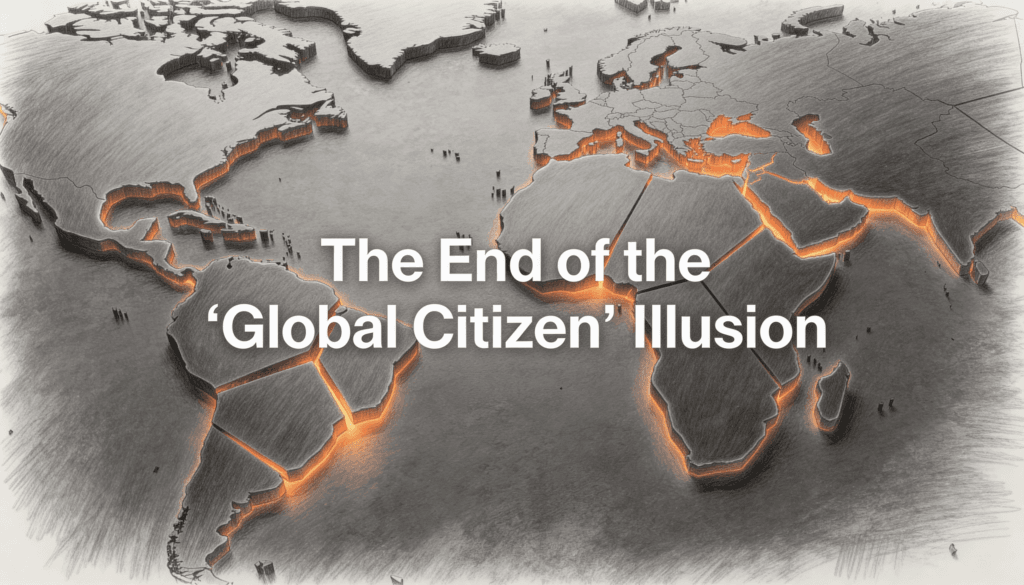
Huntington argued that the world was not heading toward unity but toward a new kind of fragmentation. The future would be organized not by nation states alone, nor by ideologies, but by civilizations. He counted roughly seven or eight of them. The Western, the Orthodox, the Islamic, the Sinic, the Hindu, the Japanese, the Latin American, and the African. Each had its own deep cultural code, its own assumptions about authority, family, justice, and the good life.
The conflicts of the future, he predicted, would happen along the fault lines between these civilizations. Not because people were irrational, but because culture matters more than economics in the long run. You can sell a man a smartphone. You cannot easily sell him a new soul.
This was a quiet form of heresy. The whole project of liberal modernity assumes that beneath our differences, we are all basically the same kind of creature, wanting the same things, organizing our lives by the same logic of preference and choice. Huntington was suggesting that this was a parochial assumption dressed up as a universal truth. Western liberals had mistaken their own worldview for the destination of all humanity.
The Cosmopolitan Mirage
If you spent any time in a major Western city during the 2000s and 2010s, you might have been forgiven for thinking the global citizen was real. You could meet people who had studied in three countries, worked in four, dated across five, and held opinions identical to your own about climate change, gender, art, and the proper way to brew coffee.
These people genuinely believed they represented the future. What they actually represented was a thin demographic slice of the upper middle class, distributed unevenly across a handful of expensive cities. They were the staff of the global citizen idea, not its citizenry.
Huntington had a name for this phenomenon. He called them, with the polite cruelty of an academic, “Davos Man.” The figure who attends international conferences, speaks fluent business English, owns property in multiple jurisdictions, and feels more at home in another global city than in the small town two hours from his birthplace. Davos Man was not the herald of a new universal humanity. He was a curious outlier, a beneficiary of a specific economic moment, and his worldview did not travel well.
Outside the elite enclaves, ordinary people were doing something quite different. They were rediscovering local attachments, religious traditions, and national identities. In Turkey, in India, in Russia, in Hungary, in the United States, and across much of the Islamic world, the cultural tide was moving in the opposite direction. Not toward dissolution but toward reassertion.
Why Culture Refuses to Disappear
We are not, by nature, creatures of pure preference. We are creatures of meaning. We need stories about who we are, where we come from, and what we owe to others. These stories are not optional luxuries we add to our economic lives. They are the operating system beneath everything else we do. When you try to replace them with consumer choice and individual rights, you do not get a richer humanity. You get a flatter one, and eventually a hungrier one.
The global citizen project asked people to give up these older stories in exchange for membership in an abstract human community. The trouble is that abstract communities do not feed anyone emotionally. You cannot mourn with them, celebrate with them, or raise children inside them. They have no songs, no holidays, no shared dead to remember. They are intellectual constructions, and intellectual constructions do not survive the first cold winter.
This is why religion has come roaring back across so much of the world. It is why national identity, even in its uglier forms, keeps finding new audiences. It is why young people in stable democracies are increasingly drawn to traditions their grandparents thought had been safely buried. Human beings need thick belonging, and if the official institutions of modernity refuse to provide it, people will go looking elsewhere.
The Awkward Achievement
Huntington was not celebrating any of this. That is a common misreading. He was not a tribalist. He was a careful American patriot who happened to think that civilizations were real and that pretending otherwise would lead to disaster.
His warning to the West was specific. Do not assume your values are universal. Do not try to remake every other civilization in your image. Do not confuse your temporary military and economic dominance with permanent moral authority. Understand that other civilizations have their own coherent ways of organizing human life, and that they will resist being absorbed.
This sounded, at the time, like cynicism. Today it sounds like ordinary common sense. The wars of the early 21st century, the failure of various democracy promotion projects, the surprise of Western elites at the rise of China on its own terms rather than as a junior Western partner, these were all consequences of ignoring exactly what Huntington had described.
There is irony here. The same intellectual class that mocked Huntington for being culturally pessimistic has spent the last decade discovering, with great surprise, that culture matters. They now write long articles about identity politics, the sacred, populism, and the return of religion. They have, in effect, rediscovered Huntington while pretending to discover something new.
What This Means For Us Now
So where does this leave the ordinary reader, the person who is neither Davos Man nor a civilizational warrior, just someone trying to live a thoughtful life?
It leaves us, I think, with a more honest set of questions. Not whether we should be global citizens, because that option was always more advertising than reality. But what kind of local, national, and cultural citizens we want to be. Which traditions we are inheriting, and which we want to pass on. What we actually owe to the people closest to us, and what we owe to strangers.
It also leaves us with a healthier skepticism about grand simplifying narratives. The end of history was one. The global village was another. The borderless world was a third. Each of them flattered the people who already had the most to gain from a particular arrangement of the world.
Huntington did not give us a comforting story. He gave us a more accurate map. On that map, the world is not a single homogenizing village but a busy intersection of distinct civilizations, each with its own logic, its own memory, and its own future.
The global citizen was a beautiful idea. It was also, in the end, a costume worn by a particular class of people during a particular decade. The costume has been quietly folded away. What remains is the older, stranger, more interesting world that was always underneath.