Table of Contents
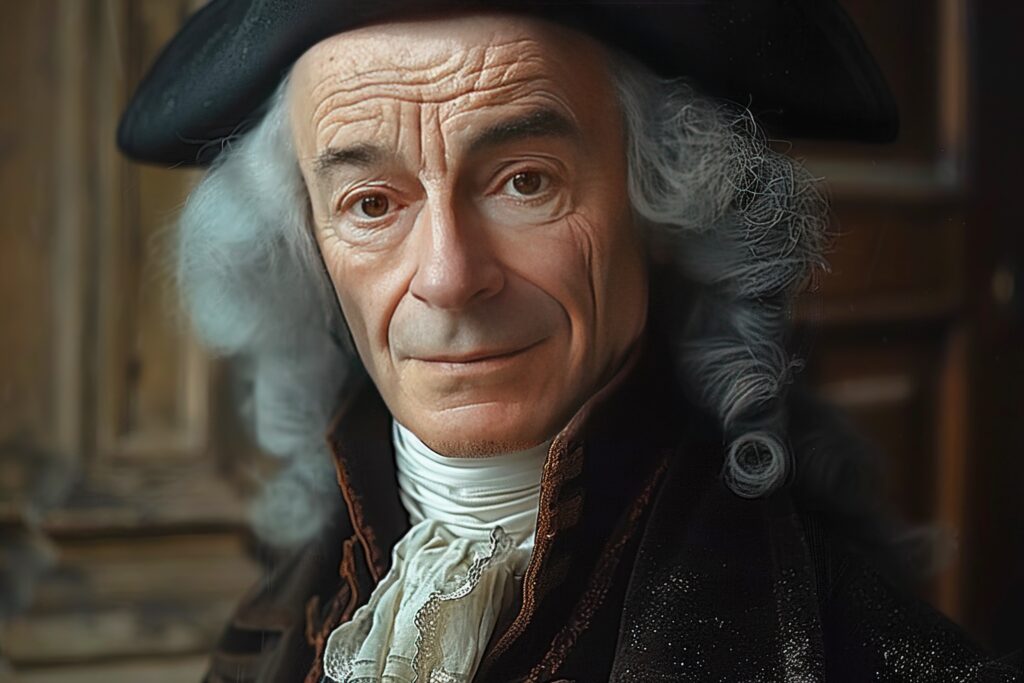
There is a strange thing that happens when you read John Locke today. You expect a dusty seventeenth century philosopher in a powdered wig, mumbling about property and government. Instead, you find a man who sounds suspiciously like he is live tweeting our current culture wars from beyond the grave.
Locke is the patron saint of free thought. Every defender of open discourse, from the editorial pages of major newspapers to the comment sections of obscure Substacks, eventually drags his name into the conversation. He is the one who told us that belief cannot be forced, that reason must be free, that the mind is its own sovereign. So it seems almost absurd to ask whether he could defend cancel culture, that modern ritual where a person is publicly shamed, professionally exiled, or socially erased for saying the wrong thing.
Surely Locke would have hated it. Right?
Well, maybe. But also, maybe not. And the maybe not is where it gets interesting.
The Locke Everyone Thinks They Know
The standard portrait of Locke is simple. He wrote A Letter Concerning Toleration in 1689, arguing that the state had no business policing belief. He thought magistrates should not jail heretics, that churches should not coerce souls, and that human reason functioned best when left unmolested by authority. From this, a thousand free speech defenders have built their fortresses.
The logic flows nicely. If Locke wanted minds to be free, then any pressure to silence dissent is unLockean. Cancel culture, which applies enormous social pressure to dissenters, must therefore be a betrayal of his legacy. Case closed. Pour yourself a brandy.
Except Locke was a more complicated thinker than the bumper sticker version suggests. He drew lines. He had exceptions. And those exceptions cast a long shadow over our easy assumption that he would have been horrified by the modern outrage cycle.
What Locke Actually Said
Read A Letter Concerning Toleration carefully and you find something curious. Locke is tolerant of nearly everyone, but not quite everyone. He explicitly excluded two groups from the protections of toleration: atheists, because he believed they could not be trusted to keep oaths, and Church Catholics, because he thought they owed allegiance to a foreign power, the Pope.
The patron saint of open discourse was, in his actual writings, perfectly comfortable with the social and political exclusion of people whose beliefs he considered dangerous to the civic order.
That is not a small footnote. That is a load bearing pillar of his argument. Locke believed that toleration had limits, and those limits were defined by whether a belief threatened the basic structure of society. He was not a free speech absolutist. He was a pragmatist with a strong preference for liberty, but with conditions.
If you are starting to feel uncomfortable, good. That means you are reading him honestly.
The Difference Between State and Society
Here is where things get genuinely tricky. Locke spent most of his energy arguing against state coercion. He did not want the king throwing dissenters in prison. He did not want bishops burning heretics. His target was institutional power wielded by the government against the individual conscience.
But cancel culture, in most cases, is not the state. It is your employer firing you. It is your publisher dropping you. It is your followers turning on you. It is private actors making private decisions about who they want to associate with. And Locke had very little to say against that.
In fact, his entire framework relied on the idea that private associations, like churches, were free to set their own membership rules. If you stopped believing what the church believed, the church could ask you to leave. That was not tyranny. That was the church being a church.
Apply this to a magazine that fires a columnist, or a university that disinvites a speaker, or a publishing house that drops an author, and you get a Lockean defense that is at least plausible. These are voluntary associations exercising their right to define themselves. The fired columnist still has her tongue. She can still write. She can still publish elsewhere. No one has thrown her in jail. No one has burned her books.
The state has not moved. So where exactly is the Lockean violation?
The Counterintuitive Part
This is the part that tends to irritate people who imagined Locke as a clear ally. The truth is that Locke was far more concerned with religious persecution by government than with social pressure between citizens. He lived in a century where you could be executed for the wrong theological opinion. The stakes were not getting a mean post on social media. The stakes were the gallows.
When modern thinkers invoke Locke to defend a celebrity who got dropped from a brand deal, they are stretching his argument far beyond its original load. Locke was not writing a manifesto for the protection of unpopular opinion in the marketplace of ideas. He was writing a survival guide for people whose neighbors wanted to kill them for praying differently.
That is a different problem. And applying his solution to ours requires more honesty than most commentators bring to the task.
But Wait. There Is Another Locke
Now, before you assume I have written a thousand words just to hand cancel culture a philosophical victory, let me complicate things in the other direction.
Locke believed deeply in the cultivation of reason. He thought human beings became moral and intelligent through the slow process of testing ideas against each other. In his Essay Concerning Human Understanding, he argued that we should follow evidence where it leads, that we should hold beliefs in proportion to the strength of their support, and that we should remain humble about the limits of our own knowledge.
A society that punishes people for expressing unpopular views, even through purely social means, undermines this process. If you know that saying the wrong thing will cost you your job, your reputation, and your friends, you will think very hard before you say anything. And not in the good way. Not in the way that produces careful reasoning. In the way that produces silence, conformity, and the death of genuine inquiry.
Locke would not have tolerated a society where reason itself was suffocated by fear. He believed that free minds required not just legal protection but also a culture that valued honest disagreement. Without that culture, his legal protections were just empty rooms with no one brave enough to enter them.
So we have a problem. Locke would probably not have called modern social shaming a violation of rights in the strict legal sense. But he might still have considered it a disaster for the kind of society he wanted to build.
The Knot Worth Untangling
Here is the knot. Locke gave us two things that now seem to be pulling in opposite directions. He gave us a strong defense of private association, which seems to permit social exclusion of those we disagree with. And he gave us a strong defense of free inquiry, which seems to require that we not punish people for thinking out loud.
How do you hold both at once?
The honest answer is that Locke himself did not have to. He lived in a world where the threats to free thought came almost entirely from the state, and where private communities were small enough that exclusion from one did not mean exile from public life. If a Quaker got kicked out of his village, he could find another village. If a heretic was banned from one university, there were others.
We do not live in that world anymore. When a person is canceled today, the social punishment can be effectively total. Employers across an industry coordinate. Platforms that span the globe revoke access. Friends fall silent because they fear becoming the next target. The exclusion is not from one community. It is from a network of communities so interlinked that being expelled from one is functionally being expelled from all.
This is something Locke did not anticipate. The collapse of distance, the rise of mass media, and the integration of cultural institutions have changed what social exclusion means. A private association booting you out used to be a minor inconvenience. Now it can be a life ending event.
What Locke Might Have Actually Said
If we could resurrect Locke and update him on the past three hundred years, I suspect he would say something annoyingly nuanced. He would probably defend the right of private institutions to set their own standards. He would also probably warn that when those institutions begin to act in concert, when they form what amounts to a private orthodoxy enforced across society, they begin to function like the state he was so worried about.
The danger Locke feared was not specifically governmental. It was concentrated power being used to crush individuals. Whether that power wore a crown, a mitre, or a corporate badge was, in the end, less important than what it did.
He might point out that when twenty publishers refuse to print a book, when a dozen platforms ban a user, when an industry quietly agrees that certain views are unhirable, the practical effect on free thought is similar to what the seventeenth century church accomplished with its index of forbidden books. The mechanism is different. The result is recognizable.
So, Could Locke Defend Cancel Culture?
In its mildest forms, yes. A church asking a member to leave, a magazine ending a contributor relationship, a friend group deciding they have had enough. These are exactly the kinds of private associational choices that Locke considered legitimate.
In its harsher forms, probably not. When social punishment becomes coordinated, when it spans institutions and industries, when it makes it impossible for a person to participate in public life because of opinions they once held, it starts to look like the very concentration of power Locke spent his career resisting. The fact that the power is not officially governmental does not, by his own logic, make it harmless.
The interesting question is not whether Locke would have signed an open letter on either side of this debate. He almost certainly would not have. The interesting question is what his framework asks us to consider, which is something more demanding than either side typically wants to hear.
It asks us to defend the right of communities to set their own rules. It also asks us to be deeply suspicious of any time those rules start moving in lockstep across society. It asks us to value the legal protection of speech. It also asks us to nurture the cultural conditions under which speech is worth having.
What he would have given us, if we bothered to read him carefully, is a kind of intellectual responsibility. He would have told us to be honest about the difference between the state and society, and also honest about the moments when society starts to behave like a state. He would have told us to defend free inquiry not just as a legal abstraction but as a living practice, which means being willing to hear people we find ridiculous, offensive, or wrong.
And he would have noticed something that the loudest voices on both sides of our current debate often miss, which is that free thought is not protected only by laws and not destroyed only by governments. It is protected by the small daily courage of people who keep talking honestly even when it costs them, and destroyed by the small daily cowardice of people who decide silence is safer.
Locke knew the difference. The question, three hundred years later, is whether we still do.