Table of Contents
Somewhere in a coffee shop right now, a person is telling another person how slammed they are. Their week is insane. They have not had a proper weekend in months. They are running on four hours of sleep and three espressos. They say all of this while sitting still, drinking a latte, with absolutely no urgent reason to leave.
Listen closely and you will notice something strange. They are not complaining. They are bragging.
This is one of the quietest status games of our era, and almost nobody talks about it honestly. We have replaced gold watches with packed calendars. We have swapped designer logos for the phrase “I am so busy right now.” And the man who would have predicted all of this with a grim little smile was an economist who died nearly a century ago, wearing safety pins instead of buttons because he did not care to impress anyone.
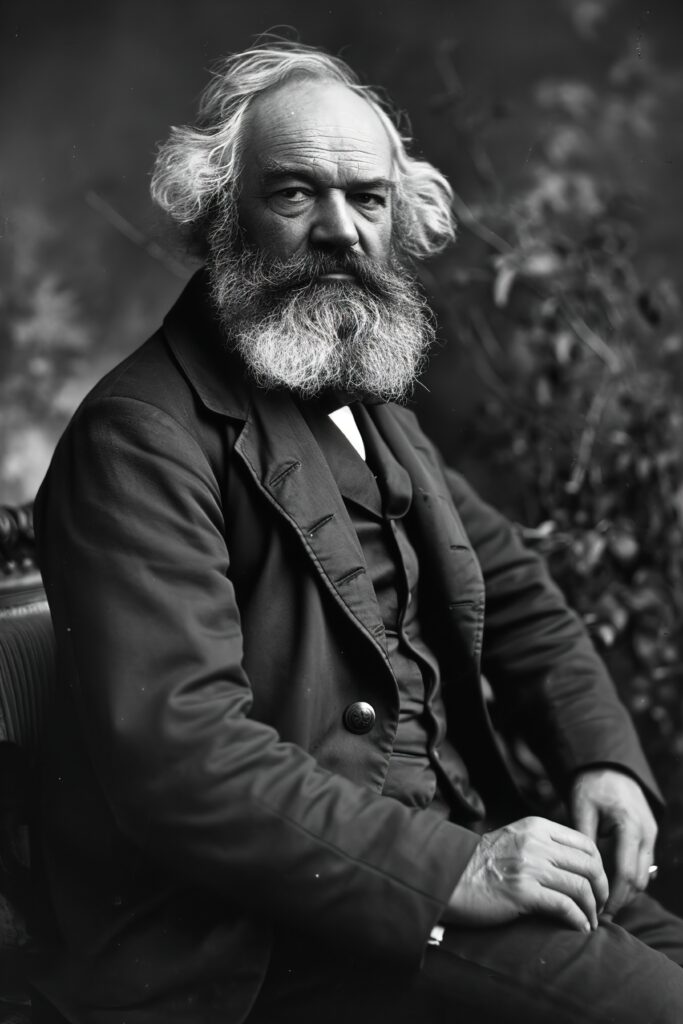
His name was Thorstein Veblen, and he would not be surprised by any of this. He would just be tired of being right.
The Old Game
Back in 1899, Veblen wrote a book called The Theory of the Leisure Class. The title alone tells you what you need to know about his era. To be rich back then meant to be visibly, expensively, gloriously idle. The wealthy did not work. They did not even pretend to work. They wore impractical clothes that made physical labor impossible. They kept long fingernails. They learned dead languages. They spent their afternoons hunting foxes they did not need to eat.
Veblen called this “conspicuous leisure.” The point was not the leisure itself. The point was that everyone could see you had it. You were broadcasting, with every velvet sleeve and powdered wig, that you did not need to work for a living. Other people worked. You were beyond that.
He also coined the more famous cousin of this idea: “conspicuous consumption.” This was the part where you bought things specifically so other people would see you had bought them. The mansion that was too big to live in comfortably. The silverware too ornate to actually use. The carriage with four horses when two would have done.
Veblen was not impressed. He saw all of it as a kind of theater. A performance of wealth designed to keep score in a game most people did not even know they were playing.
And then something changed.
When the Rich Started Working
Sometime in the last fifty years or so, a quiet inversion happened. The wealthy stopped advertising their leisure and started advertising their labor. The CEO who works ninety hours a week became the new hero. The founder sleeping under his desk became a folk legend. The tech executive who answers emails at three in the morning became a person to admire, not pity.
If you had told a Gilded Age aristocrat that future billionaires would be proud of how little they sleep, he would have laughed himself into a monocle malfunction. Working hard was for the people who had to. Now it is for the people who do not have to but want everyone to know they choose to.
Why did this flip happen? A few reasons, and none of them are flattering.
The first is that the economy changed. In Veblen’s time, most wealth came from owning things. Land, factories, railroads. You inherited it or you took it, and then you sat back. Today, most wealth at the top comes from human capital. Skills, networks, knowledge work. Even the very rich have to keep showing up to stay relevant. Their value is tied to what they do, not just what they own.
The second reason is more interesting. As manual labor became less common and knowledge work became dominant, being “busy” became a signal of being needed. And being needed became a signal of being valuable. If you are slammed with meetings, it must be because important people want your time. If your calendar is empty, well, what does that say about you?
This is where Veblen’s logic comes back with a vengeance. The signal changed, but the game did not. We are still performing status. We just swapped the costume.
The New Wardrobe
Watch how busyness gets worn in modern life. It has a uniform, a vocabulary, and a set of accessories almost as predictable as a pocket watch on a chain.
The accessories include the laptop open at brunch. The phone face up on the dinner table. The AirPods in even when nobody is on the line. The Slack notification that gets glanced at mid conversation, just so the other person can see that someone, somewhere, urgently needs you.
The vocabulary is its own little dialect. “Crazy week.” “Back to back all day.” “Drowning in emails.” “I have not had a minute.” Notice how all of these complaints are also boasts. Nobody says “I have plenty of time and very little to do” with the same pride.
And the uniform itself is striking. The tech founder hoodie. The doctor in scrubs at the grocery store. The lawyer with the rolled up sleeves and the dark circles. These are not accidents of dress. They are signals that say: I am too important to dress nicely. My time is too valuable for a suit.
This is conspicuous busyness, and it works almost exactly the way Veblen described, except the script has been flipped. Where the aristocrat once said “I do not work, look at me,” the modern professional says “I work constantly, look at me.” Same play, different costume.
The Math Does Not Add Up
Here is the part that becomes funny once you see it.
A lot of this busyness is not real. Researchers have studied how people report their working hours, and the pattern is consistent and a little embarrassing. The people who claim to work the most tend to overstate it by the largest margin. Someone who says they work seventy five hours a week is, on average, working closer to sixty or sixty five. The brag inflates with the hours.
Why? Because being busy is now the proof that you matter. So even people who have reasonably balanced lives feel pressure to perform the appearance of overwork. The brunch latte sipper from the opening of this article is not lying, exactly. They just believe their own performance. They feel busy because they have learned that feeling busy is what successful people are supposed to feel.
There is also a darker layer. A lot of what we call “busy” is actually fragmented attention. Checking your phone every four minutes does not make you productive. It makes you scattered. But scattered feels like busy from the inside. So we mistake the symptom for the substance.
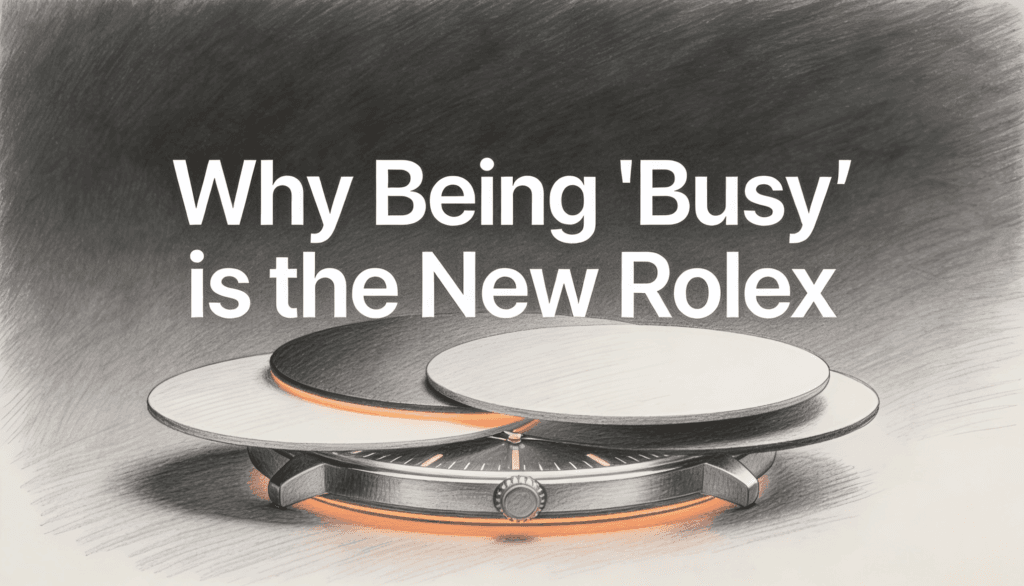
We are running ourselves ragged not because the work demands it, but because the signal demands it. The Rolex used to tell the world you had arrived. Now the packed calendar does the same job, except the Rolex did not also wreck your sleep.
The Quiet Counter Move
There is a small but interesting counter trend, and Veblen would have spotted it instantly.
At the very top of the wealth pyramid, something has started to shift again. The richest of the rich are quietly bringing back leisure, but in a coded way. They take month long sabbaticals. They go on silent meditation retreats. They post photos from a remote cabin with no signal. They talk about “deep work” and “long walks” and “reading season.”
What is this? It is leisure, performed as wisdom. It is rest, dressed up as strategy. It is, if we are being honest, conspicuous leisure all over again, just with better branding. The CEO who used to brag about answering emails at midnight now brags about not checking email for a week. The signal flipped because the lower signal got too crowded.
When everyone is busy, busy stops meaning anything. So the people who really want to stand out start signaling something rarer. The ability to step away. The luxury of attention. The freedom to be unreachable.
This is the next layer of the same game. And the pattern is so on the nose that you can almost hear Veblen sighing from his grave.
Who Loses
The trouble with status games is that almost everyone loses them. By definition, the prize is being above other people. If everyone could have it, it would not be a prize.
The conspicuous busyness game has a particular kind of casualty. It is the middle class professional who is genuinely overworked but receives none of the actual benefits of being a wealthy executive. They get the long hours and the sacrificed weekends without the corner office or the equity stake. They are performing busyness not because they chose to but because the culture has made it the default. They are running on a treadmill someone else built.
And the costs are not abstract. Burnout is now common enough that it has its own diagnostic category. Loneliness has become a public health concern in much of the developed world. We are sicker, more anxious, and more disconnected than the people in Veblen’s day, and a good chunk of it traces back to a game we did not consciously sign up for.
This is the worst part about status competition. You can lose without ever having known you were playing.
What To Actually Do About It
You do not have to throw your phone in a river. You do not have to move to a cabin. You do not have to read Veblen, although his prose is funnier than the academic reputation suggests.
What you do have to do is notice the game.
The next time you find yourself telling someone how slammed you are, ask yourself an honest question. Is this true? And if it is true, is it actually a good thing? When did “no time to think” become something to be proud of?
Notice the brag in the complaint. When a colleague says they did not sleep last night, notice whether they are asking for help or asking for applause. When you feel the pull to put your laptop on the brunch table, notice what you are performing and for whom.
Use your time the way a person from a future, saner century would use theirs. Spend an afternoon reading something with no professional purpose. Take a walk without a podcast. Have a conversation where you are not also checking a screen. Be bored. Be unreachable. Be uninteresting for a while.
You will not get a watch for it. You will not get a promotion. You will not get likes. You will get something rarer, which is a life that is actually yours instead of a performance staged for an audience that does not particularly care.
Veblen saw that humans would always find new ways to keep score. The Rolex became the calendar. The calendar will become the sabbatical. The sabbatical will become whatever signals luxury once sabbaticals get too common.
The game keeps going. The only winning move is to step off the field, even briefly, and notice the field was always there.
And then maybe finish your coffee in peace.