Table of Contents
The Bargain We Made Without Reading the Fine Print
Every generation strikes a bargain with its tools. Ours is with artificial intelligence, and the terms look generous on the surface. Machines draft our emails, summarize our meetings, write our code, and increasingly make our decisions. The productivity gains are real. The dashboards glow green.
But there is a quieter transaction happening underneath, and almost nobody is reading the fine print. The cost of AI efficiency is not measured in subscription fees or GPU cycles. It is measured in the slow atrophy of the human faculties we outsource.
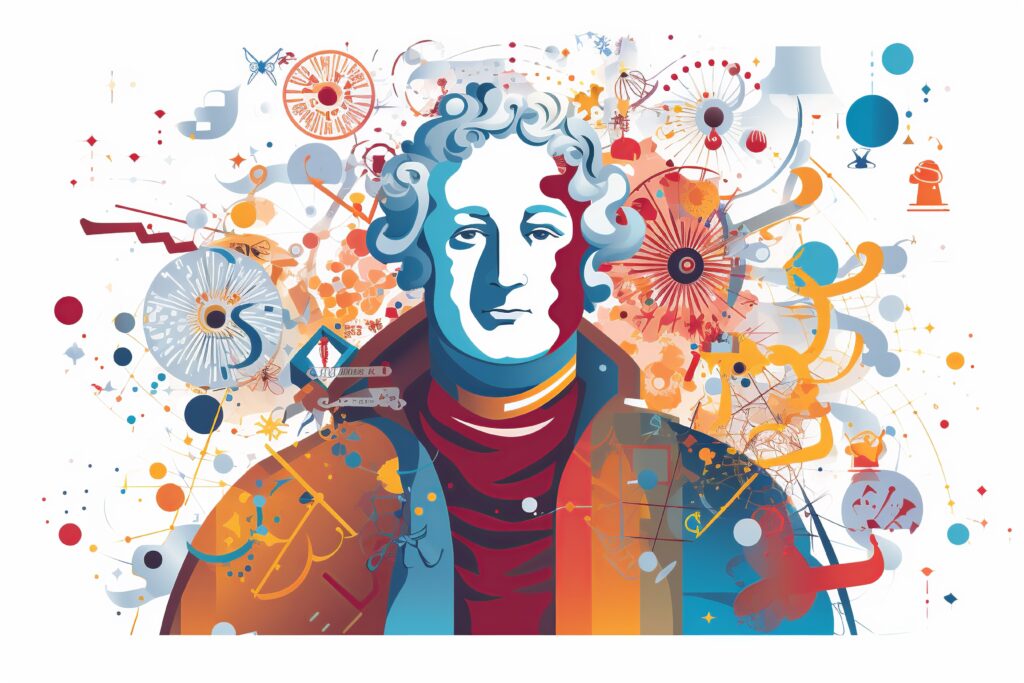
John Stuart Mill saw this coming almost 200 years ago, though he was worried about a different machine: the machine of conformist Victorian society. His warning applies with uncanny precision to the age of large language models. And Aristotle, writing two millennia earlier, already knew why: virtue, skill, and judgment are habits, and habits die when they stop being practiced.
This essay is about what we are quietly giving up in exchange for speed, and whether the trade is worth it.
Mill’s Warning: The Faculty That Rusts
In On Liberty, published in 1859, Mill wrote a passage that reads today like a memo from the future:
“The human faculties of perception, judgment, discriminative feeling, mental activity, and even moral preference, are exercised only in making a choice. He who does anything because it is the custom, makes no choice. He gains no practice either in discerning or in desiring what is best.”
Mill was arguing against social conformity, the pressure to think and act like everyone else. But his mechanism is universal. Faculties that are not exercised do not merely stay flat. They wither. The mind, like the body, is built through resistance.
Now replace “custom” with “the model’s suggestion.” A writer who accepts the first draft the AI produces makes no real choice. A manager who ratifies the algorithm’s hiring shortlist makes no real choice. A student who submits the chatbot’s answer makes no real choice. Each individual instance seems harmless, even smart. Aggregated across a career, they represent the systematic dismantling of the muscle Mill called the most human of all: judgment.
Choice as Cognitive Weightlifting
Every hard decision is a repetition at the gym. When you struggle to phrase an awkward paragraph, you are not just producing text. You are training the part of your brain that senses tone, weighs nuance, and recognizes when something is almost right but not quite. When you wrestle with a spreadsheet to find the pattern, you are building the intuition that will let you spot a fraudulent number at a glance 5 years from now.
AI removes the struggle. That is precisely its selling point. And that is precisely the problem. You cannot buy the results of exercise without doing the exercise. No serious person believes a bodybuilder can outsource his squats to a robot and keep his legs. Yet we assume a knowledge worker can outsource her thinking to a model and keep her mind.
The Downsides of AI Nobody Puts in the Pitch Deck
Vendors talk about time saved, tasks automated, and revenue unlocked. They rarely enumerate the downsides of AI adoption, because those costs land on individuals, teams, and cultures rather than on the quarterly report. Here are the ones that matter most.
1. The Erosion of Tacit Knowledge
Tacit knowledge is the stuff you know but cannot fully articulate. A veteran nurse who senses a patient is about to crash. A trader who feels the market turning before the ticker confirms it. A senior engineer who smells bad architecture in a code review.
This knowledge is built through thousands of small, unrewarded acts of attention. When AI intercepts those acts, it also intercepts the learning. Junior professionals who begin their careers letting the model do the first pass will never accumulate the pattern library that made their seniors valuable. In 15 years, we may look around and discover that the people who used to know things without knowing how they knew them have quietly stopped being produced.
2. The Homogenization of Thought
Language models are trained on the aggregated middle of human expression. Their outputs, by mathematical necessity, cluster around the average. When millions of professionals begin their thinking from a model draft, the median of human writing, strategy, and analysis flattens toward that same statistical center.
Mill again, prescient:
“That so few now dare to be eccentric, marks the chief danger of the time.”
Replace “eccentric” with “original,” and the sentence describes any team where everyone is quietly running the same prompt against the same model and shipping the results. The variance that used to distinguish great work from adequate work is being smoothed away by the tool itself.
3. The Illusion of Competence
AI does not just complete tasks. It makes the operator feel skilled. A person who could not write a coherent memo 3 years ago can now ship one that reads well. This feels like empowerment. Sometimes it is. But often it produces something more dangerous: confident output from an operator who cannot evaluate whether the output is correct.
The gap between producing and judging is the entire game. A pilot who cannot fly the plane manually is fine until the autopilot fails. A doctor who cannot reason through a differential diagnosis is fine until the model hallucinates. A lawyer who cannot draft a brief is fine until the citations turn out to be invented, as several have already learned in front of unamused judges.
4. The Loss of Productive Friction
Writing is thinking. Reading a hard book is thinking. Sitting with a problem, unable to solve it for 3 days, is thinking. Friction is not a bug in the cognitive process. It is the process.
When you eliminate friction, you eliminate the byproducts of friction, and those byproducts include most of what we value: insight, creativity, mastery, character. Aristotle argued in the Nicomachean Ethics that we become just by doing just acts, brave by doing brave acts, wise by doing wise acts. There is no shortcut. The doing is the becoming.
An AI-mediated life is a life with the friction engineered out. It is also, therefore, a life with much of the becoming engineered out.
AI Efficiency Tradeoffs: A Practical Ledger
Efficiency is not free. Every gain sits opposite a loss, and honest thinking about AI requires holding both columns in view at once. Here is a working ledger of the most common AI efficiency tradeoffs, the ones any serious operator should be tracking.
| What You Gain | What You Trade Away |
| Faster first drafts | The mental workout of composition |
| Instant summaries | Deep reading and memory formation |
| Automated analysis | Pattern recognition built over years |
| Consistent output | Distinctive voice and originality |
| Lower cost per task | Fewer entry-level roles that build expertise |
| Scalable decisions | Accountability when decisions go wrong |
| 24/7 availability | The rhythm of rest, reflection, and revision |
Notice the pattern. The gains are immediate, measurable, and accrue to the organization. The losses are delayed, diffuse, and accrue to the individual and the culture. This is why the tradeoff is so easy to miss and so dangerous to ignore. The balance sheet lies.
Who Pays the Bill
Efficiency gains typically flow upward. The firm captures the productivity. The individual who used the tool captures a slightly easier day and a slightly less capable version of themselves 5 years out. The junior employee who never got hired because the model replaced her role captures nothing at all.
Mill would have been unsurprised. He understood that when a system optimizes for one variable, it does so at the expense of the others, and the losers rarely have a seat at the meeting where the optimization is announced.
What the Machines Cannot Do (And Why It Matters)
None of this is an argument against AI. That would be foolish. The tools are extraordinary, and refusing to use them is a form of professional suicide in most fields. The argument is against unreflective use, against the assumption that because a machine can do something, a human should stop doing it.
Judgment Under Genuine Uncertainty
Models are excellent at problems that resemble their training data. They are unreliable at problems that do not. Genuine novelty, ethical edge cases, situations where the right answer requires ignoring the statistical consensus: these remain human territory.
The catch is that the humans who will handle those situations well in 20 years are the ones practicing judgment today, on smaller stakes. If you outsource all the easy calls, you will not be ready for the hard ones. Mastery of the exceptional is built by relentlessly practicing the ordinary.
Meaning, Not Just Output
A life measured only in tasks completed is a life optimized for the wrong variable. Human beings do not simply want results. We want to have earned them. The pleasure of a book you struggled to write, a company you built with your own decisions, a skill you slowly acquired, is qualitatively different from the pleasure of pressing a button and receiving output.
Mill again, on the higher pleasures:
“It is better to be a human being dissatisfied than a pig satisfied; better to be Socrates dissatisfied than a fool satisfied.”
The AI-saturated life risks producing the satisfied fool at scale. Everything done for you, nothing done by you, and no faculty of yours strong enough to know the difference.
How to Use AI Without Being Diminished By It
The question is not whether to use these tools. The question is how to use them without paying the hidden bill. A few principles, gathered from watching people who seem to be handling this well.
Do the Hard Thinking First, Then Consult the Machine
Draft your own outline before asking the model. Take your own crack at the problem before pulling up the assistant. Form your own opinion before asking for a summary. The machine should be an editor, a sparring partner, a second opinion. It should not be the first mover in your cognition. This ordering matters more than any other single habit.
Keep Some Domains Deliberately Manual
Chess grandmasters still play blitz without engines. Serious writers still keep a notebook. Elite programmers still solve problems on paper. Choose a few domains, ideally the ones central to your craft, and refuse to let the machine into them. Not because the machine could not help, but because you need the reps.
Think of these as your cognitive gym. You would not install an escalator in a gym.
Audit What You Have Stopped Being Able to Do
Every 6 months, take stock. Can you still do the things you used to do without the tool? Can you write a paragraph, read a long document, run a calculation, draft a plan, without falling back on the model? If the answer is drifting toward no, that is your signal. The atrophy is real, and it is happening to you specifically.
Treat Efficiency Skeptically
When someone tells you a tool will save you time, ask what the time will be used for. If the answer is “more of the same, faster,” the tool is a treadmill, not a lever. If the answer is “harder problems, deeper work, things I could not do before,” the tool is genuinely useful. Most workplace AI is currently the former dressed up as the latter.
The Choice Mill Would Have Us Make
Mill’s deepest argument was that a human being is not a vessel to be filled with correct outputs. A human being is a capacity to be developed. The point of a life is not that the right things happen. The point is that you become the kind of person capable of making the right things happen, and that becoming requires the friction of choice, effort, and occasional failure.
AI, used badly, offers the opposite deal. It fills the vessel with outputs and leaves the capacity to shrink. It is generous with results and stingy with growth. It flatters the operator and quietly deskills them. The cost of AI efficiency, priced honestly, is the cost of everything you would have become had you kept doing the work yourself.
This does not mean rejecting the tools. It means holding them at the correct distance. Use them for the tasks that were never going to develop you anyway. Guard the tasks that would. The person who thrives in the next 20 years will be the one who used AI aggressively for leverage and refused it stubbornly for growth.
The rest will discover, sometime in their 40s or 50s, that they have a resume full of accomplishments and a mind that can no longer produce them without the machine. That is not efficiency. That is dependence dressed in a nicer suit.
Mill saw the trap in the language of custom and conformity. We can see it now in the language of models and productivity. The shape is the same. The escape is the same. Choose deliberately. Do the hard thing sometimes on purpose. Refuse to let your faculties rust for the sake of a slightly cleaner inbox.
The machines will keep getting better. The question is whether you will.