Table of Contents
There is a phrase that has wormed its way into every corporate handbook, every LinkedIn post, every wellness seminar held in a windowless conference room with stale pastries. That phrase is work-life balance. It sounds noble. It sounds like progress. It sounds like something your employer cares about because there is a poster about it near the coffee machine.
But what if the whole thing is a trick?
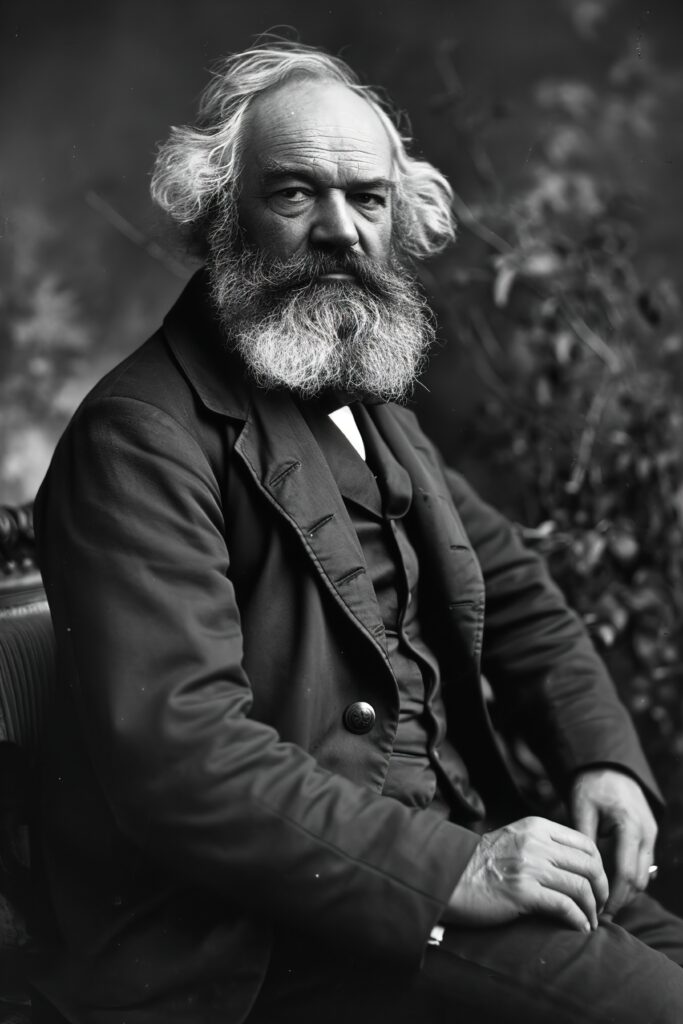
Not a trick in the dramatic sense, with villains twirling moustaches in boardrooms. A quieter trick. The kind that gets you to accept a smaller portion of your own life while believing you are being generously fed. Karl Marx, who died long before anyone invented Slack or the four day workweek pilot program, had a lot to say about this. And if you read him today, you start to notice something uncomfortable. The conversation about balance might be the most successful piece of marketing capitalism ever produced.
Let us walk through why.
The Word Balance Hides a Confession
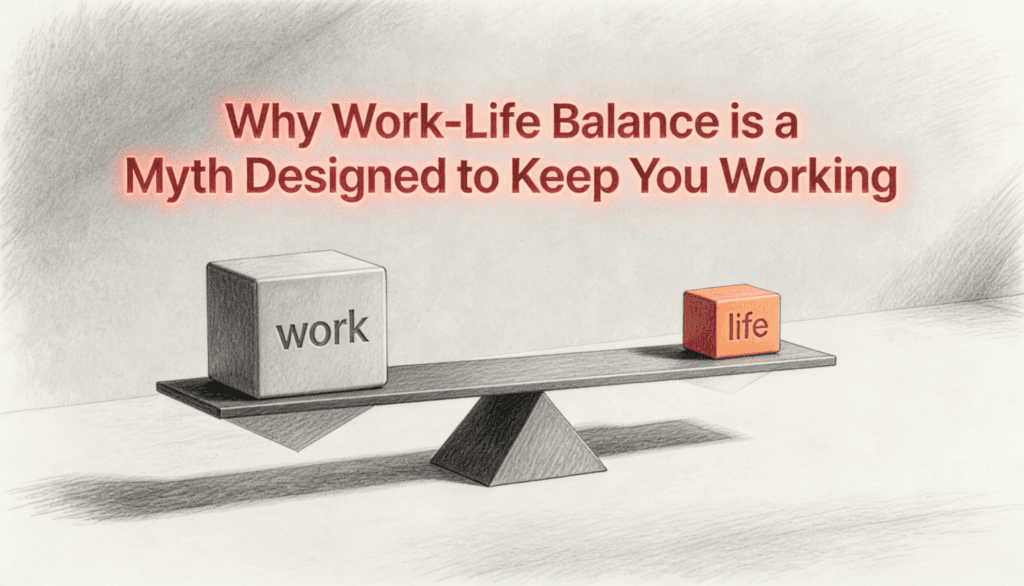
Think about what the phrase actually admits. Work and life are two separate things. One is on a scale. The other is on the opposite side. They are pulling against each other, and your job is to keep them roughly even, like a circus performer balancing plates while the audience cheers.
But why are they on opposite sides at all?
Life, presumably, is the thing you do because you are alive. It includes eating, loving, sleeping, laughing, walking outside, having opinions about movies, and arguing with your sibling about whose turn it is to call mom. Work, in this framing, is something else. Something that is not life. Something that takes from life and must be carefully measured against it so it does not consume the whole thing.
Marx noticed this strange split more than 150 years ago. He called it alienation. The idea is simple. When you work for someone else, doing things that are not yours, producing things you will never own, for reasons that have nothing to do with your own purposes, you become separated from your own activity. Your labor stops feeling like an expression of who you are. It becomes a thing you sell. A chunk of your hours rented out so you can afford to do the rest of your life on the weekend.
The phrase work-life balance does not challenge this split. It accepts it. It treats it as natural, like gravity. And then it offers you tools to manage the damage.
The Magic Trick of Asking the Wrong Question
Here is something worth sitting with. If your job genuinely energized you, if it expressed your talents, if it connected you to people you cared about and produced things you were proud of, would you need balance?
Probably not. You would just need a life. A whole one. The kind where work and the rest of existence are not enemies negotiating a ceasefire.
Marx had a vision of labor that sounds almost embarrassing to read now because it is so far from anything most of us experience. He imagined work as something that develops you. That stretches your mind. That makes you feel more human, not less. He thought it was deeply weird that we had built a system where the activity that takes up most of our waking hours is the one we most desperately want to escape from.
The genius of the work-life balance discourse is that it never asks why this is the case. It does not say, hey, maybe the problem is that your work is structured in a way that drains you. It says, hey, have you tried meditation? Have you considered blocking your calendar on Fridays? Have you downloaded our new wellness app?
The question shifts. Suddenly it is not about whether your job is humane. It is about whether you are managing your stress correctly. And if you are not, well, that is on you.
Wellness as a Pressure Valve
Notice how the language of self care has expanded in the last decade. Companies now offer mindfulness training, mental health days, ergonomic chairs, and yoga subscriptions. Some give you a fruit basket on your birthday. None of this is bad. Fruit is nice.
But ask yourself what these things are actually for.
They are pressure valves. They release just enough steam to keep the engine running. If you were truly burnt out, the rational response would be to work less. To leave at five. To take an actual vacation where no one emails you. To question whether the work itself is worth the cost.
Instead, you are offered tools to recover faster so you can return to the same intensity tomorrow. The recovery is the point. Not so you can live more fully. So you can produce more reliably.
This is not a conspiracy. No one is sitting in a dark room rubbing their hands. It is just what systems do when they need workers to keep showing up. They find ways to patch the damage without addressing the cause. Marx would call this reproduction of labor power. You are kept just well enough to work tomorrow. Anything beyond that is not really the system’s concern.
Why the Myth Works
Here is the clever part. The myth of work-life balance works because it tells you a partial truth.
Yes, you should rest. Yes, time with people you love matters. Yes, hobbies and walks and naps are good. None of this is wrong. Marx himself thought free time was essential. He once wrote that the true realm of freedom begins where labor determined by necessity ends. He wanted people to have more of that free time, not less.
But here is the thing. He wanted to change what work itself was. He wanted to attack the problem at the root. The modern work-life balance industry wants to keep work exactly as it is and just sell you better recovery tools.
It is like being told the solution to a leaky roof is to buy a better bucket. The bucket helps, sure. You will not drown immediately. But the roof is still leaking, and someone is making a lot of money selling buckets.
The Discomfort of Asking Bigger Questions
You might be reading this and feeling a little uncomfortable. Good. That is the point.
Most of us have organized our entire lives around the assumption that work is what we do to fund the rest of our existence. We have accepted the trade. We have made peace with it. We have signed mortgages and made plans based on it.
To question whether this trade is fair, whether it had to be this way, whether there are other possibilities, is to crack something open. It is easier to talk about balance. Balance is manageable. Balance is something you can put on a vision board.
But what if the real question is not how to balance work and life, but how to make work something that does not require constant balancing? What if work could be a place where you feel like yourself, where your time is not extracted but invested, where the end of the day does not feel like emerging from underwater?
Marx was not naive about how hard this would be. He understood that the structures that produce alienated work are massive and entrenched. He was not handing out personal solutions. He was pointing at the building and saying, look, this is the shape of the thing. If you do not see it, you cannot change it.
What This Means for You on a Tuesday Morning
You probably came to this article hoping for something practical. Maybe a few tips. Maybe a way to feel better about your overflowing inbox.
I do not have tips. I have a question.
When you feel exhausted at the end of the week, when you notice that your weekend is mostly spent recovering rather than living, when you find yourself counting down to vacations like a prisoner counting down to release, what is that telling you?
The work-life balance industry will tell you it means you need better systems. Better boundaries. Better self care.
It might mean that. It also might mean something larger. That the way work is organized in your life, in our entire culture, is not designed for human beings. It is designed for productivity. And those two things are not the same.
You do not have to overthrow the global economy on a Tuesday morning. But you can stop accepting the framing. You can notice when wellness initiatives are pressure valves. You can refuse to treat your own exhaustion as a personal failing. You can ask why the only acceptable answer to a draining job is to drain yourself more efficiently.
You can also, when possible, choose differently. Take the smaller paycheck for the saner schedule. Push back when work tries to colonize your evening. Build a life where the question of balance becomes less urgent because the imbalance is less violent.
The Quiet Rebellion
Marx is not exactly the kind of guy you bring up at brunch. He has baggage. He inspired movements that did things he never imagined and probably would have hated. But strip away the political wreckage of the twentieth century and look at the original observations, and they are surprisingly hard to argue with.
He noticed that we had built a world where the thing we spend most of our lives doing is the thing we most want to escape. He thought that was strange. He thought it deserved more than a yoga app and a poster about wellness.
The myth of work-life balance is not evil. It is just inadequate. It accepts the terms of a bad deal and tries to make the deal feel survivable. It sells you the bucket and tells you nothing about the roof.
The quiet rebellion, the one available to almost anyone, is to stop pretending the bucket is the solution. To name the leak. To ask, even just to yourself, whether this is really the only way to live.
That is not a productivity hack. It is something better. It is the beginning of thinking for yourself about your own life. Which, when you really think about it, might be the most radical act available in a world that keeps trying to sell you balance instead of freedom.