Table of Contents
There is a strange silence at the heart of modern education. We teach children the names of distant planets. We make them memorize the dates of wars fought centuries ago. We drill them in the periodic table, the parts of a cell, the rules of grammar in languages they will never speak. And yet, when these same children grow up and step into the world, most of them cannot answer a simple question: where does wealth actually come from?
This is not an accident. It is a feature of the system.
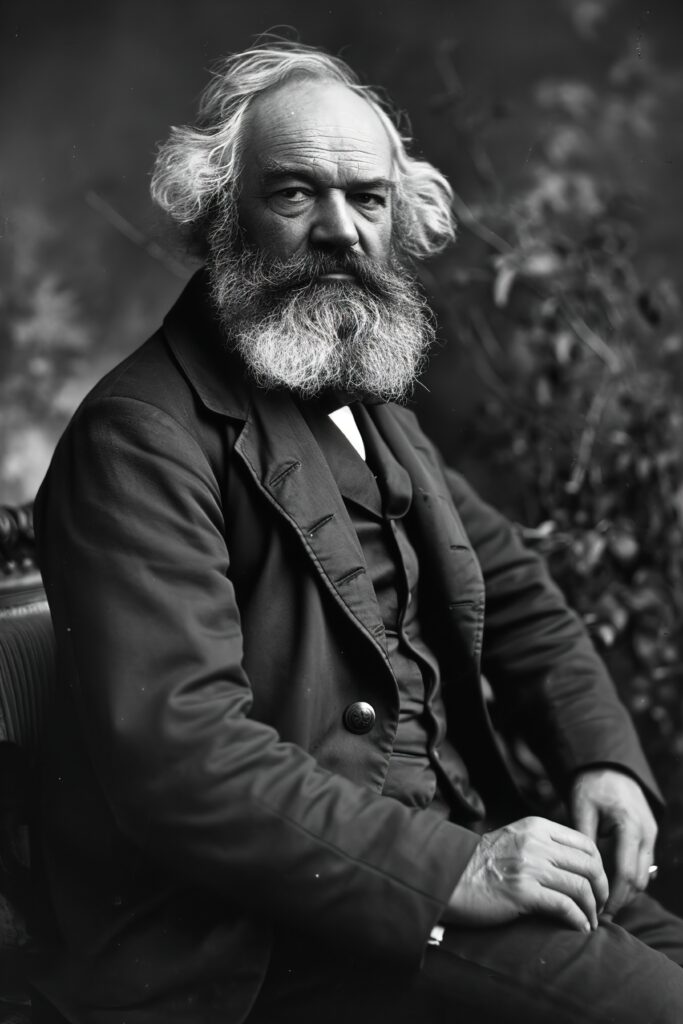
A French economist named Frédéric Bastiat figured this out almost two hundred years ago. He was a man with a sharp pen and an even sharper sense of humor, and he spent most of his short life pointing out the absurdity of how people thought about money, trade, and government. His most famous essay opens with a line that has aged like fine wine: there is what is seen, and there is what is unseen. The trained economist, he wrote, learns to account for both. Everyone else only sees the first part. That gap, he argued, is where most political mischief hides.
Two centuries later, that gap has not closed. It has widened into a canyon.
The Curriculum of Convenient Ignorance
Walk into any high school in any developed country and look at what is being taught. You will find calculus, which most students will never use. You will find Shakespeare, which is wonderful but rarely applied to a tax return. You will find chemistry, biology, geography, art history. What you will not find, in any serious form, is a class that explains how a price gets set, why inflation eats your paycheck, what a central bank actually does, or why your grandmother can no longer afford the same groceries on the same pension.
This is peculiar when you think about it. Economic decisions shape every single day of an adult life. What you earn, what you pay, what you save, what you borrow, what your government takes from you, what it gives back, why your rent keeps climbing, why your dollar buys less than it did last year. These are not abstract academic puzzles. They are the texture of existence. And yet schools treat the subject as optional, peripheral, or worse, as a kind of dangerous knowledge that ought to be confined to specialists.
Bastiat would have laughed and then sighed. He saw the same pattern in his own time. People who could not balance a household budget were happy to lecture parliaments on monetary policy. Voters who had never run a business were certain they knew exactly what businesses should be forced to do. The result was a country governed by enthusiastic confusion, which is more or less the state of every democracy that has ever existed.
What Bastiat Actually Taught
His most famous parable involves a broken window. A boy throws a rock through a shopkeeper’s window. The neighbors gather around and, after the initial shock, someone offers a strange consolation. Look on the bright side, they say. The glazier will now have work. He will earn six francs. He will spend those francs at the butcher, who will spend them at the baker, and so on. The broken window, in this telling, becomes a kind of economic blessing.
Bastiat asked a question that nobody in the crowd thought to ask. What would the shopkeeper have done with those six francs if his window had not been broken? Perhaps he would have bought new shoes. Perhaps he would have bought books for his son. Perhaps he would have saved them and invested in his shop. Whatever he would have done, that purchase is now lost forever. The glazier gains, yes. But the shoemaker loses. And the shopkeeper, instead of owning a window AND a pair of shoes, now owns only a window. He is poorer. The town is poorer. Civilization is, by exactly six francs, poorer.
This is the entire lesson. Wealth is not created by destruction. It is not created by activity for its own sake. It is created when human effort produces something that did not exist before, something people actually want. Everything else is just moving money from one pocket to another while taking a small cut along the way.
Now consider how often you hear, in the news, in political speeches, in casual conversation, some version of the broken window fallacy. Hurricanes are good for the economy because of all the rebuilding. Wars stimulate growth. A new government program will create jobs. Each of these claims focuses on what is seen, the visible activity, the busy workers, the flowing money, and ignores what is unseen, the things that would have existed if the destruction or the spending had never happened.
A child taught to spot this pattern would grow up immune to a thousand kinds of nonsense. Which may be precisely why this child is not being taught.
The Three Questions Nobody Asks
If you want to test someone’s economic literacy, you do not need to ask them about derivatives or yield curves. You only need three questions.
First, where does the government get its money? Most adults, if pressed, will answer that it comes from taxes. Push a little further. What does it tax? The answer, of course, is that it taxes people. Every cent the government spends came, originally, from somebody’s labor. There is no magic vault. There is no separate stream of wealth that politicians can draw from without touching the citizens. When a politician says the government will pay for something, what is being said is that other people, present or future, will pay for it. The word government is just a polite way of saying everyone else.
Second, what is a price? Most people think a price is a number that someone decides on, somewhat arbitrarily, perhaps out of greed. The truth is stranger and more beautiful. A price is a piece of information. It is the result of millions of small decisions, made by people who will never meet, condensed into a single signal that tells you how much of something exists relative to how much people want it. When the price of coffee goes up, it is not because a coffee executive is feeling greedy that morning. It is because something, somewhere, in a chain that stretches from a farm in Ethiopia to a port in Rotterdam to a shelf in your local store, has changed. The price is the message. Trying to fix prices by command is like trying to lower a fever by smashing the thermometer.
Third, what is inflation? Here the confusion becomes almost theological. Most people think inflation is when prices go up. This is like saying that getting wet is when rain falls on you. It describes the symptom while missing the cause. Inflation is what happens when there is more money chasing the same amount of goods. Print twice as much currency, and each unit buys half as much. The prices have not really gone up. The money has gone down. This distinction matters because it tells you who is actually responsible for the slow theft you experience every year when your savings buy less than they used to.
These three ideas are not advanced. They are not technical. A bright twelve year old could grasp all of them in a single afternoon. And yet the great majority of adults never learn them, never apply them, and consequently spend their entire lives baffled by an economy that, in truth, is not all that mysterious.
The Convenient Confusion
Why is this the case? Why does a society that teaches the gerund and the cosine and the structure of the mitochondrion fail to teach the most useful thinking tools a person can own?
One answer, the polite one, is that economics is hard and controversial and full of competing schools of thought. There is some truth to this. Economists do disagree, often loudly, about complicated questions. But the basics, the things Bastiat was writing about, are not controversial among people who have actually studied them. The dispute is mostly between economists and everyone else.
The less polite answer is that economic literacy is inconvenient. A population that understands the broken window fallacy is harder to govern. A voter who asks where the money comes from is harder to please with promises. A citizen who knows that inflation is a hidden tax is harder to lull with reassurances about stable prices. There is a reason every authoritarian regime in history has loved the idea of free education, as long as that education left out certain subjects.
I do not want to suggest a vast conspiracy. The truth is usually duller than that. The system simply rewards its own continuation. Teachers teach what they were taught. Curriculum committees approve what looks respectable. Politicians fund what gets them votes. And somewhere in the middle of all this gentle inertia, the subject that would most empower ordinary people to push back against bad ideas simply never finds a place on the schedule.
What You Can Do About It
The good news is that the gap is wide enough to step through. Economic literacy is not gatekept by universities. It does not require a degree or a license. The foundational texts are short, often free, and written in plain language by people who actually wanted to be understood. Bastiat’s essays can be read in an afternoon. Henry Hazlitt wrote a whole book, Economics in One Lesson, that lives up to its title. Adam Smith is denser but rewards the patience. None of this is rocket science. Most of it is closer to common sense, sharpened.
If you have children, this is among the most valuable gifts you can give them, and it costs nothing. Teach them to ask, when they hear about a new program or a new tax or a new tariff, what is unseen. What would have happened with this money if it had been left alone? Who is bearing the cost that nobody is mentioning? What is the price actually trying to tell us?
This habit of mind, once formed, never goes away. It changes how a person reads the news, votes, runs a business, manages a household, plans a future. It is the difference between drifting through the world and understanding it.
The Quiet Revolution
Bastiat died young, at forty nine, of tuberculosis, having written most of his best work in the last few years of his life. He never saw most of his predictions come true. He never watched the twentieth century stagger from one economic catastrophe to another, each one driven, at root, by exactly the kinds of confusions he had tried to dispel.
What he did see, clearly, was that the road to economic ruin is paved with good intentions and seductive half truths. The seen and the unseen. The thing the politician points to, and the thing the politician hopes you will not notice. The visible job created, and the invisible job destroyed. The free benefit, and the hidden bill.
Schools will not teach this skill. Perhaps they cannot. Perhaps a system that depends on public funding has trouble producing graduates who ask hard questions about public spending. Whatever the reason, the absence is real, and the cost is enormous. A society in which most adults cannot think clearly about wealth is a society that will be governed badly, taxed cleverly, and slowly impoverished by people who insist they are helping.
But the books are still there. The ideas are still alive. The discipline of asking, what is unseen, costs nothing and explains almost everything.
You were not given this skill in school. You can give it to yourself in a weekend. And once you have it, you will find that the world becomes, for the first time, intelligible.
That alone is worth more than most degrees.