Table of Contents
Most people think of ethics in terms of what you should not do. Do not steal. Do not lie. Do not harm. The entire moral framework we inherit from childhood is built around restraint. Be good by avoiding bad. Stay in your lane. Keep your hands to yourself.
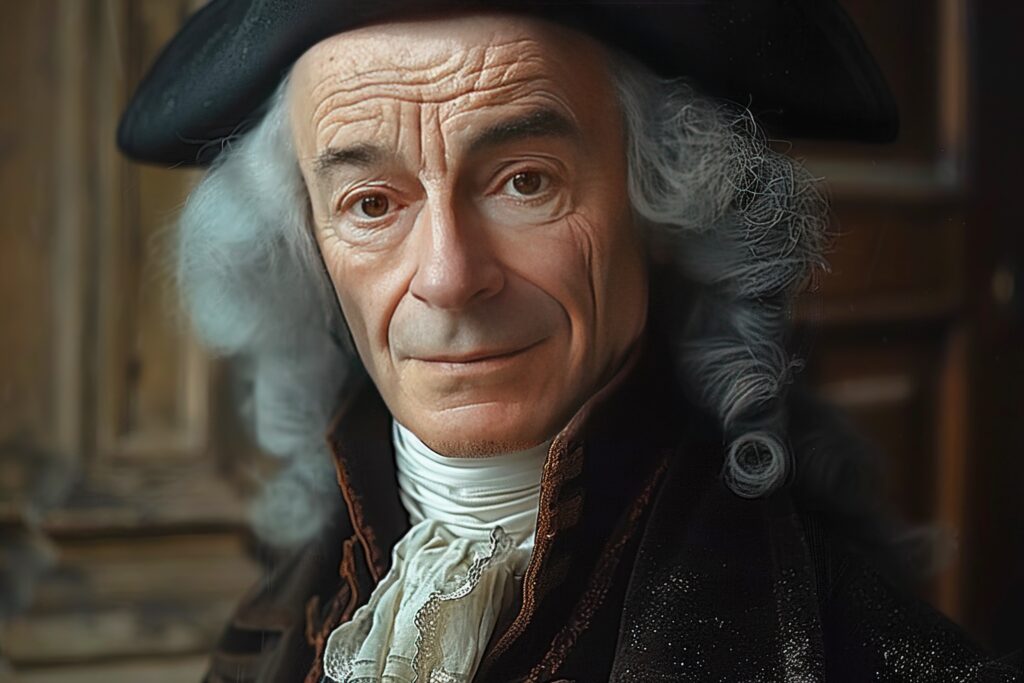
But there is a French economist from the early 1800s who would find this whole approach painfully incomplete. Jean-Baptiste Say did not just believe that innovation was useful or profitable. He believed it was a moral act. And by extension, he believed that refusing to innovate, choosing comfort over progress, was something closer to a moral failure.
That sounds dramatic. It is meant to.
Who Was Jean-Baptiste Say, and Why Should You Care?
Say was born in 1767 in Lyon, France. He lived through the French Revolution, watched empires rise and collapse, and spent his career thinking about what actually makes societies prosperous. He is most famous for “Say’s Law,” often simplified to the idea that supply creates its own demand. But reducing him to that single phrase is like reducing Darwin to “survival of the fittest.” It misses the texture of the thinking underneath.
What made Say genuinely radical was his focus on the entrepreneur. At a time when economists were obsessed with land, labor, and capital as abstract forces, Say insisted that none of it mattered without someone willing to combine those resources in new ways. The entrepreneur was not just a participant in the economy. The entrepreneur was the engine. Without that figure, resources just sat there. Land grew weeds. Labor wandered. Capital collected dust.
And here is where the ethics come in. Say did not view this entrepreneurial function as optional. He saw it as necessary for human welfare. If innovation is what turns idle resources into goods that feed, clothe, shelter, and heal people, then the person who refuses to innovate is not simply being cautious. That person is withholding potential welfare from the world.
Let that sit for a moment. In Say’s framework, playing it safe is not neutral. It is a form of neglect.
The Comfort Trap
We live in an era that worships comfort. And why would we not? Comfort is pleasant. Comfort is predictable. Comfort does not send you angry emails at midnight or make you question your life choices over a failed prototype.
But comfort has a cost that rarely shows up on any balance sheet. When individuals, companies, or entire societies choose the known over the unknown, they are making a decision that affects everyone downstream. The medicine that was never developed. The technology that was never built. The business model that was never tested. These are not hypothetical losses. They are real absences with real consequences for real people.
Say understood this intuitively. He wrote in his Treatise on Political Economy that the entrepreneur’s role was to assess needs and find ways to meet them. Not tomorrow. Not when conditions are perfect. Now, with whatever imperfect tools and incomplete information happen to be available. Waiting for certainty was not wisdom in his eyes. It was abdication.
There is a strange irony here. The person who takes risks and fails is often mocked. The person who never tries at all is rarely criticized. We have built a culture that punishes visible failure and rewards invisible cowardice. Say would have found this arrangement absurd.
Stagnation as a Quiet Violence
Call it what you will. Inaction. Complacency. Maintaining the status quo. Whatever label you prefer, the result is the same. When progress stops, suffering continues unnecessarily.
Think about it through a simple thought experiment. Imagine a doctor who has the skills and resources to develop a better treatment for a common disease but chooses instead to keep practicing the old method because it is easier, more familiar, and less risky to their reputation. Most people would find that doctor’s choice troubling. Not illegal, certainly. But ethically questionable in a way that is hard to articulate without using the word “selfish.”
Now scale that up. A pharmaceutical company that sits on research because the current product line is profitable enough. A government that avoids infrastructure upgrades because the political cost of disruption outweighs the political reward of improvement. A tech industry that recycles the same ideas with slightly better marketing because genuine invention is expensive and uncertain.
Say would argue that all of these are ethical failures dressed up as reasonable business decisions. The language of prudence and risk management becomes, in his framework, a sophisticated excuse for moral laziness.
The Entrepreneur as Moral Agent
This is where Say’s thinking gets genuinely interesting and, for some people, genuinely uncomfortable. If the entrepreneur is the person who transforms dormant resources into human welfare, then entrepreneurship is not just an economic function. It is an ethical one. The entrepreneur is a moral agent whether they know it or not.
Most entrepreneurs do not think of themselves this way. They think about margins, market fit, competitive advantage, and maybe, on a good day, customer satisfaction. The idea that they carry a moral responsibility simply by virtue of their capacity to innovate would strike many of them as either flattering or terrifying, depending on their temperament.
But Say was not interested in how entrepreneurs felt about their role. He was interested in the consequences of their actions and, more importantly, their inactions. A society full of capable people who choose not to create is a society that is actively harming itself. Not through malice. Through passivity.
The Counter Argument, and Why It Only Half Works
Now, a reasonable person might object. Is it really unethical to not innovate? What about the risks of reckless innovation? What about technologies that cause harm? What about the entrepreneur who “disrupts” an industry and leaves thousands unemployed in the process?
These are fair objections. And they are worth taking seriously precisely because dismissing them would be intellectually dishonest.
Say was not naive. He lived through one of the most violent periods in European history. He saw firsthand what happens when people pursue radical change without wisdom or restraint. His argument was never that all innovation is good or that speed should override caution in every case.
His argument was subtler. He believed that the default human tendency is not toward reckless innovation but toward excessive caution. Most people, most companies, and most governments err on the side of doing too little, not too much. The greater danger, in his view, was not the entrepreneur who tries something foolish. It was the capable person who tries nothing at all.
And honestly, the evidence supports him. Look at any major advance in human welfare over the last two centuries. Vaccines. Sanitation. Electricity. The green revolution in agriculture. Every single one of these was resisted, delayed, or nearly killed by people who preferred the safety of what they already knew. The cost of that resistance was not abstract. It was measured in lives.
So yes, reckless innovation is dangerous. But timid stagnation is deadlier. It just kills more quietly.
Say’s Law, Revisited
This brings us back to Say’s most famous idea, but with a twist. “Supply creates its own demand” is usually taught as a dry macroeconomic principle. But read it through an ethical lens and it becomes something more provocative.
If creating new goods and services generates the economic activity that allows people to acquire those goods and services, then production is not just an economic act. It is an act of social creation. Every new product is a new possibility. Every new business is a new set of jobs, skills, and opportunities that did not exist before.
By this logic, the entrepreneur who builds something genuinely new is literally expanding the boundaries of what is possible for other people. That is not a small thing. That is, in a very real sense, an act of generosity, even if the entrepreneur is motivated entirely by self interest. Say saw no contradiction here. The motive did not matter nearly as much as the outcome.
Adam Smith made a similar observation decades earlier with his famous metaphor about the invisible hand. But Say pushed it further. Smith described a mechanism. Say described a duty. The invisible hand was an explanation of how markets work. Say’s innovation ethic was an argument about how people should work.
What This Means for You, Right Now
It would be easy to treat Say’s ideas as interesting historical artifacts. A French economist from two hundred years ago had some spicy takes on innovation. How nice. Pass the coffee.
But the relevance is immediate and personal.
If you are running a business and choosing to coast on existing products because the quarterly numbers are fine, Say would tell you that “fine” is not good enough. Not because the market will eventually punish you, though it will. But because you are capable of more, and choosing less when more is possible is a quiet betrayal of the people who depend on you. Your employees. Your customers. The broader community your business exists within.
If you are an individual with skills, ideas, and resources that you are not deploying because the risk feels too high or the timing feels wrong, Say would point out that the timing is never right. It was not right in post revolutionary France, and it is not right now. The gap between the life you are living and the contribution you could be making is not a comfort zone. It is a deficit.
If you are a policymaker designing regulations that prioritize stability over experimentation, Say would remind you that stability without dynamism is just well organized decline. The safest bridge in the world is useless if it does not go anywhere.
The Uncomfortable Bottom Line
Jean-Baptiste Say left us with an idea that most people find instinctively uncomfortable. It is the idea that doing nothing can be just as harmful as doing something wrong. That passivity, when it comes to progress, is not a neutral position but an active choice with real casualties.
This discomfort is the point. Ethical frameworks that only address what you should not do will always be incomplete. They are moral guardrails without a destination. Say insisted on giving the economy, and by extension human society, a destination: the continuous improvement of material welfare through creative, productive action.
He was not suggesting that everyone become a tech founder or that every tradition be abandoned in the name of progress. He was suggesting something simultaneously simpler and more demanding. That if you have the capacity to make something better and you choose not to, you owe the world an explanation.
Most of us do not have one. We have excuses. We have rationalizations. We have the soothing narrative that caution is a virtue and ambition is a risk.
Say would listen patiently, nod politely, and then ask the question that still has no comfortable answer: “And what about the people who would have benefited from the thing you were too comfortable to build?”
Two hundred years later, we are still avoiding that question. Which, if Say was right, might be the most unethical thing of all.