Table of Contents
There is a particular kind of person who has read every productivity book, installed every task management app, and color coded their calendar down to the minute. They can tell you about time blocking, the Pomodoro technique, Eisenhower matrices, and at least three different ways to process an inbox. They are also, almost always, behind on the work that actually matters.
This is not a coincidence. It is a pattern. And an Italian economist who died over a century ago already explained why.
The Man Who Noticed the Obvious
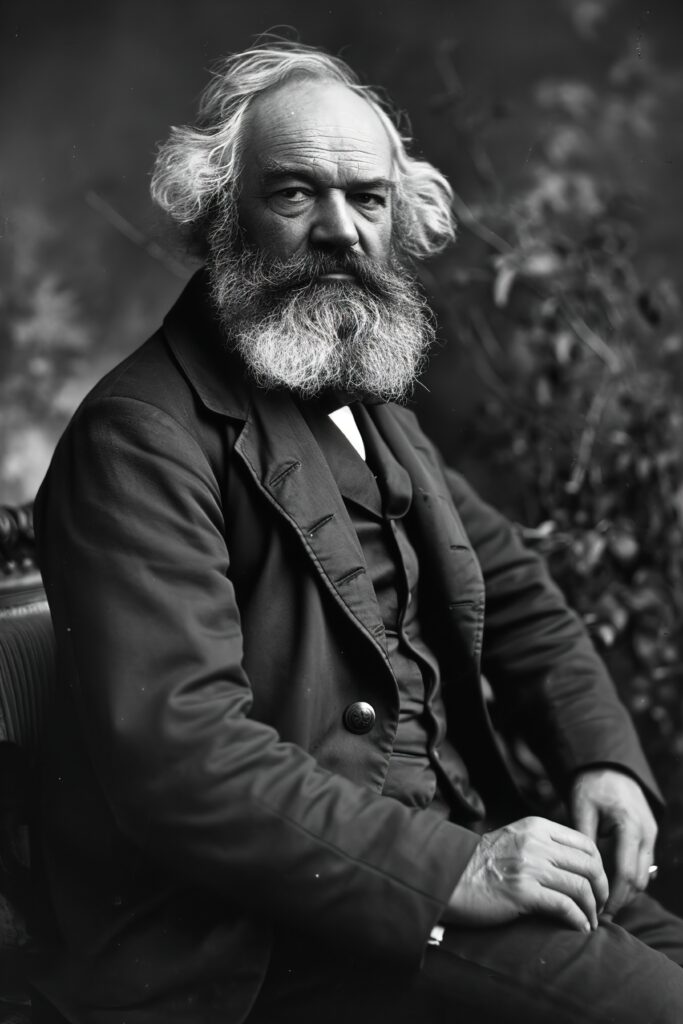
Vilfredo Pareto was not trying to fix anyone’s morning routine when he stumbled onto one of the most useful observations in the history of thinking about work. In the late 1890s, he was studying land ownership in Italy and noticed something that should have been unremarkable but turned out to be profound: roughly 20 percent of the population owned about 80 percent of the land.
He kept looking. The same pattern showed up everywhere. A small number of causes produced a large share of effects. A minority of inputs drove the majority of outputs. The ratio was not always exactly 80/20, but the imbalance was consistent and dramatic.
This became known as the Pareto Principle, and it has since been confirmed across an absurd range of fields. About 20 percent of customers generate 80 percent of revenue in most businesses. A handful of bugs cause most software crashes. A small fraction of criminals commit most of the crime. A few of your habits produce most of your results, good or bad.
The principle is simple enough that you could explain it to a child. Which makes it all the more strange that most adults spend their lives ignoring it.
The Productivity Industrial Complex
We live in an era that has turned “being productive” into an identity. There are podcasts about productivity, newsletters about productivity, online courses about being more productive at learning how to be productive. It is a market worth billions of dollars, and it feeds on a very specific anxiety: the feeling that you are not doing enough.
Here is where things get ironic. Most of this content does not actually help people produce more meaningful output. What it does, brilliantly, is give people a way to feel busy without confronting the small number of tasks that would genuinely move their lives forward.
Think about it. Reorganizing your task list is not work. Researching the best note taking app is not work. Reading about how successful people structure their mornings is not work. These activities feel productive because they orbit around the concept of productivity. But orbiting is not landing.
Pareto would have looked at the modern productivity landscape and pointed out the obvious: if 20 percent of your activities produce 80 percent of your meaningful results, then the entire game is about identifying and protecting that 20 percent. Everything else is decoration.
Why We Choose the 80 Over the 20
If the math is so simple, why do most people get it backwards? Why do we gravitate toward the 80 percent of activities that produce only 20 percent of results?
Because the 20 percent that matters is almost always harder, scarier, or more uncomfortable than the 80 percent that does not.
Writing the actual report is harder than formatting the document template. Making the difficult phone call is scarier than updating your CRM. Sitting down to practice your craft is more uncomfortable than watching a tutorial about practicing your craft.
The low value 80 percent tends to be easy, clearly defined, and immediately rewarding. You can cross things off a list. You can see your inbox hit zero. You can feel the small dopamine pulse of completion without ever touching anything that requires real cognitive effort or emotional risk.
The high value 20 percent, on the other hand, tends to be ambiguous, demanding, and slow to reward you. The results do not show up for weeks or months. There is no neat checkbox. There is just the uncomfortable process of doing something that matters, which means doing something that could fail.
So we hide. We hide in systems, in tools, in methodologies, in the comforting busywork of organizing our approach to work rather than doing the work itself. And we call this hiding “productivity.”
The Spreadsheet That Runs Your Life
Here is a thought experiment. Take everything you did last week, every task, every meeting, every hour spent. Now sort those activities by their actual impact on your most important goals. Not how urgent they felt. Not how satisfying they were to complete. Just their real contribution to outcomes you care about.
If you are honest, and most people are not, you will find that a tiny fraction of your week drove almost everything that mattered. Maybe it was four hours of deep work on a project. Maybe it was one conversation that changed a relationship or opened a door. Maybe it was a single decision you had been avoiding.
The rest? Filler. Necessary filler in some cases, because life includes laundry and email and grocery shopping. But filler that expanded to fill your week because you let it, because it was easier to live inside the filler than to face the small number of things that demanded your real attention.
Pareto did not just observe an interesting statistical pattern. He accidentally described the central tension of human effort: we know what matters, and we do everything else instead.
The Counter Intuitive Move
If the Pareto Principle is correct, and decades of evidence across dozens of fields suggest it is, then the most productive thing most people could do is dramatically less.
Not less effort. Less activity.
There is a difference. Effort concentrated on the vital few tasks is exhausting but effective. Activity spread across dozens of trivial tasks is also exhausting but accomplishes almost nothing of lasting value. The calendar is full either way. The fatigue is real either way. But the results are wildly different.
This means that the person who works four focused hours on their highest leverage project and then goes for a walk is almost certainly outperforming the person who grinds through ten hours of meetings, emails, and “quick tasks” without ever touching their real priorities.
This is hard to accept because our culture has confused being busy with being effective. We admire the person who is always on, always responding, always in motion. We do not tend to admire the person who does one thing well and then stops. But Pareto’s numbers do not care about cultural preferences.
The Uncomfortable Audit
If you want to actually apply this, and most people will read this section, nod, and then go back to exactly what they were doing before, the process is almost offensively simple.
First, identify the two or three activities that produce the most meaningful results in your work or life. Not the most results. The most meaningful results. There is a difference, and it matters.
Second, look at how much of your time you currently spend on those activities. If you are like most people, the answer will be embarrassing. Somewhere between 10 and 20 percent of your week, often less.
Third, ask a question that sounds easy but is actually terrifying: what would happen if you doubled the time you spent on those two or three things?
The answer is usually that something else would have to go. Some meeting would not get attended. Some email would not get answered immediately. Some “system” would not get maintained. And this is where people stop, because letting things drop feels irresponsible. It feels like failure.
But Pareto is whispering from 1896 that the things you would drop are almost certainly in the 80 percent that produces barely anything. You are not dropping important things. You are dropping the things that feel important because they are loud, urgent, or habitual.
The Toolkit Trap
A brief word about tools, because this is where the productivity world does its most effective damage.
Every few months, a new app promises to revolutionize how you work. It has beautiful design, clever features, and a marketing campaign full of people who seem suspiciously calm and organized. You download it. You spend an afternoon setting it up. You migrate your tasks, customize your views, learn the keyboard shortcuts. For about two weeks, you feel like a new person.
Then you go back to your old patterns, except now you have another abandoned app and slightly less confidence in your ability to change.
This is not because the tools are bad. Some of them are genuinely well designed. It is because no tool can solve a problem of priority. If you do not know what your 20 percent is, the most sophisticated system in the world will just help you organize your confusion more neatly.
A notebook and a pen, combined with clarity about what actually matters, will outperform any app paired with vague intentions. This is not romantic anti technology nostalgia. It is just math.
The Poker Player’s Edge
There is a concept in professional poker that maps onto this perfectly. Good poker players know that most hands are not worth playing. The mathematically correct move, the majority of the time, is to fold. To do nothing. To wait.
Amateur players cannot stand this. They came to play. They want action. So they play too many hands, spread their chips across too many mediocre opportunities, and slowly bleed out while the patient player waits for the few hands that offer a genuine edge.
Productivity works the same way. Most of the “hands” that show up in your day, the tasks, the requests, the opportunities, are not worth playing. The correct move is to fold. To say no, or not yet, or that is not my 20 percent. But saying no feels like missing out. It feels passive. It feels like you are not doing your job.
Meanwhile, the person who plays fewer hands but plays them with full attention and energy keeps winning in ways that look like luck but are actually just Pareto in action.
The Real Hack
Here is the part where a normal productivity article would give you a seven step framework, probably with an acronym. Instead, here is the uncomfortable truth that no one can sell you because it is free.
You already know what your most important work is. You have known for a while. It is the thing that sits at the edge of your awareness, the task you think about in the shower, the project you keep “meaning to get to,” the conversation you know you need to have.
You do not need a better system to identify it. You need to stop using systems as a buffer between you and it.
Pareto did not discover a productivity hack. He discovered a law of nature. A small number of things matter enormously. Most things barely matter at all. And the hard part was never figuring out which was which.
The hard part is sitting down, turning off the noise, and doing the thing that matters.
Everything else is just sophisticated procrastination in a better outfit.