Table of Contents
The Story We Tell Ourselves About Regulation
When you think about regulations, you probably imagine stuffy government bureaucrats protecting you from dangerous products or crooked businesses. That mental picture makes sense. After all, that is what we learn in school. Regulations exist to protect the little guy from the big bad corporation. They keep our food safe, our air clean, and our financial system stable.
But what if this comforting story has things backwards? What if regulations do not primarily exist to protect consumers, but to benefit the very industries they supposedly constrain? This is the uncomfortable insight that economist George Stigler brought to light, and it fundamentally changes how we understand the rules that govern our economy.
The Nobel Prize Winner Who Saw Through the Smoke
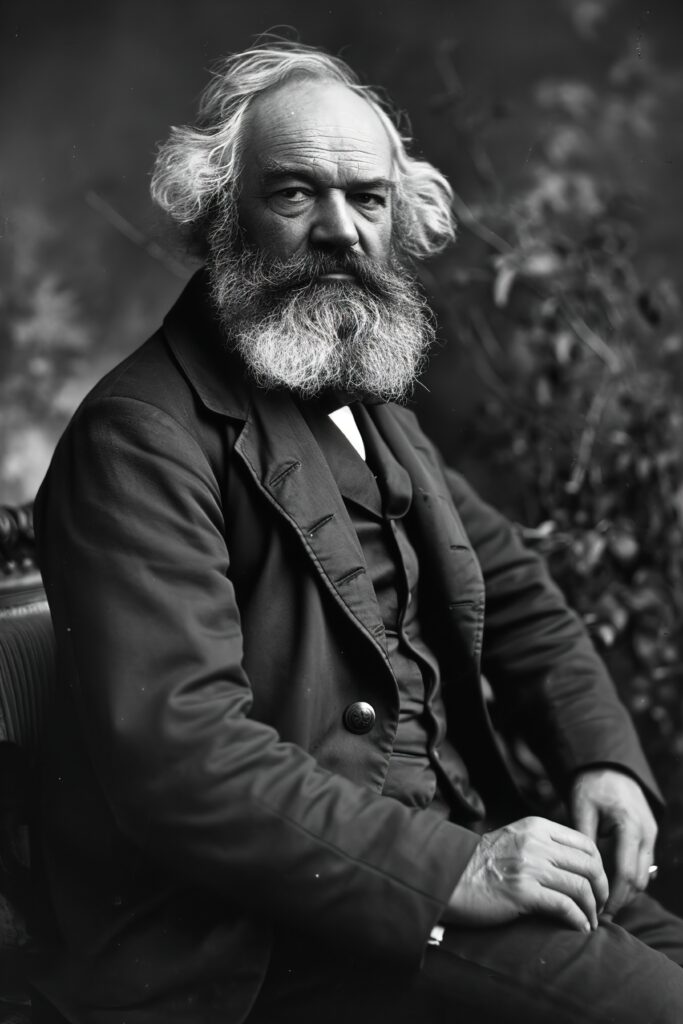
George Stigler was not some wild eyed conspiracy theorist. He won the Nobel Prize in Economics in 1982, largely for his work on regulatory capture. His central observation sounds almost cynical at first: regulations tend to be designed and operated primarily for the benefit of the industry being regulated, not for the public good. If you see a regulation on the books, someone somewhere is making money off it. This became known as Stigler’s Razor, a principle that cuts through the public relations fog surrounding most regulatory debates.
The logic behind this idea is deceptively simple. Imagine you run a successful taxi company in a major city. New competitors keep entering the market, cutting into your profits. You could compete harder, lower prices, improve service. Or you could do something much easier: convince the city government to create regulations that make it extremely difficult for new taxi companies to enter the market. Maybe you need a medallion that costs hundreds of thousands of dollars. Maybe you need to pass dozens of inspections. Maybe you need connections with city hall just to get your application reviewed.
The Clever Disguise: Self Interest Dressed as Public Interest
Now here is the clever part. You do not go to city hall and say, “Please create barriers to entry so I can maintain my monopoly profits.” Instead, you talk about safety. You talk about protecting consumers from unlicensed drivers. You talk about ensuring quality standards. You wrap your self interest in the language of public interest. And because you have more at stake than any individual consumer, you invest heavily in making this happen. You hire lobbyists. You fund studies. You wine and dine politicians. Meanwhile, consumers are barely paying attention because the cost to each of them is relatively small, even if the total cost is enormous.
This is regulatory capture in action, and it happens far more often than most people realize. The industry does not just comply with regulation. It authors it, shapes it, and benefits from it.
When Banks Write Banking Rules
Consider the financial sector. After the 2008 financial crisis, there was enormous public pressure for stricter banking regulations. The result was the Dodd Frank Act, a massive piece of legislation spanning hundreds of pages. The official story: tough new rules to prevent another crisis. The reality: the largest banks helped write significant portions of these regulations, and what emerged was a system so complex that only the biggest institutions could afford the compliance costs. Smaller community banks, which had nothing to do with the financial crisis, found themselves drowning in paperwork. Many closed or merged. The big banks that caused the crisis ended up with less competition.
The same pattern appears in healthcare, where insurance companies helped design the Affordable Care Act. In telecommunications, where incumbent providers shape net neutrality debates. In agriculture, where massive farming corporations influence food safety rules that conveniently burden their smaller competitors. The examples multiply once you start looking.
The Counterintuitive Truth: Industries Love Regulation
What makes this so counterintuitive is that it flips our usual assumptions. We tend to think businesses hate regulation and fight against it. Sometimes they do, particularly when they lack influence over the regulatory process. But established industries often love regulation, provided they get to shape it. Regulation serves as a moat around their castle, keeping upstarts at bay.
The pharmaceutical industry provides a particularly rich example. Drug approval processes are genuinely important for public safety. Nobody wants a repeat of thalidomide. But the FDA approval process has become so expensive and time consuming that it costs over a billion dollars and takes over a decade to bring a new drug to market. This creates an enormous barrier to entry. Established pharmaceutical companies can afford these costs. Startup biotech firms often cannot. Even when they have promising treatments, they need to partner with or sell out to big pharma to navigate the regulatory maze.
Now, ask yourself: who lobbies hardest to keep these processes exactly as they are? Not consumer groups. Not patient advocates. The pharmaceutical companies themselves. They talk about safety and rigorous testing, and some of that concern is genuine. But they also know that expensive, complex regulations protect their market position far better than any patent ever could.
The Medical Monopoly Nobody Talks About
The medical licensing system works similarly. Doctors must complete years of expensive training and pass difficult exams. Again, you want your surgeon to know what she is doing. But the American Medical Association, which represents doctors, has consistently lobbied to restrict the number of medical school slots available. Fewer doctors means less competition and higher salaries. They do this in the name of maintaining quality, but the effect is to keep supply artificially low and prices artificially high.
The Deeper Problem: Government Failure Replacing Market Failure
This is where things get philosophically interesting. Stigler’s insight reveals a fundamental problem in how we organize society. We create regulations to solve market failures, but the regulatory process itself creates government failures. The very people who are supposed to be controlled by regulation end up controlling the regulators.
The relationship between regulators and the regulated becomes uncomfortably cozy over time. Regulators are often former industry executives. After their government service, they frequently return to high paying industry jobs. They attend the same conferences, read the same journals, and share the same assumptions. This revolving door creates a culture where the regulator begins to see the world through the industry’s eyes. They start to believe that what is good for the industry is good for the country.
Following the Incentives: Politics as a Market
Public choice theory, which Stigler helped pioneer, treats politics and regulation like any other market. Politicians want votes and campaign contributions. Bureaucrats want larger budgets and more prestige. Industry groups want favorable rules. Everyone pursues their own interests. The difference from a normal market is that the currency is political power rather than money, and the outcomes are enforced by law rather than voluntary exchange.
This perspective makes certain patterns suddenly visible. Why do sugar quotas persist even though they make food more expensive for everyone? Because sugar producers are concentrated and organized, while sugar consumers are dispersed and disorganized. Why do occupational licensing requirements keep spreading to fields like hair braiding and interior design? Because existing practitioners want to limit competition. Why do building codes often seem designed to favor certain materials or methods? Because the manufacturers of those materials helped write the codes.
The pattern is consistent: concentrated benefits and dispersed costs. A regulation might cost each consumer ten dollars but save an industry player ten million dollars. The industry player has every incentive to fight for that regulation. The consumer has little incentive to even learn about it.
When the Razor Cuts Too Deep: Not Everything Is a Scam
But here is where we need to pump the brakes on pure cynicism. Stigler’s Razor is a powerful analytical tool, but like any razor, it can cut too deep. Not every regulation is a scam. Some genuinely protect public welfare. The question is how to tell the difference.
Food safety regulations, for instance, emerged after Upton Sinclair’s “The Jungle” revealed horrifying conditions in meatpacking plants. These rules serve a legitimate purpose. The problem is that once regulations are established, industry learns to game them. A rule that started with good intentions becomes a tool for established firms to squeeze out competitors.
Environmental regulations present a similar mixed picture. Companies absolutely try to weaken pollution controls, but they also use environmental rules strategically. A large factory can afford expensive scrubbers and complex monitoring systems. A small competitor might not. Supporting stringent environmental rules can be both good citizenship and good business strategy if you are big enough to comply.
Finding Better Solutions Without Throwing Out the Baby
The nuance matters because the solution is not simply to eliminate all regulations. That would be throwing the baby out with the bathwater. Markets fail in predictable ways. Monopolies emerge. Information asymmetries allow fraud. Externalities like pollution impose costs on people who never agreed to bear them. Some government intervention is necessary.
The challenge is designing regulations that actually serve the public interest rather than private interests. This is harder than it sounds. One approach is to favor simple, transparent rules over complex, opaque ones. Complexity creates opportunities for gaming the system. Another approach is to focus on outcomes rather than processes. Tell companies what to achieve, not how to achieve it. This preserves room for innovation and prevents regulations from becoming obsolete as technology changes.
Sunset provisions help too. Make regulations expire after a set period unless actively renewed. This forces periodic review and prevents zombie rules from lurching forward long after their usefulness has ended. Greater transparency in the regulatory process matters as well. Who is lobbying for what? Who benefits? Public comment periods should mean something beyond a pro forma exercise.
When Technology Crashes the Party
Technology has started to disrupt some regulatory moats in interesting ways. Uber and Lyft circumvented taxi medallion systems by redefining themselves as technology platforms rather than transportation companies. The resulting battle revealed just how much the taxi industry depended on regulatory protection rather than superior service. Airbnb did something similar to hotel regulations. Cryptocurrency attempts to route around financial regulations, with mixed results.
These disruptions are not purely positive. Some regulations exist for good reasons, and Silicon Valley’s “ask forgiveness rather than permission” approach can cause genuine harm. But the fact that technology companies are willing to challenge regulatory structures that incumbents hide behind is instructive. It shows that these barriers are often more fragile than they appear, sustained by inertia and insider dealing rather than genuine necessity.
The Global Dimension: Shopping for Friendly Rules
The international dimension adds another layer. Companies increasingly shop for favorable regulatory environments, playing countries against each other. Tax havens exist because some jurisdictions offer light touch regulation. Manufacturing moves to countries with lax environmental or labor standards. This creates a race to the bottom that is difficult to prevent without international coordination, which is itself subject to capture by the industries being regulated.
The Questions We Should Always Ask
Stigler’s insight ultimately forces us to be more skeptical and more sophisticated in how we think about rules. When someone proposes a new regulation, the first question should not be whether it sounds nice or addresses a real problem. The question should be who benefits. Follow the money. Who lobbied for this? What is their incentive? How will established players use this rule to their advantage?
This skepticism should not lead to paralysis. Sometimes we genuinely need new rules. But we should design them with clear eyes about how they will actually function, not how we hope they will function. We should assume that regulated industries will try to capture the regulatory process and design safeguards accordingly.
The Razor Cuts Both Ways
The razor cuts both ways. If a regulation exists, someone is making money off it. But if a regulation is absent, someone might also be making money off that absence. The question is always whose interests are being served and whether that aligns with the broader public good.
Perhaps the deepest insight is that there are no permanent solutions, only ongoing struggles. Regulatory systems drift toward capture over time. Vigilance and periodic reform are necessary. The public interest is not something you can lock in with the right set of rules. It requires constant attention and a willingness to ask uncomfortable questions about who really benefits from the status quo.
George Stigler gave us a tool for asking those questions. Whether we use it wisely is up to us.