Table of Contents
Your economy is booming. Your GDP climbs every quarter. Jobs multiply like rabbits. And yet, people are fighting in the streets over a piece of cloth or a chunk of bronze from 1887.
Welcome to the 21st century, where prosperity doesn’t buy peace and economic growth can’t compete with identity. Samuel Huntington saw this coming decades ago, and we’re still pretending he was wrong.
The Economist’s Blind Spot
Economists love to measure everything. They track growth rates, inflation, productivity. They build models that assume humans are rational calculators, weighing costs and benefits like accountants at tax time. Give people wealth, the thinking goes, and conflicts dissolve. Raise living standards and watch tribalism evaporate.
Except it doesn’t work that way.
The richest societies on Earth are currently tearing themselves apart over symbols. Americans riot over Confederate statues. Europeans wage political warfare over headscarves in schools. Prosperous nations split along lines that have nothing to do with paychecks and everything to do with flags, crosses, and cultural markers that economists can’t graph.
Huntington understood what the spreadsheet worshippers missed. Culture isn’t the dessert that comes after economic development. It’s the main course. People don’t ask “what’s my GDP per capita?” when they wake up. They ask “who am I?” And the answer comes wrapped in symbols.
The Symbols That Actually Matter
A hijab is just fabric. A flag is colored cloth on a pole. A statue is molded metal or carved stone. By any material calculation, these objects have minimal economic value. You can’t eat them. They don’t generate quarterly returns. Wall Street doesn’t trade futures in religious headwear.
Yet these symbols command the kind of loyalty that money can only dream of buying. People die for flags. They sacrifice careers over headscarves. They gather by thousands to protect or destroy statues of men who’ve been dead for centuries.
The reason is simple and profound. Symbols do something money cannot. They answer the question that keeps humans up at night: where do I belong?
Every person walking this planet needs to know they’re part of something larger than themselves. We’re tribal creatures wearing business suits. We need our team, our people, our story. And symbols are the shorthand for that story. They’re identity made visible.
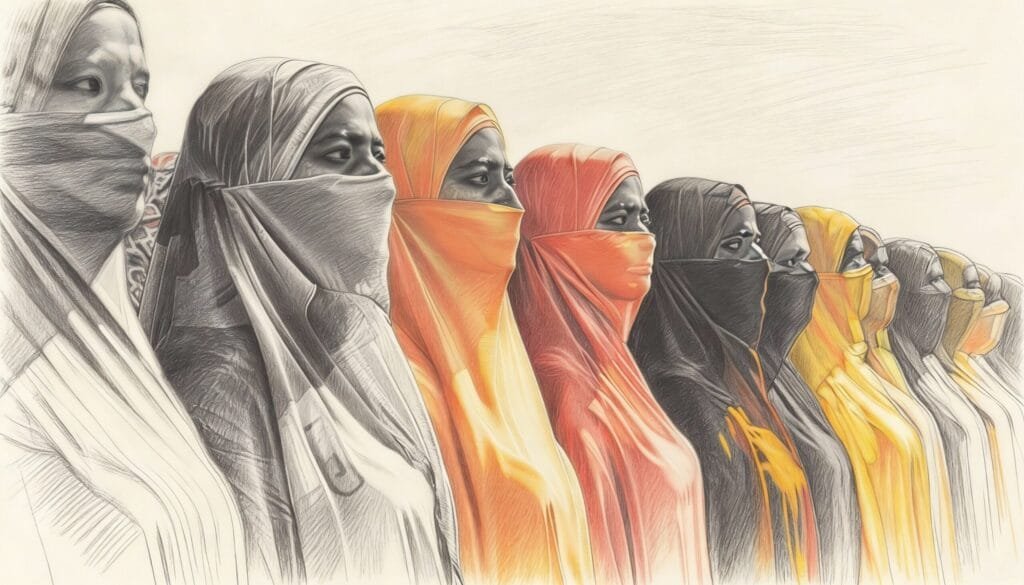
When a woman wears a hijab, she’s not making a fashion statement. She’s declaring allegiance. She’s saying “this is my tribe, my tradition, my line in the sand.” When protesters tear down a statue, they’re not engaging in property damage. They’re rewriting the narrative about who belongs in the public story.
These acts carry meaning that transcends market value. And that’s exactly why they matter more than GDP.
Huntington’s Uncomfortable Truth
Samuel Huntington wrote “The Clash of Civilizations” in 1996 and immediately became the scholar everyone loved to hate. His thesis was straightforward and offensive to cosmopolitan sensibilities: the world’s major conflicts wouldn’t be about ideology or economics. They’d be about culture and identity.
The intellectual establishment recoiled. Surely, they argued, globalization would blend cultures into a smooth cosmopolitan soup. Economic integration would make cultural differences irrelevant. McDonald’s and the internet would create a unified global civilization.
Huntington said no. People will cling harder to their identities precisely because globalization threatens them. The more the world homogenizes economically, the more desperately people will fight to preserve what makes them distinct.
Look around. He wasn’t wrong.
The European Union achieved unprecedented economic integration. It should be paradise according to the economic determinist playbook. Instead, it’s fragmenting along cultural fault lines. Britain left. Populist movements surge from Poland to Italy. The project stumbles not because the economy failed but because people value their national symbols more than common currency.
China grew richer than any Marxist theorist imagined possible. Its people should be satisfied materialists by now. Instead, the government obsesses over controlling symbols. They ban Winnie the Pooh memes and scrub references to Tiananmen Square because they understand what Western economists don’t. Symbols of identity and resistance are more dangerous than economic downturns.
The Paradox of Prosperity
Here’s the counterintuitive part. Wealth doesn’t diminish symbolic conflicts. It amplifies them.
When people are starving, they focus on bread. When they have bread, they start asking bigger questions. Who are we? What do we stand for? What story defines us? Prosperity gives people the luxury to care about meaning, not just survival.
This explains why the most intense culture wars happen in wealthy nations. Poor countries have less bandwidth for statue controversies. They’re busy with actual survival. Rich countries can afford the luxury of symbolic politics.
Consider the American culture wars. The debates over Confederate monuments, pronoun usage, and flag etiquette don’t happen because Americans are poor. They happen because Americans are rich enough to care about identity rather than just income. The country has enough economic slack that people can spend energy fighting over what belongs in textbooks and who gets to define national identity.
The same pattern repeats globally. Wealthy European nations battle over mosque construction and burkini bans. Prosperous Asian democracies fight over historical narratives and memorial sites. Abundance creates space for identity politics to flourish.
Economics can’t solve this because economics isn’t the problem. The problem is meaning. And meaning comes from stories, traditions, and yes, symbols.
The Statue Debate Explained
Let’s talk statues because they perfectly illustrate how symbols work.
A bronze statue of a Confederate general has zero functional value. It doesn’t produce widgets. It doesn’t employ people. From a pure economic standpoint, the metal would be worth more melted down.
But that statue represents competing narratives about what America means. For some, it honors heritage and history. For others, it celebrates oppression and exclusion. Neither side is arguing about the metal. They’re arguing about whose story gets told in public space.
The same statue can mean opposite things to different groups. That’s the power and problem of symbols. They’re Rorschach tests for identity. What you see reveals who you are.
When cities debate removing these monuments, they’re not having an art criticism discussion. They’re wrestling with fundamental questions: Whose ancestors get honored? Which parts of history deserve public space? Who belongs to the national story?
These questions can’t be answered with GDP growth or unemployment statistics. They require choosing between competing visions of identity. Someone’s story gets elevated. Someone else’s gets diminished. There’s no economically optimal solution because the conflict isn’t economic.
Flags and Belonging
Flags operate on the same symbolic wavelength. A piece of cloth becomes the physical embodiment of collective identity. People who’d never take a bullet for their neighbor will die for the flag that represents both of them.
The flag obsession baffles rationalists. It’s just dyed fabric, they protest. Why pledge allegiance to textile?
Because the flag isn’t fabric. It’s the visible marker of “us versus them.” It’s the boundary line of belonging. When you salute a flag, you’re performing loyalty to a specific group and its particular story.
This is why flag desecration provokes such fury. Burning a flag isn’t destruction of property. It’s rejection of belonging. It’s a symbolic middle finger to everyone who identifies with that banner. The economic value of the cloth is irrelevant. The symbolic value is infinite.
Nations understand this instinctively. They mandate flag education in schools. They fly flags everywhere. They prosecute flag burning not because cloth is expensive but because symbols of unity are invaluable.
Even corporations grasp symbolic power. They spend fortunes on logos because they know humans respond to tribal markers. The Nike swoosh and Apple logo aren’t just branding. They’re identity badges. People pay premiums to wear symbols that signal which tribe they belong to.
The Hijab and Freedom’s Paradox
The hijab debates in Europe reveal how symbols create impossible dilemmas in pluralistic societies.
France banned headscarves in public schools, claiming it protects secular values and women’s freedom. Many Muslim women responded that the ban itself restricts their freedom to express religious identity. Both sides invoke freedom while demanding opposite policies.
There’s no economically correct answer here. This is a pure symbolic conflict about what kind of society France wants to be. Should public space reflect secular uniformity or religious diversity? Should integration mean assimilation to majority cultural norms or accommodation of minority practices?
These questions touch identity at its deepest level. For secular French citizens, the headscarf represents religious intrusion into public space. For Muslim women, it represents personal faith and cultural heritage. Same object, opposite meanings.
The economic cost of various policies is trivial compared to the symbolic stakes. This isn’t about money. It’s about which vision of French identity prevails. And unlike economic disputes where compromise finds middle ground, symbolic conflicts demand choosing sides. You can’t half wear a hijab.
Why Economics Can’t Compete
Economists keep getting surprised by this because their models assume material self interest drives behavior. People should care most about what enriches them financially. Cultural attachments should dissolve when they become economically inconvenient.
Reality works differently. People routinely sacrifice economic benefit for symbolic belonging.
Brexit offers a perfect case study. Britain voted to leave the European Union despite clear economic costs. Economists warned of GDP decline, trade disruption, and financial damage. Voters chose sovereignty and national identity anyway. The symbolic value of “taking back control” trumped material prosperity.
You can’t reduce this to ignorance or irrationality. The Brexiteers understood the economic arguments. They simply valued something else more. They wanted their symbols back, their sense of distinct national identity, their feeling of self governance. These things don’t appear on balance sheets, but they matter more than quarterly earnings to people deciding what kind of society they want.
The pattern repeats everywhere. Catalans seek independence despite economic disadvantage. Scotland debates leaving Britain for symbolic autonomy. People consistently choose identity over income when forced to pick.
Huntington saw this clearly. Culture, he argued, provides what economics cannot: a sense of who we are. And humans will always value identity over wealth when the chips are down.
The Meaning Crisis
Modern prosperity created an unexpected problem. We solved material scarcity but triggered a meaning crisis.
Previous generations struggled to survive. Their identity came partly from that shared struggle. Work provided purpose. Community was necessary for survival. Religion offered answers to ultimate questions.
Now machines handle survival. Work feels arbitrary. Communities fragment. Traditional religious certainty fades for many. We’re materially comfortable but existentially adrift.
Symbols rush in to fill the void. If traditional markers of identity weaken, people grab newer ones more fiercely. Political affiliation becomes tribal identity. Sports teams become surrogate nations. Social movements offer meaning that employment no longer provides.
This explains the intensity of contemporary symbolic conflicts. These battles aren’t really about cloth or bronze. They’re about people desperately seeking something to belong to, some story that gives life meaning beyond consumption.
You can’t buy meaning. You can’t GDP your way out of existential emptiness. Symbols offer what spreadsheets cannot: a narrative that explains why your life matters.
The Tribal Algorithm
Here’s the uncomfortable biological reality underneath all this. Humans evolved in small tribes where group loyalty meant survival. Our brains are wired for tribal belonging. We’re programmed to distinguish “us” from “them” and favor our group.
Modern society tries to override this programming. We’re supposed to be rational individuals making cost benefit calculations. We should judge people as individuals, not group members. We ought to prioritize universal human values over parochial tribal loyalty.
But you can’t reprogram millions of years of evolution with a few centuries of Enlightenment philosophy. The tribal instinct remains powerful. It just finds new outlets.
Symbols activate that tribal circuitry. When you see your flag, your brain lights up with belonging. When you see the opposing tribe’s symbols, ancient alarm systems trigger. This happens automatically, below conscious awareness.
Sports demonstrate this perfectly. Grown adults paint their faces and scream at strangers wearing different colored jerseys. Why? Because those jerseys are tribal markers, and our brains treat opposing tribes as threats. The symbols trigger emotional responses that bypass rational thought.
Political and cultural symbols work the same way. They’re hacks for our tribal operating system. They give our ancient brains the “us versus them” clarity they crave.
Living With Symbol Wars
So what do we do with all this? Huntington didn’t offer easy solutions because there aren’t any.
We can’t eliminate symbols. Humans need identity markers like we need oxygen. Trying to create a purely rational, symbol free society is like trying to breathe underwater. The tribal algorithm is part of our hardware.
We can’t transcend symbolic conflicts through economic growth. Prosperity intensifies rather than diminishes identity politics. Rich societies have more symbolic warfare, not less.
We probably can’t compromise our way out either. Symbols often represent mutually exclusive visions. You can’t negotiate between groups who disagree on fundamental questions of identity and belonging.
What we can do is understand the game we’re playing. Recognize that beneath every statue controversy, every flag debate, every cultural clash, people are fighting about who they are and where they belong. These aren’t frivolous distractions from “real” economic issues. They are the real issues.
The culture wars aren’t going away. GDP growth won’t resolve them. The symbolic conflicts that Huntington predicted will likely intensify as globalization continues threatening local identities. People will cling more desperately to their markers of distinction.
We’re not homo economicus, rational calculators pursuing material gain. We’re tribal creatures seeking meaning and belonging. We need our symbols like we need our stories. They tell us who we are.
And in the end, who you are matters more than what you own. That’s why the war of symbols will always trump the race for GDP. Huntington understood this.
The sooner the rest of us do, the better we’ll navigate the cultural conflicts ahead.