Table of Contents
Picture a courtroom where twelve jurors must decide between guilt and innocence. Each juror has seen the same evidence, heard the same testimony. Now imagine that each of them is slightly better than a coin flip at reaching the right verdict. Maybe they’re correct 60% of the time.
Here’s where mathematics delivers a surprise. When these twelve modestly competent people vote together, their collective accuracy doesn’t stay at 60%. It shoots up dramatically. Add more jurors and the collective judgment gets even better. With enough people, the group becomes nearly infallible.
This insight belongs to an 18th-century French mathematician named Condorcet. His theorem, published in 1785, revealed something profound about collective decision making. Groups can be wiser than any individual member. Democracy, at least in theory, has mathematical backing.
But there’s a darker side to this story. The same mathematics that justifies democracy also exposes its greatest vulnerability. The theorem is a double-edged sword, and the edge cutting against democracy is razor sharp.
The Wisdom of Crowds, Mathematically Speaking
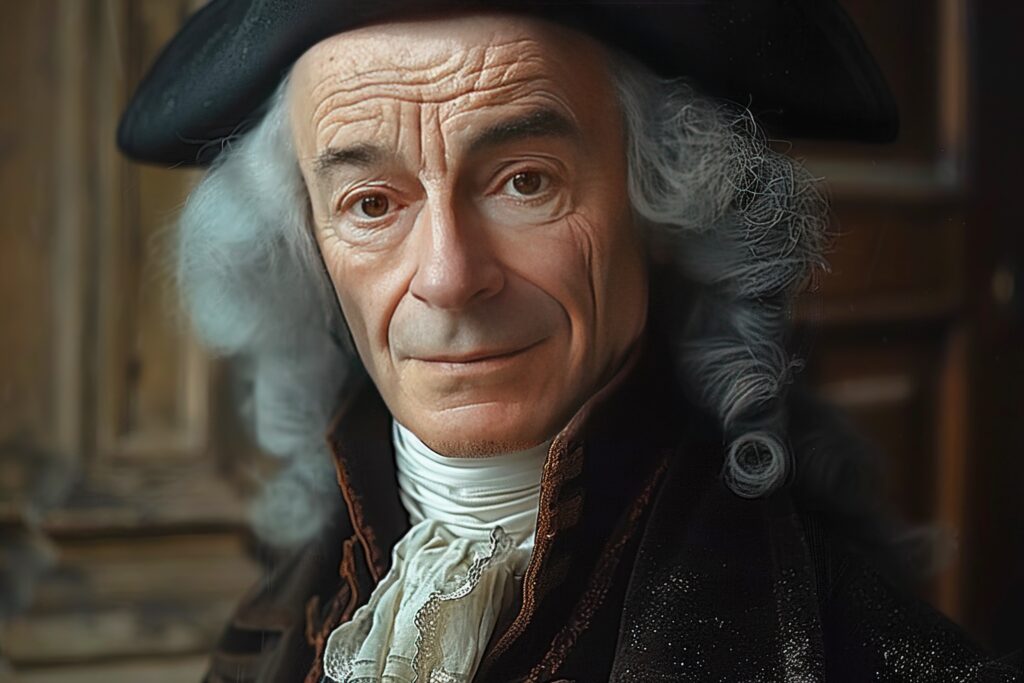
Marie Jean Antoine Nicolas de Caritat, Marquis de Condorcet, lived during the Enlightenment when thinkers believed reason could solve anything. He turned probability theory loose on political questions and discovered something counterintuitive.
Take a simple yes or no decision where one answer is objectively correct. Give this choice to voters who each have better than 50% odds of being right. Condorcet proved that as you add more voters, the probability of the majority reaching the correct decision approaches 100%.
The math is elegant. If each voter has a 51% chance of being correct, a group of 100 voters has a 73% chance of making the right collective choice. Scale up to 1,000 voters and that probability jumps to nearly 100%. The crowd, despite being full of individuals who are barely better than random, becomes collectively brilliant.
This happens because errors tend to cancel out when voters make mistakes independently. One person might incorrectly vote “yes” while another incorrectly votes “no.” These errors neutralize each other. The signal of truth gradually rises above the noise of individual mistakes.
It’s like averaging measurements in science. One thermometer might read slightly high, another slightly low. Take enough readings and the average converges on the true temperature. Democracy, in this view, is an error-correcting mechanism built from imperfect parts.
The Math That Justifies Democracy
For centuries, democracy’s defenders relied on philosophical arguments about human dignity and natural rights. Condorcet offered something different: a mathematical case. If you want the right answer and you have voters who are more likely right than wrong, majority rule becomes not just fair but efficient.
The theorem requires three key assumptions. Voters must decide independently. Each voter must have better than 50% odds of being correct. And those odds must be roughly equal across voters.
Under these conditions, collective wisdom emerges like magic from individual mediocrity. You don’t need brilliant voters. You don’t need experts. You just need a lot of people who are slightly better than random chance, and the mathematics takes care of the rest.
This explains why prediction markets work. It’s why betting odds often outperform expert forecasters. It’s the reason Wikipedia, despite being written by amateurs, is remarkably accurate. The errors wash out. The truth accumulates.
For democratic optimists, this is wonderful news. It means ordinary citizens, despite knowing little about policy details, can collectively make better decisions than any expert. The janitor and the professor each get one vote, and somehow this produces good outcomes.
The Catastrophic Flip Side
Now here’s where Condorcet’s mathematics turns sinister.
Everything described above depends on one critical number: that percentage chance each voter has of being correct. It must be above 50%. It must be better than a coin flip.
If that percentage drops below 50%, if voters are more likely to be wrong than right, the entire mechanism reverses. Add more voters and collective accuracy doesn’t improve. It gets worse. Much worse.
With voters who are 49% likely to be correct, a large electorate becomes almost certain to choose the wrong answer. The same mathematics that creates wisdom of crowds now creates madness of crowds. The error-correcting mechanism becomes an error-amplifying machine.
Think about that for a moment. The exact same system that produces near-perfect decisions with slightly informed voters produces catastrophic decisions with slightly misinformed voters. It’s not a gentle decline. It’s a cliff edge at the 50% mark.
This is Condorcet’s devastating insight about uninformed voters. Democracy doesn’t just tolerate ignorance poorly. It can turn ignorance into disaster, systematically and reliably. The bigger the electorate, the more certain the catastrophe.
The Problem of Systematic Bias
Here’s where things get worse. Random ignorance might not be so bad. If voters are simply uninformed, they might scatter their votes randomly, effectively canceling out. The informed voters would then determine the outcome.
But what if ignorance isn’t random? What if uninformed voters are systematically wrong in the same direction?
Economist Bryan Caplan has argued that this is exactly what happens in practice. Voters don’t just lack information. They hold persistent, biased beliefs that push them toward incorrect conclusions. They’re not randomly scattered around the truth. They’re clustered on the wrong side of it.
Caplan calls this “rational irrationality.” It’s rational because voters pay no personal cost for being wrong. Your individual vote almost never changes an election outcome. So why invest time learning economics or policy details? Why challenge your comfortable misconceptions?
It’s irrational because the beliefs themselves are wrong. But it’s rational to maintain those wrong beliefs because correcting them costs effort and changes nothing for you personally.
A factory worker might believe that trade restrictions protect his job, even if economists nearly universally agree that free trade increases overall prosperity. Believing in protectionism makes him feel better. It’s emotionally satisfying to blame foreigners rather than technological change or market forces.
Correcting this belief requires learning economics. It requires accepting uncomfortable truths. And for what? His one vote won’t determine trade policy. So the rational choice is to stay comfortably wrong.
Multiply this by millions of voters and you get systematic bias. The crowd isn’t wise. It’s systematically foolish, and the more voters you add, the more certain the foolish outcome becomes.
The Counterintuitive Core
There’s something almost perverse about Condorcet’s theorem. It says that in the right conditions, one million people who are each 51% likely to be correct will collectively make better decisions than a single expert who is 95% likely to be correct.
Put that way, it sounds absurd. How can we trust a million barely competent people over one highly competent person?
The answer lies in independence and error cancellation. The expert might be right 95 times out of 100, but on that 5% where he’s wrong, he’s simply wrong. There’s no correction mechanism. His error is the final answer.
The million people are individually unreliable, but their errors point in different directions. The person who incorrectly leans “yes” is offset by someone who incorrectly leans “no.” What survives this winnowing process is the signal of truth that slightly more of them perceive.
This only works, of course, if they truly are better than 50%. Drop below that threshold and the same mechanism produces the opposite result. Now all those errors don’t cancel out. They accumulate. They reinforce. They guarantee disaster.
It’s like the difference between white noise and a biased signal. White noise averages out to silence. A biased signal gets louder as you amplify it.
The Information Paradox
Here’s another counterintuitive twist. For Condorcet’s positive result, voters don’t need much information. Being 51% correct is enough. But they need to stay above that threshold.
This creates a strange situation. A little bit of knowledge is powerful when aggregated across millions. But a little bit of misinformation is catastrophic for the same reason.
The system amplifies both wisdom and folly. It’s an extremely powerful engine with no built-in steering mechanism. Point it in the right direction and it produces excellent outcomes. Point it wrong and it drives off a cliff with mathematical certainty.
This is why voter education matters so much, yet also why it’s so hard to achieve. You don’t need voters to be experts.
For democracy’s defenders, this is good news. You don’t need an educated elite making every decision. You just need a minimally informed populace.
For democracy’s critics, it’s damning. That “minimal” threshold is apparently very hard to meet on many issues.
The Jury Room Versus the Ballot Box
Condorcet’s theorem emerged from thinking about juries, and the jury context reveals something important. Jurors see the same evidence. They deliberate together. They’re trying to reach the truth about a specific factual question: did this defendant commit this crime?
Elections are different in crucial ways. Voters don’t see identical evidence. They’re exposed to different media, different sources, different narratives. There’s no shared deliberation. And the “correct” answer often isn’t a matter of fact but of values, priorities, and predictions about uncertain futures.
This matters for the theorem’s assumptions. Independence might fail when voters all watch the same biased news sources. The idea of a “correct” answer becomes fuzzy when the choice is between different visions of society rather than guilty or innocent.
In a jury, we can fairly clearly say whether the group made the right or wrong decision once we learn more facts. In an election, we often can’t agree even decades later whether the voters chose wisely.
The Modern Dilemma
We live in an era of unprecedented information availability. The internet puts human knowledge at everyone’s fingertips. Yet voter ignorance persists and arguably intensifies.
Part of this is rational ignorance. Learning policy details takes work. Your individual vote doesn’t matter. So why bother?
But there’s also the problem of information quality. Access to information doesn’t mean access to good information. Voters might be more exposed to information than ever while being less informed than ever.
Misinformation spreads faster than correction. Emotionally satisfying falsehoods outcompete uncomfortable truths in the attention economy.
This creates a nightmare scenario for Condorcet’s theorem. We have mass democracy with millions of voters. The theorem tells us this should produce excellent results if voters are slightly better than 50%.
But if modern information ecosystems systematically push voters below that threshold on key issues, we’ve built an enormous machine for converting ignorance into certain disaster.
Is There a Way Out?
Condorcet’s mathematics suggests some uncomfortable options. If voters are systematically biased below 50% on certain issues, adding more voters makes things worse. A small group of informed decision makers would produce better outcomes.
This points toward technocracy, expert panels, or restricting the franchise to informed voters. All of these options conflict with democratic values and create new problems. Who decides who’s informed enough? Who watches the experts? Power concentrated in small groups faces its own pathologies.
Alternatively, we might try to improve voter competence. Better education, better media, better information ecosystems. Move voters from 49% to 51% and the mathematics works in our favor again.
But this is harder than it sounds. The incentives work against it. Individual voters have no reason to invest in being informed. Media outlets profit from engagement, not accuracy. Politicians win by confirming biases, not challenging them.
Each solution involves tradeoffs. Each abandons some aspect of pure democracy. But Condorcet’s mathematics suggests that pure majority rule only works under specific conditions. When those conditions fail, defending democracy means acknowledging its limits.
What Condorcet revealed is both beautiful and terrible. Beautiful because it shows how collective wisdom can emerge from individual limitation. Terrible because it shows how collective catastrophe can emerge just as easily.
Democracy is often defended as a matter of principle, regardless of outcomes. People have a right to self-governance, the argument goes, even if they govern themselves poorly.
Condorcet’s theorem doesn’t directly challenge this. You can still believe in democracy as a right while acknowledging its practical limitations.
The cost of ignorance isn’t just that we miss the optimal policy. It’s that we become certain to choose the worst policy, and the certainty increases with the size of the electorate.
This is why ignorance in a democracy isn’t a personal failing we can afford to tolerate. It’s a collective crisis. Every voter who drops below that 50% threshold makes the entire system worse. Not slightly worse. Catastrophically worse, with compounding effects.
The mathematics is cold and clear. Democracy works only when voters are at least marginally competent. That’s not an argument against democracy. It’s an argument for taking voter competence seriously, for fighting misinformation aggressively, for being honest about democracy’s practical requirements.
The math doesn’t lie. Collective wisdom has prerequisites. Ignore them at our peril.