Table of Contents
Your government didn’t choose you. The rivers, mountains, and weather patterns did.
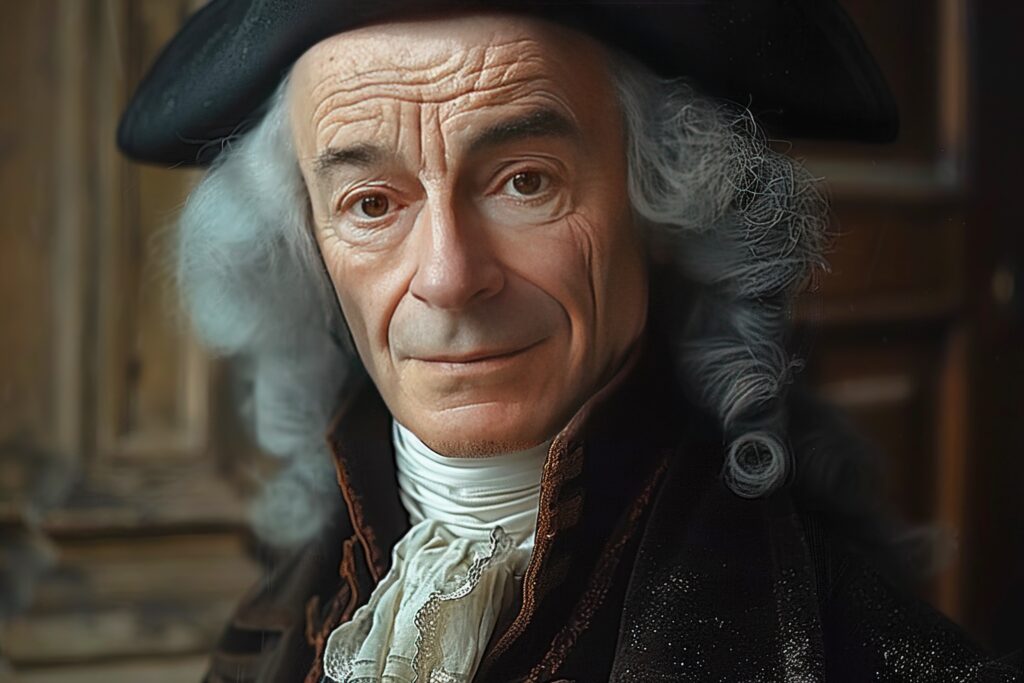
This is the provocative claim made by Charles-Louis de Secondat, better known as Montesquieu, the 18th century French philosopher who looked at the world and saw something his contemporaries missed. While others debated the divine right of kings or the social contract, Montesquieu pointed at the map and said: look at the terrain first, the politics second. The connection wasn’t random.
His masterwork, The Spirit of the Laws, published in 1748, argued that geography doesn’t just influence politics. It creates the conditions that make certain political systems inevitable and others impossible. A nation’s latitude, climate, soil quality, and physical barriers don’t merely suggest what kind of government might work. They determine what kind of government can work.
This might sound like environmental determinism run amok. But before dismissing it as outdated thinking, consider how much of global politics still follows the patterns Montesquieu identified. There’s something uncomfortable about his thesis because it strips away our illusions of pure human agency. We like to believe societies consciously choose their destinies. Montesquieu suggests geography wrote much of the script before the actors arrived on stage.
The Climate Theory of Everything
Montesquieu’s most controversial argument centered on climate. He believed hot climates produced lazy, fearful people who naturally submitted to despotic rule. Cold climates, meanwhile, bred vigorous, courageous people who demanded freedom. Moderate climates created moderate politics.
The reasoning went like this: heat makes the body sluggish and weakens the spirit. People in hot regions avoid exertion and become passive. This passivity extends to political life. They don’t resist tyranny because resistance requires energy they don’t have. Despots thrive in these conditions because the population lacks the vigor to overthrow them.
Cold weather, by contrast, forces activity. You move or you freeze. This constant stimulation strengthens both body and character. Northern peoples develop a taste for independence because their environment demands it. They resist domination because their climate has trained them to fight against nature itself daily.
We can immediately spot the problems here. The theory reeks of the prejudices of an 18th century European looking down at tropical colonies. It justified imperialism by suggesting warmer regions needed European governance because their inhabitants were naturally suited to servitude. This isn’t just wrong, it’s offensive.
Yet strip away the crude climatology and something interesting remains. Geography does constrain political possibilities, even if not in the simplistic ways Montesquieu imagined. The question isn’t whether hot weather makes people lazy. It’s whether environmental pressures shape the institutions societies build.
The Terrain Tells the Truth
Montesquieu’s observations about terrain prove more durable than his climate theories. He noticed that mountains breed independence while plains breed empires. This pattern repeats across history with uncomfortable regularity.
Mountain regions fragment power. The terrain itself provides natural fortifications. Small communities can defend themselves in valleys and passes. Centralized authority struggles to project power across broken geography. Switzerland, with its mountainous terrain and fiercely local governance, exemplifies this dynamic. The Afghan highlands have swallowed empires for millennia. Mountain peoples tend toward confederations and local autonomy because the mountains make centralization nearly impossible.
Plains tell a different story. Flat, open terrain favors whoever can muster the largest army. Defense becomes difficult without natural barriers. This creates pressure toward consolidation. Small political units get absorbed by larger ones because they can’t defend themselves effectively. The result: vast empires across the steppes of Central Asia, the plains of Northern Europe, the great river valleys of China and Mesopotamia.
Russia offers a stark example. The endless Eurasian plain provided no natural boundaries, leaving Russia exposed to invasion from every direction. This vulnerability shaped Russian political culture toward centralized, autocratic government. A dispersed political system couldn’t mobilize resources quickly enough to defend such exposed territory. Geography demanded a strong center, and Russian politics obliged.
The pattern extends to coastlines and rivers. Navigable waterways facilitate trade and communication, creating prosperity but also vulnerability. Island nations develop differently from continental ones. Maritime powers build different institutions than landlocked states. Geography doesn’t just influence these choices. It makes certain options extremely costly while rendering others almost natural.
Size Matters in Politics
Montesquieu argued that territory size determines government type. Small states naturally tend toward republicanism. Large states drift toward despotism. Medium states work well with monarchy.
The logic seems straightforward. In small territories, citizens can participate meaningfully in government. Everyone knows everyone. Accountability is personal. Direct democracy becomes possible because you can actually gather the citizens in one place. Ancient Athens exemplified this model.
As territory expands, direct participation becomes impossible. You need representatives, layers of bureaucracy, complex institutions. Communication across distance takes time. Local interests diverge. The center must either grant autonomy to distant regions or impose control through force. The second option leads toward despotism because the government relates to citizens through abstraction and coercion rather than personal connection.
Montesquieu saw monarchy as a middle path. A king rules through intermediate bodies: nobles, clergy, chartered cities. These institutions mediate between ruler and ruled, preventing both mob rule and pure despotism. But this requires careful balance that geography helps determine.
What makes this analysis intriguing is how it anticipates modern political science observations about the relationship between state capacity and territory. Large territories without modern communication technology and transportation infrastructure are nearly impossible to govern democratically. The Roman Republic collapsed partly under the weight of empire. The system designed for a city-state couldn’t scale to Mediterranean hegemony.
The United States seemed to prove Montesquieu wrong by establishing a republic across a continent. But the founders obsessed over this exact problem. Federalism, the division of powers, strong local government, these weren’t abstract principles. They were adaptations to the problem Montesquieu identified. You can’t run Rhode Island and Texas the same way because geography won’t permit it.
The Counterintuitive Twist
Here’s where Montesquieu gets interesting beyond the obvious environmental determinism. He didn’t argue geography made good government impossible in difficult terrains. He argued that successful governments in challenging geographies required especially good laws precisely because they had to work against natural tendencies.
A state with favorable geography, moderate climate, defensible borders, and fertile soil can survive mediocre governance. The environment does half the work. But harsh geographies demand excellence. Every institution must perform efficiently because there’s no slack in the system.
This flips the usual narrative. We often assume wealthy, well-positioned nations succeed because they govern well. Montesquieu suggests the opposite. They govern moderately well because their geography permits it. The truly impressive political achievements happen in unlikely places where geography offers no advantages.
Consider the Netherlands. Below sea level, constantly threatened by water, with poor soil and harsh weather. Dutch republicanism and commercial success didn’t happen despite these conditions but partly because of them. The environment demanded cooperation, sophisticated engineering, and effective institutions. Failure meant drowning. This concentrated the mind wonderfully.
Iceland maintained Europe’s oldest continuous parliament through centuries of volcanic eruptions, brutal climate, and geographic isolation. The environment was unforgiving, so the institutions had to be robust. Geography created selective pressure that shaped political culture.
This suggests that geographic determinism works both ways. Easy geography permits sloppy government. Difficult geography demands good government or delivers extinction. The political systems that survive harsh environments may be more robust than those that flourish in Eden.
The Invisible Hand of Landscape
Montesquieu’s insight extends beyond formal government structures to legal systems and cultural practices. He noticed that property laws, criminal penalties, marriage customs, and religious practices all correlated with geographical conditions. This wasn’t random. The environment shaped what behaviors societies needed to encourage or suppress.
Agricultural societies in fertile river valleys developed complex property laws because land was valuable and scarce. Nomadic peoples in harsh steppes maintained simpler property concepts because mobility mattered more than fixed assets. Maritime cultures developed sophisticated commercial law because trade was their lifeblood. Mountain communities relied on reputation and shame because formal enforcement was difficult across broken terrain.
Criminal law reflected geographic realities. Societies with easy escape routes needed harsh penalties to deter crime. Island nations with nowhere to run could afford more lenient punishment. Dense urban populations required different legal frameworks than dispersed rural ones. None of this was consciously designed. It emerged from trial and error as societies adapted to their environments.
This creates an uncomfortable recognition. Much of what we consider cultural identity or national character might be geographic adaptation wearing a cultural mask. The supposed inherent traits of peoples might be learned responses to environmental pressures, so deeply embedded that they feel innate.
The Modern Echo
Montesquieu wrote before industrialization, before airplanes, before instant global communication. Technology was supposed to make geography irrelevant. Yet the patterns persist.
Oil states remain vulnerable to the resource curse regardless of intentions. Small, wealthy trading nations still develop different institutions than large resource-extractors. Island democracies still show remarkable political stability. Continental empires still struggle with regional tensions. The specific mechanisms changed but the underlying dynamics remain.
Singapore’s authoritarian capitalism makes more sense considering its geographic position: a tiny island dependent on trade, surrounded by larger neighbors, with no natural resources except location. The government style emerges partly from these constraints. Norway’s social democracy connects to its geographic reality: isolated, resource-rich, with natural barriers protecting it from external pressure.
Even the European Union, that monument to post-geographic cosmopolitanism, reveals geographic logic. It’s a project of moderate climates, navigable rivers, and prosperous coastlines. It works where geography facilitates integration and struggles where terrain creates natural barriers. The euro crisis followed geographic fault lines. The refugee debate maps onto geographic exposure.
The United States’ political polarization increasingly follows geographic patterns. Urban density versus rural expanse. Coasts versus interior. These aren’t just demographic differences. They’re different geographic realities producing different political needs that national politics struggles to accommodate.
The Limits of Landscape
Montesquieu wasn’t arguing for absolute determinism. He knew human choice mattered. Good legislators could adapt laws to geography, working with natural tendencies rather than against them. Bad legislators could ruin favorable conditions through stupidity or corruption.
His point was subtler. Geography creates the playing field. It determines how difficult good government will be, what challenges will arise, which solutions will work. Ignoring geography is like ignoring gravity. You can fight it, but you better have a good plan.
This matters because modern political discourse often pretends geography doesn’t exist. We assume institutional models that work in one place can transplant anywhere. We’re surprised when they fail, as if culture and history alone explain political outcomes while physical reality plays no role.
Afghanistan isn’t difficult to govern because Afghans are inherently ungovernable. It’s difficult because the geography makes unified central authority nearly impossible without overwhelming force. Iraq’s instability isn’t just about religion or oil. It’s also about arbitrary borders cutting across geographic and ethnic regions that never formed natural political units. Yugoslavia held together under Tito but fragmented along geographic fault lines once central authority weakened.
The Uncomfortable Conclusion
Montesquieu forces us to confront limits on political possibility that ideology prefers to ignore. We want to believe the right ideas, implemented by the right people, can create the right government anywhere. He suggests otherwise.
Some places will always find democracy easier than others because their geography facilitates it. Some nations will always struggle with centralization because their terrain resists it. Some regions will remain poor not because of bad policy but because their geography offers few advantages to build on.
This doesn’t mean geography is destiny in the simple sense. Technology matters. Ideas matter. Leadership matters. But they matter while playing on a board whose dimensions geography sets. The pieces can move with skill or clumsiness, but the board itself doesn’t change.
The value of Montesquieu’s perspective isn’t that it explains everything. It’s that it explains something contemporary political analysis often ignores. We’ve become so focused on culture, institutions, and ideas that we’ve forgotten humans still live on a physical planet with mountains, rivers, and climate zones that constrain what’s possible.
Your country’s politics might feel like conscious choices made by thinking people debating principles. Zoom out far enough and you see the rivers that determined where cities formed, the mountains that created defensive barriers, the climate that shaped economic possibilities, the coastlines that opened or closed trade routes. The debates happened within a geography that had already narrowed the options considerably.
Montesquieu looked at the map and saw invisible walls channeling political development along certain paths while blocking others. He saw geography as the silent partner in every political system, the factor everyone takes for granted precisely because it’s always present.
The landscape doesn’t just host politics. It shapes politics, often in ways we don’t notice until we compare across very different environments. Your government might not have chosen you, but the land beneath your feet certainly had a say in choosing your government.
And it’s still voting.